

What are the conditions and equations for the addition reaction of ethylene?
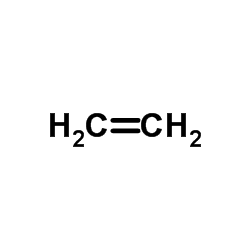
Image: Ethylene structure
Ethylene is one of the most basic raw materials in petrochemical industry. In terms of synthetic materials, it is widely used in the production of polyethylene, vinyl chloride and polyvinyl chloride, ethylbenzene, styrene and polystyrene, as well as ethylene propylene rubber; in organic synthesis, it is widely used in the synthesis of ethanol, ethylene oxide and ethylene glycol, acetaldehyde, acetic acid, propionaldehyde, propionic acid and its derivatives and other basic organic synthesis raw materials; by halogenation, chloroethane, ethylene bromide can be prepared; by oligomerization, alpha-olefins can be produced, and then higher alcohols, alkylbenzene, etc.
There are too many substances that can be added to ethylene, and the common conditions and equations for ethylene addition reactions are as follows:
CH2 = CH2 + H2O - catalyst heated and pressurized - > CH3CH2OH
CH2=CH2 + Br2 - - > CH2BrCH2Br
CH2 = CH2 + HCl - catalyst heating - > CH3CH2Cl
CH2 = CH2 + H2 - catalyst heating - > CH3CH3
Add water, you need to pressurize. Add bromine, no conditions required. Other heating catalysts, what the catalyst is, do not need to be written down. The catalyst for hydrogenation is Ni, this can be written out, or you can simply write the catalyst.




