

Introduction and Preparation of Mirabilisin
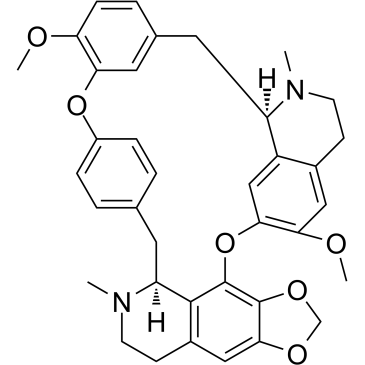
Picture: Qianjin vine structural formula
This article describes in detail the introduction and preparation of propanosin:
Dictylinin, also known as chlorogilan hydrochloride and dictylinin, is a bisbenzylisoquinoline alkaloid extracted from the rhizomes or pages of dictylinin plants. Dictylinin plants are antisepticaceae plants, mainly including dictylinin, ground intolerance, and dactylinus, which are widely distributed in rural areas and are common plants.
Qianjinteng is a common raw material of traditional Chinese medicine. It has anti-inflammatory and antioxidant effects. It is described in "Materia Medica" to treat cholera, cough, epilepsy and other diseases. According to Huayuan.com, Qianjinteng chemical formula C37H38N2O6, relative molecular weight 606.707, usually exists in yellow or light yellow powder, is easy to oxidize, not easy to decompose, usually sealed and bright after low temperature dry storage. Easily soluble in some organic solvents, such as ether, acetone, easily soluble in acidic aqueous solutions, insoluble in petroleum ether.
On May 10, 2022, the day of the COVID-19 pandemic, a major news about Qianjin teng appeared. Chinese scientists obtained the invention patent for a new drug for the treatment of COVID-19. In the patent specification, it is shown that 10 micromoles/liter of Qianjin teng inhibits the replication of coronaviruses by 15,393 times. As the name suggests, Qianjin teng can inhibit the replication ability of novel coronaviruses with extremely high cost performance. Assuming that the original amount of viruses is 15,393, then after treatment with 10 micromoles/liter of Qianjin teng, there will only be one virus left. The paper published by American scholars in the journal Science also confirmed this data, and the experiment can be reproduced.
Therefore, in addition to the traditional treatment of muscle and kidney damage, adjuvant treatment of breast cancer, suppression of HIV-1 and other uses, Qianjin teng has the potential to fight the COVID-19 pandemic, and many research based on Qianjin teng should set off a craze. Therefore, in addition to purchasing major brands of Qianjin teng reagents in Huayuan Mall, researchers can also extract and prepare them by themselves. Here is a preparation method of Qianjin teng:
1. Take 1 kg of ground impermeable root powder, wet it with 0.6 liters of 5% sodium carbonate solution, and leave it for 2 hours until dry to ensure that the ground impermeable root powder fully absorbs the lye.
2. Soak the dried ground root powder into 1.5L of benzene, leave it for three days, then filter to obtain the residue, soak it with benzene for another 2 days, filter it again and soak it with the same amount of benzene once, and merge the three filtered benzene solutions.
3. Extract the benzene solution in step 2 with 10% hydrochloric acid until the benzene solution no longer contains alkaloids. It is important to note that a large amount of easily emulsified white atherosomes will precipitate during the process.
4. Use a saturated sodium carbonate solution to alkalize the acid in step 3.
5. Repeatedly use chloroform to extract the alkaline solution four times and combine the extracted chloroform solution
6. Dry the chloroform solution with anhydrous sodium sulfate, recover the chloroform by distillation, and prepare about 17.5g of light yellow foam alkaloids.
7. Dissolve the foamed alkaloid in 35 ml of acetone, leave it for 2 hours, and white needle-like crystals precipitate out. After filtering the crystals, wash them with a small amount of acetone and dry them once to obtain 1.8 grams of verticine.
8. Add 2.5 milliliters of benzene to the acetone mother liquor in step 7, leave it overnight, and columnar crystals will precipitate. After the crystals are filtered, wash them with acetone and dry them, worth 6.8 grams of the benzene adduct.
9. Dissolve the benzene adduct of gigantein in chloroform, pass through an alumina chromatography column, and the amount of alumina is about 20.4 grams (the ratio of alkaloids and alumina is 1:3). After concentration, the resulting precipitation can be filtered and dried to obtain a light yellow foam powder, that is, gigantein.




