
Tyrothricin is a polypeptide antibiotic mixture isolated from Bacillus brevis and consists of tyrocidines and gramicidins. Tyrothricin shows activity against bacteria , fungi and some viruses. Tyrothricin containing formulations are used in sore throat agents and in agents for the healing of infected superficial and small-area wounds. In Vitro Tyrothricin is a mixture of polypeptides, consisting of 50%-70% tyrocidines and 25%-50% gramicidins. The group of tyrocidines is basic, cyclic peptides, whereas the fraction of gramicidins is neutral, linear peptides. Besides physiological and essential L-amino acids, the components of Tyrothricin also contain D-amino acids. Tyrothricin is produced by the gram-positive aerobic sporeforming bacterium Bacillus brevis (Strain ATCC 8185) during its sporulation phase via the nonribosomal pathway. The efficacy spectrum of Tyrothricin mainly covers gram-positive but also several gram-negative bacteria. Corynebacteria and staphylococci show a broader range of Tyrothricin concentrations for inhibition (2-256 μg/mL). In contrast to the gramicidin fraction alone, Tyrothricin is able to inhibit all Staphylococcus strains at a maximum concentration of 128 μg/mL. Among the gram-negative organisms, gonococci and meningococci were the most sensitive germs (96 μg/mL). Tyrothricin exerts fungicidal effects on a variety of Candida species. Tyrothricin shows an anti-infectious activity against parainfluenza virus (type Sendai). MCE has not independently confirmed the accuracy of these methods. They are for reference only. In Vivo In animal models using HSV type 1, a pre-incubation of the virus suspension with Tyrothricin could significantly decrease the lethality in mice. The effect could only be shown after a direct contact between Tyrothricin and the virus . Nevertheless disruption of the integrity of eukaryotic membranes is observed at higher Tyrothricin concentrations in vitro. This effect is exemplified as hemolytic activity of Tyrothricin in in vitro studies and when applied to animals i.v.. In contrast to an intravenous (LD 50 mouse: 3,7 mg/kg) and an intraperitoneal (LD 50 mouse: 20-45 mg/kg) application the oral application is very well tolerated, as Tyrothricin is destroyed in the gastro-intestinal tract . MCE has not independently confirmed the accuracy of these methods. They are for reference only. Form:Solid
All
Chemical Reagents
Biomedicine
Organic raw materials
Inorganic chemical industry
intermediate
Agricultural chemicals
Auxiliaries and catalysts
Fragrances and Flavors
Dyes and Pigments
Daily chemical industry
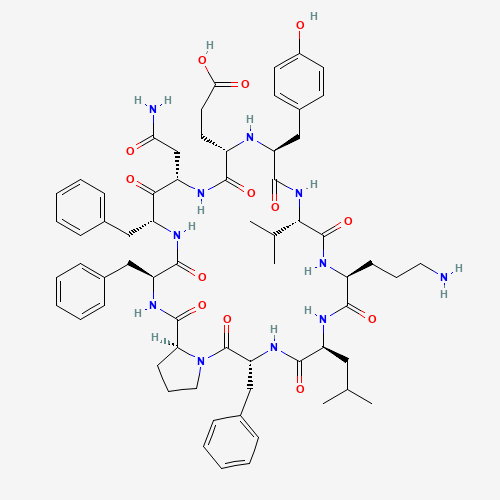
Tyrothricin
CAS number:1404-88-2 molecular formula:
overview
compound introduction
Specs
| Chinese alias | 酪丝菌素 | ||
| English alias | - | ||
| CAS number | 1404-88-2 | molecular formula | |
| molecular weight | - | Exact mass | ≥96% |
| PSA | - | logp | - |
numbering system
No numbering system information yet
physicochemical properties
No physical and chemical property information yet
Safety information
No safety information yet
Production methods and uses
No production method and use information yet
Related
upstream information
No upstream information yet
downstream information
No downstream information yet
MSDS
Found 0 shareMSDS