
Coumberone is a metabolic fluorogenic probe, and isoform-selective substrate for all AKR1C isoforms. Coumberone can be reduced by all four members of the AKR1C family to its fluorescent alcohol coumberol. Coumberone can be used for the research of AKR1C. In Vitro Coumberone (30 μM; 24 hours; HCT116 cells) is an AKR1C3 substrate and demonstrates maximal rates at ~10 μM. Coumberone (5 μM; 24 hours; COS-1 cells) can be used for the selective optical readout of each isoform, either AKR1C2 or AKR1C3. Coumberone (5 μM; 24 hours; IMR32 cells) enables real-time imaging of AKR1C induction. Coumberone (80 hours; IMR-32 cells) metabolism is indeed increased. Coumberone exhibits 10-fold greater catalytic efficiency for AKR1C3 than AKR1C2 in vitro. MCE has not independently confirmed the accuracy of these methods. They are for reference only. ImmunofluorescenceCell Line: IMR32 cells Concentration: 5 μM Incubation Time: 24 hours Result: Enabled real-time imaging of AKR1C induction. Form:Solid
All
Chemical Reagents
Biomedicine
Organic raw materials
Inorganic chemical industry
intermediate
Agricultural chemicals
Auxiliaries and catalysts
Fragrances and Flavors
Dyes and Pigments
Daily chemical industry
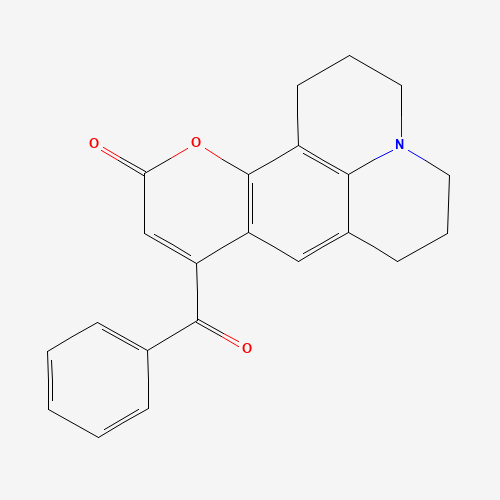
Coumberone
CAS number:878019-47-7 molecular formula:C22H19NO3
overview
compound introduction
Specs
| Chinese alias | 库伯罗内 | ||
| English alias | - | ||
| CAS number | 878019-47-7 | molecular formula | C22H19NO3 |
| molecular weight | 345.39 g/mol | Exact mass | ≥99% |
| PSA | - | logp | - |
numbering system
No numbering system information yet
physicochemical properties
No physical and chemical property information yet
Safety information
No safety information yet
Production methods and uses
No production method and use information yet
Related
upstream information
No upstream information yet
downstream information
No downstream information yet
MSDS
Found 0 shareMSDS