
compound introduction
4,4'-二溴联苯是一种多溴联苯。多溴联苯(PBBs)是一组209种合成有机化合物,在联苯上连接1-10个溴原子。它们可用作阻燃剂,并可添加到制造计算机显示器、电视机、纺织品和塑料泡沫等产品的塑料中,使其难以燃烧。然而,由于PBBs的毒性和环境持久性,其在大多数地区的使用被禁止或限制。(L628, L629)

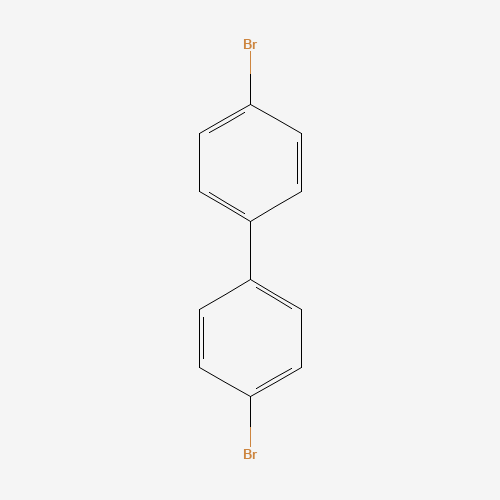
CAS number:92-86-4 molecular formula:C12H8Br2
4,4'-二溴联苯是一种多溴联苯。多溴联苯(PBBs)是一组209种合成有机化合物,在联苯上连接1-10个溴原子。它们可用作阻燃剂,并可添加到制造计算机显示器、电视机、纺织品和塑料泡沫等产品的塑料中,使其难以燃烧。然而,由于PBBs的毒性和环境持久性,其在大多数地区的使用被禁止或限制。(L628, L629)
| Chinese alias | - | ||
| English alias | p,p'-Dibromobiphenyl | ||
| CAS number | 92-86-4 | molecular formula | C12H8Br2 |
| molecular weight | 312.00 | Exact mass | - |
| PSA | - | logp | 5.7 |
| CAS | 92-86-4 |
| UNII | POU26V2XT2 |
| Wikidata | Q27286679 |
| ChEMBL ID | CHEMBL8166 |
| NSC Number | NSC Number: NSC2098 |
| PubChem CID | 7110 |
| Nikkaji Number | J79.439B |
| DSSTox Substance ID | DTXSID1059072 |
| 生态与环境部编号 | _25Q1B42EM |
| European Community (EC) Number | 202-198-6 |
| PubChem Reference Collection SID | 500739654 |
| XLogP3 | 5.7 |
| Polymers | 其他类别 -> 卤代多芳烃 |
| 复杂性 | 145 |
| 蒸气压 | 0.0000246 [mmHg] |
| Exact Mass | 311.89723 |
| 形式电荷 | 0 |
| 物理描述 | 白色粉末;[Alfa Aesar MSDS] |
| 重原子计数 | 14 |
| Molecular Weight | 312.00 |
| Monoisotopic Mass | 309.89928 |
| 可旋转键计数 | 1 |
| 氢键供体计数 | 0 |
| 氢键受体计数 | 0 |
| 共价键单元计数 | 1 |
| 同位素原子计数 | 0 |
| 拓扑极性表面积 | 0 Ų |
| Collision Cross Section | 147.8 Ų [M]+ [CCS Type: TIMS, Method: calibration with PAHs] |
| 定义键立体中心计数 | 0 |
| 定义原子立体中心计数 | 0 |
| 未定义键立体中心计数 | 0 |
| 未定义原子手性中心计数 | 0 |
No upstream information yet
No downstream information yet




