

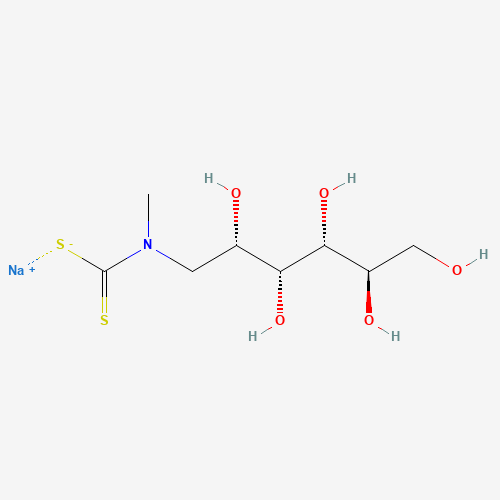
N-methyl-N-dithiocarboxyglucamine (MDCG) sodium mobilizes and promotes excretion of metallothionein-bound 109 Cd in mouse model. N-methyl-N-dithiocarboxyglucamine significantly lowers the Cd content of both the liver and kidney, which is organs most susceptible to Cd-induced toxicity. In Vivo N-methyl-N-dithiocarboxyglucamine (1.1 mM/kg; ip; single dose) could significantly induce the excretion of Cd from feces. Increasing the number of treatments to 7 times per week, N-methyl-N-dithiocarboxyglucamine results in a more than 50% reduction in systemic Cd load in mice . MCE has not independently confirmed the accuracy of these methods. They are for reference only. Form:Solid

All
Chemical Reagents
Biomedicine
Organic raw materials
Inorganic chemical industry
intermediate
Agricultural chemicals
Auxiliaries and catalysts
Fragrances and Flavors
Dyes and Pigments
Daily chemical industry
N-(Dithiocarbamoyl)-N-methyl-D-glucamine sodium salt Monohydrate
CAS number:91840-27-6 molecular formula:C8H16NO5S2Na·H2O
overview
compound introduction
Specs
| Chinese alias | - | ||
| English alias | N-Methyl-D-glucamine dithiocarbamate sodium salt Monohydrate | MGD . sodium salt . monohydrate | ||
| CAS number | 91840-27-6 | molecular formula | C8H16NO5S2Na·H2O |
| molecular weight | 311.30 g/mol | Exact mass | ≥98% |
| PSA | - | logp | - |
numbering system
No numbering system information yet
physicochemical properties
No physical and chemical property information yet
Safety information
No safety information yet
Production methods and uses
No production method and use information yet
Related
upstream information
No upstream information yet
downstream information
No downstream information yet
MSDS
Found 0 shareMSDS




