
PQCA is a highly selective and potent muscarinic M1 receptor positive allosteric modulator. PQCA has an EC 50 value of 49 nM and 135 nM on rhesus and human M1 receptor , respectively. PQCA is inactive for other muscarinic receptors. PQCA has potential to reduce the cognitive deficits associated with Alzheimer's disease In Vivo PQCA (3-30 mg/kg; oral administration; single- or pair-housed male rhesus monkeys) treatment attenuates the scopolamine deficits in PAL and CPT tasks. Blockade of muscarinic signaling by scopolamine produces significant impairments in both tasks . MCE has not independently confirmed the accuracy of these methods. They are for reference only. Animal Model: Ten single- or pair-housed male rhesus monkeys (6-10 years old; 5.2-10.5 kg) with scopolamine Dosage: 3 mg/kg, 10 mg/kg, or 30 mg/kg Administration: Oral administration Result: Attenuated the scopolamine deficits in paired-associates learning (PAL) and the continuous-performance task (CPT). Form:Solid IC50& Target:EC50: 49 nM (Rhesus M1 receptor) and 135 nM (Human M1 receptor)
All
Chemical Reagents
Biomedicine
Organic raw materials
Inorganic chemical industry
intermediate
Agricultural chemicals
Auxiliaries and catalysts
Fragrances and Flavors
Dyes and Pigments
Daily chemical industry
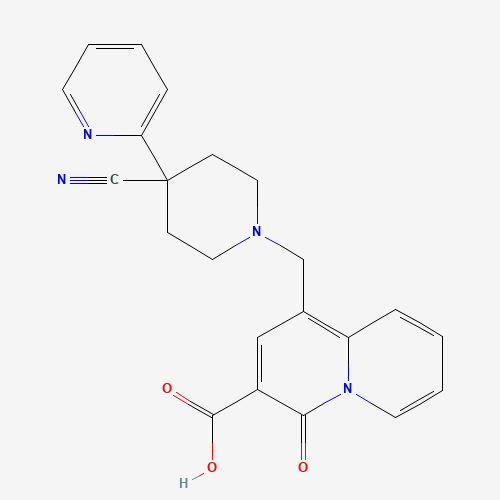
PQCA
CAS number:1144504-35-7 molecular formula:C22H20N4O3
overview
compound introduction
Specs
| Chinese alias | - | ||
| English alias | - | ||
| CAS number | 1144504-35-7 | molecular formula | C22H20N4O3 |
| molecular weight | 388.42 g/mol | Exact mass | - |
| PSA | 97.500 Ų | logp | -0.6 |
numbering system
No numbering system information yet
physicochemical properties
No physical and chemical property information yet
Safety information
No safety information yet
Production methods and uses
No production method and use information yet
Related
upstream information
No upstream information yet
downstream information
No downstream information yet
MSDS
Found 0 shareMSDS