

PTUPB is a potent and dual sEH and COX-2 enzymes inhibitor with IC 50 of 0.9 nM and 1.26 μM, respectively. In Vitro PTUPB (1-10 μM; 24 hours) shows an inhibitory activity against human 5-LOX, exhibits a 83% and 44% inhibition at 10 μM and 1 μM, respectively. PTUPB (10-20 μM; 72 hours) has minimal inhibitory effects on cell proliferation in multiple cancer cell lines, including human melanoma cell and a transformed endothelial cell, whereas it potently inhibits HUVEC proliferation after 3 days of application. PTUPB (10-20 μM; 72 hours) induces cell cycle arrest at the G0/1 phase at different various. The percentage of cell number of PTUPB are 65.15%, 66.87%,and 65.91% at 10 μM, 15 μM, and 20 μM, respectively. MCE has not independently confirmed the accuracy of these methods. They are for reference only. Cell Viability AssayCell Line: Multiple cancer cell lines: PC-3 cells, Met-1, H-1, A375, and transformed endothelial cell line (bEnd.3) Concentration: 10 μM, 15 μM, and 20 μM Incubation Time: 72 hours Result: Inhibited HUVEC proliferation after 3 days. Cell Cycle AnalysisCell Line: HUVECs Concentration: 10 μM, 15 μM, and 20 μM Incubation Time: 72 hours Result: Induced cell cycle arrest at the G0/1 phase. In Vivo PTUPB (subcutaneous injection; 30 mg/kg; 4 weeks) inhibits LLC tumor growth by 70-83% and exhibits with no overt toxicity, such as any weight loss when it is compared with the control group. After a period of treatment, the peak plasma concentration of PTUPB is high . PTUPB (subcutaneous injection; 5 mg/kg; once daily; 12 weeks) ameliorates high-fat diet-induced non-alcoholic fatty liver disease via inhibiting NLRP3 inflammasome activation. It reduces body weight, liver weight, liver triglyceride and cholesterol content. It also decreases the expression of lipolytic/lipogenic and lipid uptake related genes. MCE has not independently confirmed the accuracy of these methods. They are for reference only. Animal Model: C57BL/6 mice with LLC cells Dosage: 30 mg/kg; 4 weeks Administration: Subcutaneous injection via Alzet osmotic minipumps; once daily; 4 weeks Result: Inhibited LLC tumor growth and metastasis. Animal Model: High-fat diet (HFD)-induced obeseadult male C57BL/6 miceDosage: 5 mg/kg; 12 weeks Administration: Subcutaneous injection; once daily; 12 weeks Result: Arrested fibrotic progression and ameliorated high-fat diet-induced non-alcoholic fatty liver disease. Form:Solid
All
Chemical Reagents
Biomedicine
Organic raw materials
Inorganic chemical industry
intermediate
Agricultural chemicals
Auxiliaries and catalysts
Fragrances and Flavors
Dyes and Pigments
Daily chemical industry
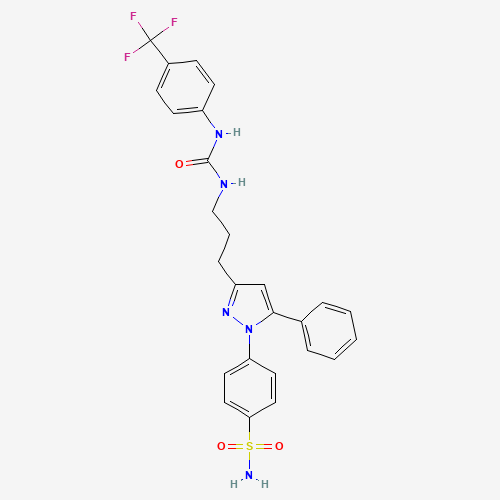
PTUPB
CAS number:1287761-01-6 molecular formula:C26H24F3N5O3S
overview
compound introduction
Specs
| Chinese alias | - | ||
| English alias | - | ||
| CAS number | 1287761-01-6 | molecular formula | C26H24F3N5O3S |
| molecular weight | 543.6 g/mol | Exact mass | ≥98% |
| PSA | 127.000 Ų | logp | 4.4 |
numbering system
No numbering system information yet
physicochemical properties
No physical and chemical property information yet
Safety information
No safety information yet
Production methods and uses
No production method and use information yet
Related
upstream information
No upstream information yet
downstream information
No downstream information yet
MSDS
Found 0 shareMSDS




