

K-7174 dihydrochloride is an orally active proteasome and GATA inhibitor. K-7174 dihydrochloride is a cell adhesion inhibitor. K-7174 dihydrochloride induces cell apoptosis. K-7174 dihydrochloride shows antitumor activities, it can be used for the research of cancer . In Vitro K-7174 dihydrochloride (10 μM; 1 h) inhibits the adhesion by VCAM-1 and its ligand. K-7174 dihydrochloride (1-30 μM; 1 h) dose-dependently suppresses the VCAM-1 expression with an IC 50 value of 14 μM. K-7174 dihydrochloride (1-30 μM; 1 h) dose-dependently suppresses the induction of VCAM-1 mRNA by TNFα with an IC 50 value of 9 μM. K-7174 dihydrochloride (10-20 μM; 24 h) dose-dependently rescues Epo production by Hep3B cells. K-7174 dihydrochloride (2.5-30 μM; 24 h) inhibits the binding activity of GATA. K-7174 dihydrochloride (0-25 μM; 72 h) inhibits MM cells growth and induces cell apoptosis. MCE has not independently confirmed the accuracy of these methods. They are for reference only. Cell Viability AssayCell Line: KMS12-BM, U266, and RPMI8226 cell lines Concentration: 0-25 μM Incubation Time: 72 h Result: Inhibited MM cells growth. Apoptosis AnalysisCell Line: KMS12-BM, U266, and RPMI8226 cell lines Concentration: 10 μM Incubation Time: 48 h Result: Significantly increased apoptosis of MM cells with the increasing percentage of annexin-V-positive cells. In Vivo K-7174 dihydrochloride (30 mg/kg; i.p. once daily for 9 days) reverses the decreasing of hemoglobin concentrations and reticulocyte counts by IL-1β or TNF-α. K-7174 dihydrochloride (75 mg/kg; i.p. once daily for 14 days) inhibits the tumor growth in vivo. K-7174 dihydrochloride (50 mg/kg; p.o. once daily for 14 days) inhibits the tumor growth in vivo and shows a better effect than intraperitoneal injection. MCE has not independently confirmed the accuracy of these methods. They are for reference only. Animal Model: ICR mice with IL-β or TNF-α injectionDosage: 30 mg/kg Administration: Intraperitoneal injection; 30 mg/kg once daily for 9 days Result: Increased erythropoietin (Epo) production, reticulocyte counts, and hemoglobin (Hb) concentrations. Animal Model: NOD/SCID mice with murine xenograftDosage: 75 mg/kg Administration: Intraperitoneal injection; once daily for 14 days Result: Significantly decreased tumor volume, but showed a significant body weight reduction after 10 days. Animal Model: NOD/SCID mice with murine xenograftDosage: 50 mg/kg Administration: Oral gavage; once daily for 14 days Result: Showed an anti-myeloma activity. Porved oral administration is more effective than intraperitoneal injection. Form:Solid
All
Chemical Reagents
Biomedicine
Organic raw materials
Inorganic chemical industry
intermediate
Agricultural chemicals
Auxiliaries and catalysts
Fragrances and Flavors
Dyes and Pigments
Daily chemical industry
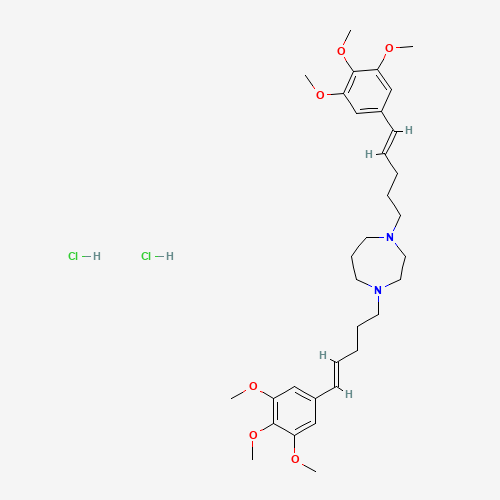
K-7174 dihydrochloride
CAS number:191089-60-8 molecular formula:C33H50Cl2N2O6
overview
compound introduction
Specs
| Chinese alias | K-7174 二盐酸盐 | ||
| English alias | - | ||
| CAS number | 191089-60-8 | molecular formula | C33H50Cl2N2O6 |
| molecular weight | 641.67 g/mol | Exact mass | ≥98% |
| PSA | 61.900 Ų | logp | - |
numbering system
No numbering system information yet
physicochemical properties
No physical and chemical property information yet
Safety information
No safety information yet
Production methods and uses
No production method and use information yet
Related
upstream information
No upstream information yet
downstream information
No downstream information yet
MSDS
Found 0 shareMSDS




