

CCG-100602 is a specific inhibitor of myocardin-related transcription factor A/serum response factor ( MRTF-A/SRF ) signaling. CCG-100602 specifically block MRTF-A nuclear localization and thus inhibit the fibrogenic transcription factor SRF. In Vitro CCG-100602 (3-30?μM) decreases the number of adherent hASC cells. ? CCG-100602 blocks the expression of MRTF-A/SRF-activated genes. ? CCG-100602 (5-40?μM) diminishes the TGF-β1 (5?ng/mL)-induced increase in COL1A1, FN1, and ACTA2 transcription in a dose-dependent manner. ? CCG-100602 (5-40?μM) reduces the TGF-β1-induced increase in MRTFA and SRF mRNA expression in the HIMFs in a dose-dependent manner. ? CCG-100602 (5-40?μM) significantly reduces the protein expression levels of the ECM and α-SMA in TGF-β1 (5?ng/mL)-stimulated cells in a dose-dependent manner. ? CCG-100602 (5-40?μM) also significantly represses the MRTF-A and SRF protein expression, which were induced by TGF-β1, in the nuclear fraction of the HIMFs in a dose-responsive manner. MCE has not independently confirmed the accuracy of these methods. They are for reference only. Cell Viability AssayCell Line: Human adipose stem cell (hASC) Concentration: 3, 8, 15, or 30 μM Incubation Time: 7 days Result: The number of adherent cells decreased as a response to increasing inhibitor amount. The effect was also dependent on the culture media because the osteogenic medium condition supported the viability over basic culture medium and adipogenic medium conditions. RT-PCRCell Line: Human intestinal myofibroblasts (HIMFs) Concentration: 5, 10, 20, and 40 μM Incubation Time: 30 min prior to the addition of TGF-β1 (5 ng/mL) for 24 hours Result: Diminished the TGF-β1-induced increase in COL1A1, FN1, and ACTA2 transcription in a dose-dependent manner. Reduced the TGF-β1-induced increase in MRTFA and SRF mRNA expression in the HIMFs in a dose-dependent manner. Western Blot AnalysisCell Line: Human intestinal myofibroblasts (HIMFs) Concentration: 5, 10, 20, and 40 μM Incubation Time: 30 min prior to the addition of TGF-β1 (5 ng/mL) for 48 hours Result: The protein expression levels of the ECM and α-SMA in TGF-β1-stimulated cells are significantly reduced. Repressed the MRTF-A and serum response factor (SRF) protein expression, which were induced by TGF-β1, in the nuclear fraction of the HIMFs. In Vivo Treatment with CCG-100602 (7.5 mg/kg/day, continuously administered for 2 weeks by osmotic minipumps) abrogates the increase of aortic stiffness represented by reduced arterial compliance and strain, indicating a significant anti-stiffening effect resulting from the inhibition of SRF/myocardin. MCE has not independently confirmed the accuracy of these methods. They are for reference only. Animal Model: Adult (4 month-old) male spontaneously hypertensive rats (SHR) and normotensive control Wistar-Kyoto (WKY) ratsDosage: 7.5 mg/kg/day Administration: Continuously administered for 2 weeks by osmotic minipumps. Result: Abrogated the increase of aortic stiffness represented by reduced arterial compliance and strain. Form:Solid
All
Chemical Reagents
Biomedicine
Organic raw materials
Inorganic chemical industry
intermediate
Agricultural chemicals
Auxiliaries and catalysts
Fragrances and Flavors
Dyes and Pigments
Daily chemical industry
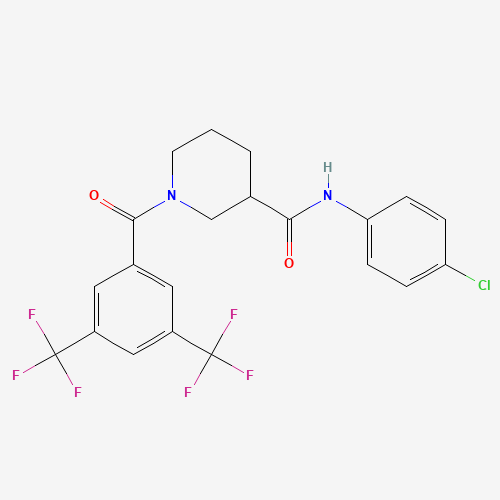
CCG-100602
CAS number:1207113-88-9 molecular formula:C21H17ClF6N2O2
overview
compound introduction
Specs
| Chinese alias | - | ||
| English alias | - | ||
| CAS number | 1207113-88-9 | molecular formula | C21H17ClF6N2O2 |
| molecular weight | 478.82 g/mol | Exact mass | ≥99% |
| PSA | 49.400 Ų | logp | 5.1 |
numbering system
No numbering system information yet
physicochemical properties
No physical and chemical property information yet
Safety information
No safety information yet
Production methods and uses
No production method and use information yet
Related
upstream information
No upstream information yet
downstream information
No downstream information yet
MSDS
Found 0 shareMSDS




