

LP-935509 is an orally active, potent, selective, ATP-competitive and brain-penetrant inhibitor of adaptor protein-2 associated kinase 1 (AAK1) with an IC 50 of 3.3 nM and a K i of 0.9 nM, respectively. LP-935509 is also a potent inhibitor of BIKE ( IC 50 =14 nM) and a modest inhibitor of GAK ( IC 50 =320 nM). LP-935509 shows antinociceptive activity. LP-935509 can be used for neuropathic pain and SARS-CoV-2 research In Vitro LP-935509 inhibits μ2 phosphorylation with an IC 50 value of 2.8 ± 0.4 nM, inhibits phosphorylation of a peptide derived from the μ2 protein with an IC 50 value of 3.3 ± 0.7 nM. LP-935509 exhibits a dose-dependent inhibition of the SARS-CoV-2 S-RBD internalization into host cells. MCE has not independently confirmed the accuracy of these methods. They are for reference only. In Vivo LP-935509 (0-60 mg/kg; PO, single) causes a robust reduction in pain behavior . LP-935509 (0.1-30 mg/kg; PO, single dosage) causes a dose-dependent reversal of thermal hyperalgesia in CCI model . LP-935509 (IV (1 mg/kg) or orally (10 mg/kg); once) has 100% oral bioavailability and a plasma half life of 3.6 hours . MCE has not independently confirmed the accuracy of these methods. They are for reference only. Animal Model: Male C57BL/6J mice (with SNL(spinal nerve ligation) injury, n=8-10 male mice per group) Dosage: 0, 10, 30 and 60 mg/kg (10 ml/kg) Administration: PO, single Result: Caused a dose-dependent reduction in phase II paw flinches that was significantly lower than the vehicle-treated animals; exhibited a dose-dependent reversal of the mechanical allodynia; Caused a robust reduction in pain behavior. Animal Model: Male Sprague-Dawley rats (CCI (chronic constriction injury)-operated rats) Dosage: 0, 0.1, 0.3, 1, 3, 10, or 30 mg/kg Administration: PO, two daily, for 5 days Result: Caused a dose-dependent reversal of thermal hyperalgesia, cold allodynia, mechanical allodynia, and mechanical hyperalgesia in CCI animals. Reversed the behavioral deficits, with ED 50 values ranging from 2 mg/kg to 10 mg/kg. Animal Model: Male Sprague-Dawley rats Dosage: 1 mg/kg (IV), 10 mg/kg (PO) Administration: IV, PO; once (Pharmacokinetic Analysis) Result: Had 100% oral bioavailability and a plasma half life of 3.6 hours; The Cmax for the 10 mg/kg oral dose was 5.2 µM at 0.5-hour postdose; had a plasma-free fraction of 2.6% in mice. Brain drug levels exceeded plasma drug levels with a brain/plasma drug ratio typically between 3 and 4, showing that LP-935509 was highly brain-penetrant. Form:Solid IC50& Target:IC50: 3.3 ± 0.7 nM (AAK1), 14 nM (BIKE), 320 ± 40 nM (GAK)
All
Chemical Reagents
Biomedicine
Organic raw materials
Inorganic chemical industry
intermediate
Agricultural chemicals
Auxiliaries and catalysts
Fragrances and Flavors
Dyes and Pigments
Daily chemical industry
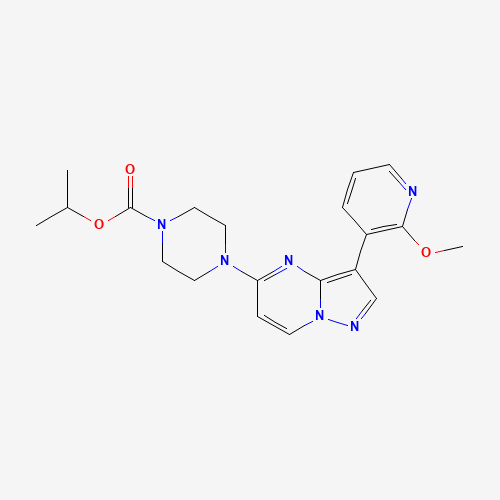
LP-935509
CAS number:1454555-29-3 molecular formula:C20H24N6O3
overview
compound introduction
Specs
| Chinese alias | - | ||
| English alias | - | ||
| CAS number | 1454555-29-3 | molecular formula | C20H24N6O3 |
| molecular weight | 396.44 g/mol | Exact mass | ≥99% |
| PSA | 85.100 Ų | logp | 2.100 |
numbering system
No numbering system information yet
physicochemical properties
No physical and chemical property information yet
Safety information
No safety information yet
Production methods and uses
No production method and use information yet
Related
upstream information
No upstream information yet
downstream information
No downstream information yet
MSDS
Found 0 shareMSDS




