
Q134R, a neuroprotective hydroxyquinoline derivative that suppresses nuclear factor of activated T cell (NFAT) signaling. Q134R can across blood-brain barrier. Q134R has the potential for Alzheimer's disease (AD) and aging-related disorders research. In Vitro Q134R (1-10 μM) suppresses NFAT signaling, without inhibiting calcineurin activity. Q134R partially inhibits NFAT activity in primary rat astrocytes, but does not prevent calcineurin-mediated dephosphorylation of a non-NFAT target, either in vivo, or in vitro. MCE has not independently confirmed the accuracy of these methods. They are for reference only. In Vivo Q134R (4 mg/kg; orally gavage; twice per day; for 7 days) treatment improves cognitive function in rodent models of AD‐like pathology . MCE has not independently confirmed the accuracy of these methods. They are for reference only. Animal Model: APP/PS1 mice (12-month-old) injected with oligomeric Aβ (oAβ) peptides Dosage: 4 mg/kg Administration: Orally gavage; twice per day; for 7 days Result: Led to improved Y maze performance. Form:Solid
All
Chemical Reagents
Biomedicine
Organic raw materials
Inorganic chemical industry
intermediate
Agricultural chemicals
Auxiliaries and catalysts
Fragrances and Flavors
Dyes and Pigments
Daily chemical industry
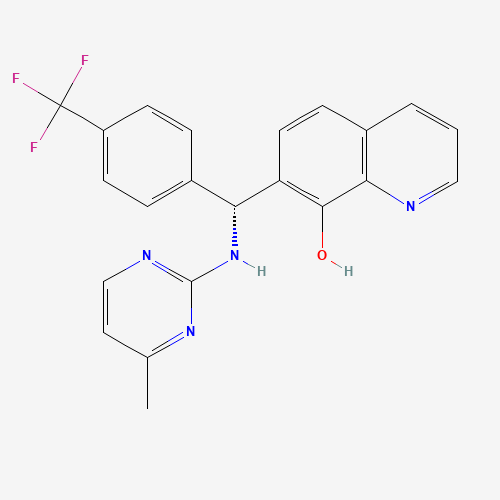
Q134R
CAS number:2022949-46-6 molecular formula:C22H17F3N4O
overview
compound introduction
Specs
| Chinese alias | - | ||
| English alias | - | ||
| CAS number | 2022949-46-6 | molecular formula | C22H17F3N4O |
| molecular weight | 410.39 g/mol | Exact mass | ≥99% |
| PSA | - | logp | - |
numbering system
No numbering system information yet
physicochemical properties
No physical and chemical property information yet
Safety information
No safety information yet
Production methods and uses
No production method and use information yet
Related
upstream information
No upstream information yet
downstream information
No downstream information yet
MSDS
Found 0 shareMSDS