

EDP-305 is an orally active, potent and selective farnesoid X receptor (FXR) agonist, with EC 50 values of 34 nM (chimeric FXR in CHO cells) and 8 nM (full-length FXR in HEK cells). EDP-305 shows a potent and consistent antifibrotic effect. EDP-305 can be used for primary biliary cholangitis (PBC) and non-alcoholic steatohepatitis (NASH) research In Vitro EDP‐305 (10 μM, 72 h) directly activates FXR in liver hepatoctyes but not stellate cells. EDP-305 (0-5 μM, 16 h) increases the expression of the FXR target gene, SHP, and downregulates CYP7A1 expression in HepaRG hepatocytes. MCE has not independently confirmed the accuracy of these methods. They are for reference only. Western Blot AnalysisCell Line: Hepatic stellate cell (HSC) lines, primary HSCs and hepatocytes Concentration: 10 μM Incubation Time: 72 h Result: Induced mRNA expression of SHP and FGF19 in human hepatocytes, and elicited no induction of downstream targets SHP or FGF15/19 in stellate lines. RT-PCRCell Line: HepaRG hepatocytes Concentration: 0.05, 0.1, 0.5, 1, 5, 10, 50, 100, 500, 1000, 5000 nM Incubation Time: 16 h Result: Dose-dependently increased the expression of the FXR target gene, SHP, and downregulated CYP7A1 expression in HepaRG hepatocytes. In Vivo EDP‐305 (0-30 mg/kg, Oral gavage, daily for 2 weeks) reduces serum markers of liver injury, and reduces liver fibrosis in a dose-dependent manner in BDL rats . EDP‐305 (0-30 mg/kg, Oral gavage, daily for 6 weeks) reduces liver fibrosis in a dose-dependent manner in CDAHFD mice . MCE has not independently confirmed the accuracy of these methods. They are for reference only. Animal Model: Male CD rats (underwent BDL, n=24, n=8 for each group) Dosage: 0, 10 and 30 mg/kg Administration: Oral gavage, daily, started on day 4 after BDL and continued until days 17-18 Result: Significantly reduced alanine aminotransferase and aspartate aminotransferase. Showed a dose-dependent reduction in CPA. Reduced hydroxyproline levels in whole liver tissue samples. Reduced messenger RNA (mRNA) relative quantification (RQ) for both Col1a1 and actin, alpha 2, smooth muscle, aorta (Acta2). Animal Model: Male C57BL/6 mice (n = 24, fed a CDAHFD consisting of 60% kcal fat and 0.1% methionine) Dosage: 0, 10 and 30 mg/kg Administration: Oral gavage, daily, started at the beginning of week 6 on the diet and were continued until week 12 Result: Reduced serum triglycerides, and significantly reduced hydroxyproline and MR liver signal intensity in a dose-dependent manner. Showed a dose‐dependent reduction in mRNA expression of lysyl oxidase genes Lox and Loxl1-4. Form:Solid IC50& Target:IC50: 8 ± 3 nM (Full-length FXR in HEK cells), 34 ± 8 nM (Chimeric FXR in CHO cells), >15000 nM (TGR5 in CHO cells)
All
Chemical Reagents
Biomedicine
Organic raw materials
Inorganic chemical industry
intermediate
Agricultural chemicals
Auxiliaries and catalysts
Fragrances and Flavors
Dyes and Pigments
Daily chemical industry
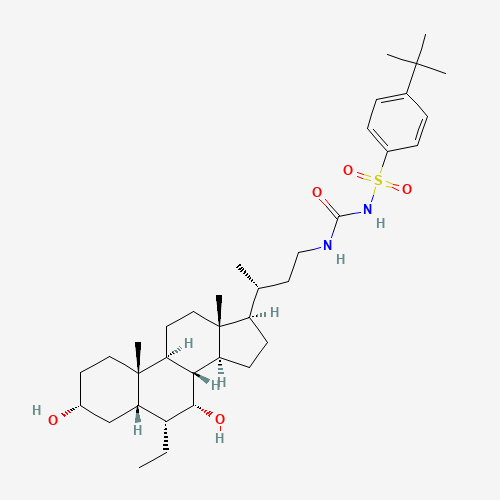
EDP-305
CAS number:1933507-63-1 molecular formula:C36H58N2O5S
overview
compound introduction
Specs
| Chinese alias | - | ||
| English alias | - | ||
| CAS number | 1933507-63-1 | molecular formula | C36H58N2O5S |
| molecular weight | 630.92 g/mol | Exact mass | ≥96% |
| PSA | - | logp | - |
numbering system
No numbering system information yet
physicochemical properties
No physical and chemical property information yet
Safety information
No safety information yet
Production methods and uses
No production method and use information yet
Related
upstream information
No upstream information yet
downstream information
No downstream information yet
MSDS
Found 0 shareMSDS




