

CU-CPT9b is a specific TLR8 antagonist, with an IC 50 of 0.7 nM. CU-CPT9b shows high binding affinity towards TLR8 with a K d of 21 nM In Vitro CU-CPT9b is a specific TLR8 antagonist, with an IC 50 of 0.7±0.2 nM. ITC experiments have confirmed the strong binding of CU-CPT9b with a K d of 21 nM. It is shown that CU-CPT-9b binds to the inactive TLR8 dimer in a similar way to CU-CPT8m. CU-CPT9b utilizes hydrogen bonds with G351 and V520*, which are conserved among TLR8/antagonist structures. Additionally, CU-CPT9b forms water-mediated contacts with S516* and Q519*, which are not observed in TLR8/CU-CPT8m structure, suggesting that the enhanced potency of CU-CPT9b derives from the new interactions with these polar residues. The orientation of Y567* also changes to facilitate van der Waals interactions with CU-CPT9b as compared to TLR8/CU-CPT8m. MCE has not independently confirmed the accuracy of these methods. They are for reference only. Form:Solid IC50& Target:TLR8 0.7 nM (IC 50 ) TLR8 21 nM (Kd)
All
Chemical Reagents
Biomedicine
Organic raw materials
Inorganic chemical industry
intermediate
Agricultural chemicals
Auxiliaries and catalysts
Fragrances and Flavors
Dyes and Pigments
Daily chemical industry
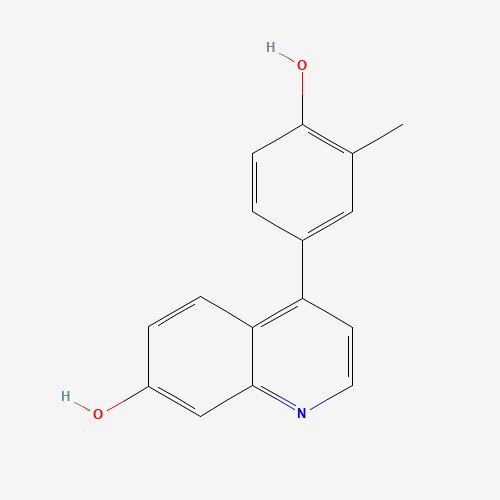
CU-CPT9b
CAS number:2162962-69-6 molecular formula:C16H13NO2
overview
compound introduction
Specs
| Chinese alias | - | ||
| English alias | - | ||
| CAS number | 2162962-69-6 | molecular formula | C16H13NO2 |
| molecular weight | 251.28 g/mol | Exact mass | ≥98% |
| PSA | 53.400 Ų | logp | 3.500 |
numbering system
No numbering system information yet
physicochemical properties
No physical and chemical property information yet
Safety information
No safety information yet
Production methods and uses
No production method and use information yet
Related
upstream information
No upstream information yet
downstream information
No downstream information yet
MSDS
Found 0 shareMSDS




