
SAR247799 (S1P1 agonist 3) is an oral activity, selective G-protein-biased sphingosine-1 phosphate receptor-1 (S1P1 ) agonist, with EC 50 s rang from 12.6 to 493 nM in S1P1-overexpressing cells and HUVECs. SAR247799 can be used for the research of endothelial protection, including type-2 diabetes, metabolic syndrome In Vitro SAR247799 (0, 0.003, 0.01, 0.03, 0.1, 0.3, 1, 3, 10 μM; 10 min) induces a concentration-dependent phosphorylation of extracellular-regulated kinase-1/2 (Erk1/2) and protein kinase B (Akt) in HUVECs. SAR247799 (0-10 μM, 8 min) induces impedance change in HUVECs in a dose-dependent manner. SAR247799 (1 μM, 1st) does not cause desensitization demonstrated by Ca 2+ flux assay in S1P1-Chinese hamster ovary (CHO) cells. MCE has not independently confirmed the accuracy of these methods. They are for reference only. In Vivo SAR247799 (1 and 3 mg/kg; p.o.; 1 h before renal occlusion) dose dependently reduces the severity of ischemia/reperfusion (I/R)–induced acute kidney injury . SAR247799 (0.3, 1, 3 mg/kg; i.v.) dose dependently increases the coronary conductance ratio in pig model of coronary endothelial dysfunction . SAR247799 (30-min intravenous administration; 8- to 10-week-old farm pig) exposure (C max and AUC) increases with dose in pigs. Pharmacokinetic parameters : Dose (mg/kg) N C max (g/mL) T max (h) T last (h) AUC 0-last (g.h/mL) Cl (L/h/kg) Vss (L/kg) T 1/2z (h) 1 4 2.08 (8) 0.5 [0.5] [8-48] 11.8 (46) 0.113 (75) 0.516 (11) 5.62 (57) 3 7 8.10 (12) 0.5 [0.5] [24-72] 42.2 (23) 0.0754 (30) 0.446 (16) 6.21 (28) 10 3 36.7 (5) 0.5 [0.5-0.75] 72 294 (13) 0.0343 (13) 0.338 (7) 7.73 (8) 30 6 112 (27) 0.5 [0.5- 1.0] [48-72] 908 (16) 0.0338 (18) 0.294 (11) 7.35 (11) Mean values with (CV%) except T max , which is expressed as median value with [range] and Tlast as [range]. C max , maximum concentration. T max , time at which maximum concentration achieved. T last , last time point sampled. AUC 0-last , area under curve from 0 to last time point. Cl, clearance. Vss, volume at steady state or volume of distribution. T 1/2z , elimination half-life. N, number of animals. MCE has not independently confirmed the accuracy of these methods. They are for reference only. Animal Model: Acute kidney injury rats (12 to 15-week-old Fischer rats) Dosage: 1 and 3 mg/kg Administration: P.o.; administered 1 hour before renal occlusion. Result: Inhibited the increase in serum creatinine (89 and 96% at 1 and 3 mg/kg) and urea (61 and 85% at 1 and 3 mg/kg). Protected renal proximal tubules against necrosis and blunted the development of interstitial hemorrhage. Animal Model: Acute kidney injury rats (8- to 12-week-old Fischer rats) Dosage: 3 mg/kg Administration: P.o.; twice a day for 7 days and twice a day for 7 day Result: Showed a dosedependent trend for reducing macrophage. Form:Solid IC50& Target:S1PR1 12.6-493 nM (EC 50 )
All
Chemical Reagents
Biomedicine
Organic raw materials
Inorganic chemical industry
intermediate
Agricultural chemicals
Auxiliaries and catalysts
Fragrances and Flavors
Dyes and Pigments
Daily chemical industry
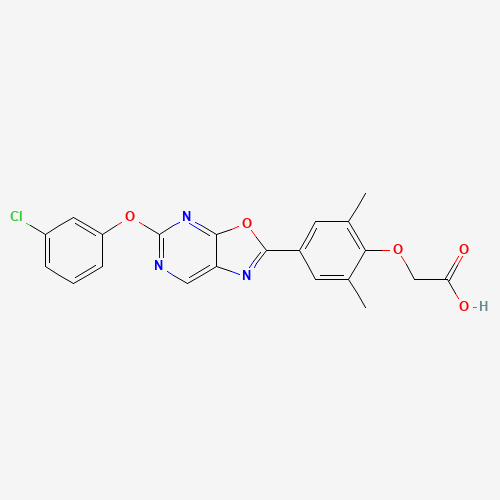
SAR247799
CAS number:1315311-14-8 molecular formula:C21H16ClN3O5
overview
compound introduction
Specs
| Chinese alias | - | ||
| English alias | - | ||
| CAS number | 1315311-14-8 | molecular formula | C21H16ClN3O5 |
| molecular weight | 425.82 g/mol | Exact mass | ≥97% |
| PSA | - | logp | - |
numbering system
No numbering system information yet
physicochemical properties
No physical and chemical property information yet
Safety information
No safety information yet
Production methods and uses
No production method and use information yet
Related
upstream information
No upstream information yet
downstream information
No downstream information yet
MSDS
Found 0 shareMSDS