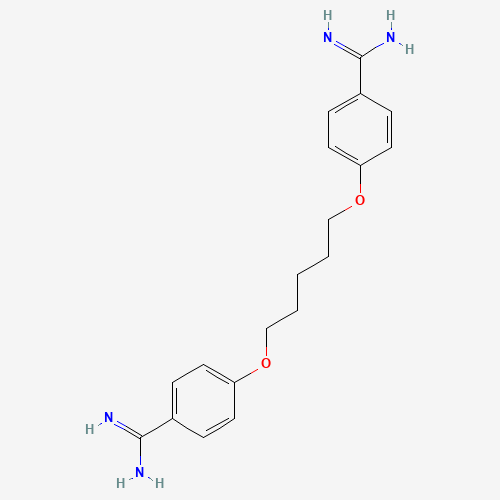
Hepatotoxicity:
Likelihood score: D (possible rare cause of clinically apparent liver injury).
Adverse Effects:
* Inhaled form - bronchospasm, wheezing, and cough
Cleanup Methods:
Spill Control. Manage hazardous drug spills according to the established, written policies and procedures for each workplace. Be aware that the size of the spill might determine who is authorized to conduct the cleanup and decontamination and how the cleanup is managed. Assure that the written policies and procedures address the protective equipment required for various spill sizes, the possible spreading of material, restricted access to hazardous drug spills, and signs to be posted. Assure that cleanup of a large spill is handled by workers who are trained in handling hazardous materials [29 CFR 1910.120]. Locate spill kits and other cleanup materials in the immediate area where exposures may occur. /Hazardous drugs/
Exposure Routes:
Absorbed poorly through the gastrointestinal tract and is usually administered parenterally.
Disposal Methods:
SRP: The most favorable course of action is to use an alternative chemical product with less inherent propensity for occupational exposure or environmental contamination. Recycle any unused portion of the material for its approved use or return it to the manufacturer or supplier. Ultimate disposal of the chemical must consider: the material's impact on air quality; potential migration in soil or water; effects on animal, aquatic, and plant life; and conformance with environmental and public health regulations.
FDA Requirements:
The Approved Drug Products with Therapeutic Equivalence Evaluations List identifies currently marketed prescription drug products, incl pentamidine isethionate, approved on the basis of safety and effectiveness by FDA under sections 505 of the Federal Food, Drug, and Cosmetic Act. /Pentamidine Isethionate/
Toxicity Summary:
The mode of action of pentamidine is not fully understood. It is thought that the drug interferes with nuclear metabolism producing inhibition of the synthesis of DNA, RNA, phospholipids, and proteins.
Signs and Symptoms:
Symptoms of overdose include pain, nausea, anorexia, hypotension, fever, rash, bad taste in mouth, confusion/hallucinations, dizziness, and diarrhea.
Medical Surveillance:
Employers should ensure that health care workers who are exposed to hazardous drugs are routinely monitored as part of a medical surveillance program. This includes workers who directly handle hazardous drugs such as nurses, pharmacists, and pharmacy technicians. In addition, other workers (e.g., nurses' aides, laundry workers) who may come directly into contact with patient wastes within 48 hours after a patient has received a hazardous drug should be included in a medical surveillance program. ... The elements of a medical surveillance program for hazardous drugs should include (at a minimum): Reproductive and general health questionnaires completed at the time of hire and periodically thereafter. Laboratory work, including complete blood count and urinalysis completed at the time of...
Carcinogen Classification:
No indication of carcinogenicity to humans (not listed by IARC).
Drug Induced Liver Injury:
References: DOI:10.1016/j.drudis.2019.09.022
Non-Human Toxicity Values:
LD50 Mouse IV 15 mg/kg
Populations at Special Risk:
Pentamidine isethionate should be used with caution in patients with hypertension, hypotension, ventricular tachycardia, hypoglycemia, hyperglycemia, hypocalcemia, pancreatitis, leukopenia, thrombocytopenia, anemia, hepatic or renal dysfunction and Stevens-Johnson syndrome. /Pentamidine isethionate/
Hazard Classes and Categories:
STOT SE 3 (100%)
Antidote and Emergency Treatment:
/SRP:/ Advanced treatment: Consider orotracheal or nasotracheal intubation for airway control in the patient who is unconscious, has severe pulmonary edema, or is in severe respiratory distress. Positive-pressure ventilation techniques with a bag valve mask device may be beneficial. Consider drug therapy for pulmonary edema ... . Consider administering a beta agonist such as albuterol for severe bronchospasm ... . Monitor cardiac rhythm and treat arrhythmias as necessary ... . Start IV administration of D5W /SRP: "To keep open", minimal flow rate/. Use 0.9% saline (NS) or lactated Ringer's if signs of hypovolemia are present. For hypotension with signs of hypovolemia, administer fluid cautiously. Watch for signs of fluid overload ... . Treat seizures with diazepam or lorazepam ... . Use...
Personal Protective Equipment (PPE):
... Some clinicians suggest that use of gowns, gloves, goggles, and masks by health-care personnel be considered, although the level of protection provided is not known. ... Use of surgical masks by health-care personnel caring for pentamidine-treated patients probably is unlikely to provide an effective means for reducing environmental exposure to the drug; therefore, if a face mask is used, alternative, appropriately designed (e.g., for adequate particle-size filtration) and well-fitted face masks (e.g., 3M Company model 9970 or 9920) should be employed since they are more likely to substantially reduce respiratory exposure levels.
Skin, Eye, and Respiratory Irritations:
Adverse effects ... include eye irritation (e.g., conjunctivitis); perioral and perinasal paresthesia; ... burning sensation of the eyes, nose, and throat; sinus irritation; ... nasal stuffiness; ... shortness of breath; ... acute bronchospasm ...