

Crocetin (Transcrocetin) disodium, extracted from saffron ( Crocus sativus L.), acts as an NMDA receptor antagonist with high affinity. In Vitro Crocetin (Transcrocetin, trans-Crocetin) disodium, a saffron metabolite originating from the crocin apocarotenoids, has been shown to exert strong NMDA receptor affinity and is thought to be responsible for the CNS activity of saffron.To ensure unchanged viability of Caco-2 cells throughout the transport experiments, cellular mitochondrial dehydrogenase activity of Caco-2 cells is measured by MTT assay after a 24 h incubation period with the test compounds: Hydroalcoholic saffron extract saffron extract (SE, 0.5-1 mg/mL) and crocin-1 (250-1000 µM) reveal no negative significant changes in cellular viability. Crocetin disodium at 10 µM level does not change viability while higher concentrations (40-160 µM) reduces significantly cellular viability. MCE has not independently confirmed the accuracy of these methods. They are for reference only. Form:Solid IC50& Target:NMDA Receptor
All
Chemical Reagents
Biomedicine
Organic raw materials
Inorganic chemical industry
intermediate
Agricultural chemicals
Auxiliaries and catalysts
Fragrances and Flavors
Dyes and Pigments
Daily chemical industry
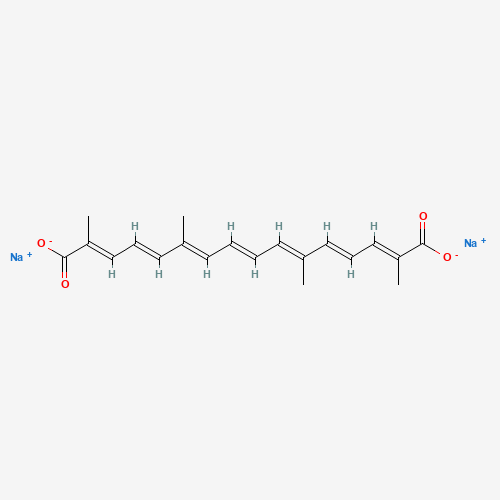
Crocetin disodium
CAS number:591230-99-8 molecular formula:C20H22Na2O4
overview
compound introduction
Specs
| Chinese alias | 藏红花酸二钠 | ||
| English alias | - | ||
| CAS number | 591230-99-8 | molecular formula | C20H22Na2O4 |
| molecular weight | 372.37 g/mol | Exact mass | ≥95% |
| PSA | 80.300 Ų | logp | - |
numbering system
No numbering system information yet
physicochemical properties
No physical and chemical property information yet
Safety information
No safety information yet
Production methods and uses
No production method and use information yet
Related
upstream information
No upstream information yet
downstream information
No downstream information yet
MSDS
Found 0 shareMSDS




