All
Chemical Reagents
Biomedicine
Organic raw materials
Inorganic chemical industry
intermediate
Agricultural chemicals
Auxiliaries and catalysts
Fragrances and Flavors
Dyes and Pigments
Daily chemical industry

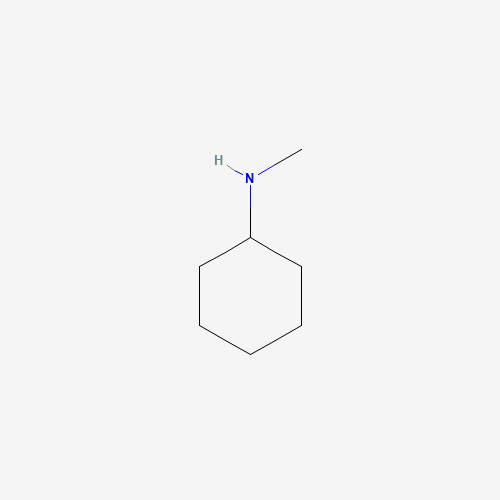
N-methylcyclohexanamine

Dangerous Goods

CAS number:100-60-7    molecular formula:C7H15N

overview

compound introduction

物理描述 | 甲基环己胺为水白色液体。微溶于水,浮于水面。对皮肤和眼睛有强烈刺激性。腐蚀性。用作溶剂。

Specs

Chinese aliasN-甲基环己胺 | N-环己基甲胺 | N-甲环己胺
English aliasFT-0631525 | MFCD00003832 | Q23775590 | 2-cyclohexyl-methylamine | N-Cyclohexylmethylamine | N-Cyclohexyl-N-methylamine | STL183276 | AKOS000119082 | Methylcyclohexylamine | Z102766892 | N-methyl-N-cyclo-hexylamine | N-methyl-N-cyclohexyl-amine | N-Metyhc
CAS number100-60-7molecular formulaC7H15N
molecular weight113.20Exact mass≥99%
PSA12logp1.6

numbering system

CAS100-60-7
UNIIYH8PF4C1OW
ChEBI ID59018
WikidataQ23775590
UN Number2924
NSC NumberNSC Number: NSC434
PubChem CID7514
MetaboLightsMTBLC59018
Nikkaji NumberJ23.469I
DSSTox Substance IDDTXSID3059216
Metabolomics Workbench ID60349
European Community (EC) Number202-869-3
PubChem Reference Collection SID500807233
MEP ID_25Q1B3AQQ

physicochemical properties

XLogP3XLogP3-AA: 1.6
Complexity55.4
Exact Mass113.120449483
Formal Charge0
Heavy Atom Count8
Molecular Weight113.20
Monoisotopic Mass113.120449483
Isotope Atom Count0
Physical DescriptionMethyl cyclohexylamine appears as a water-white liquid. Slightly soluble in water and floats on water. A strong irritant to skin and eyes. Corrosive. Used as a solvent.
Rotatable Bond Count1
Dissociation Constantsiupacpka
Kovats Retention IndexSemi-standard non-polar: 934
Hydrogen Bond Donor Count1
Covalently-Bonded Unit Count1
Hydrogen Bond Acceptor Count1
Topological Polar Surface Area12 Ų
Defined Atom Stereocenter Count0
Defined Bond Stereocenter Count0
Undefined Atom Stereocenter Count0
Undefined Bond Stereocenter Count0

Safety information

DOT Label:
Flammable Liquid Corrosive
First Aid:
Refer to the "General First Aid" section. Specific First Aid: For corrosives, in case of contact, immediately flush skin or eyes with running water for at least 30 minutes. Additional flushing may be required. In case of burns, immediately cool affected skin for as long as possible with cold water. Do not remove clothing if adhering to skin. (ERG, 2024)
Fire Hazards:
Flammable/combustible material. May be ignited by heat, sparks or flames. Vapors may form explosive mixtures with air. Vapors may travel to source of ignition and flash back. Most vapors are heavier than air. They will spread along the ground and collect in low or confined areas (sewers, basements, tanks, etc.). Vapor explosion hazard indoors, outdoors or in sewers. Those substances designated with a (P) may polymerize explosively when heated or involved in a fire. Runoff to sewer may create fire or explosion hazard. Containers may explode when heated. Many liquids will float on water. (ERG, 2024)
Fire Fighting:
FIRE INVOLVING TANKS, RAIL TANK CARS OR HIGHWAY TANKS: Fight fire from maximum distance or use unmanned master stream devices or monitor nozzles. Cool containers with flooding quantities of water until well after fire is out. Withdraw immediately in case of rising sound from venting safety devices or discoloration of tank. ALWAYS stay away from tanks in direct contact with flames. For massive fire, use unmanned master stream devices or monitor nozzles; if this is impossible, withdraw from area and let fire burn. (ERG, 2024)
Health Hazards:
May cause toxic effects if inhaled or ingested. Contact with substance may cause severe burns to skin and eyes. Fire will produce irritating, corrosive and/or toxic gases. Vapors may cause dizziness or asphyxiation, especially when in closed or confined areas. Runoff from fire control or dilution water may cause environmental contamination. (ERG, 2024)
Reactive Group:
Amines, Phosphines, and Pyridines
Reactivity Alerts:
Highly Flammable
Reactivity Profile:
METHYL CYCLOHEXYLAMINE neutralizes acids in exothermic reactions to form salts plus water. May be incompatible with isocyanates, halogenated organics, peroxides, phenols (acidic), epoxides, anhydrides, and acid halides. Flammable gaseous hydrogen may be generated in combination with strong reducing agents, such as hydrides.
Nonfire Spill Response:
LARGE SPILL: Dike far ahead of liquid spill for later disposal. Water spray may reduce vapor, but may not prevent ignition in closed spaces. (ERG, 2024)
Regulatory Information:
New Zealand EPA Inventory of Chemical Status: Cyclohexyl(methyl)amine: Does not have an individual approval but may be used under an appropriate group standard
Air and Water Reactions:
Flammable. Slightly soluble in water.
Isolation and Evacuation:
FIRE: If tank, rail tank car or highway tank is involved in a fire, ISOLATE for 800 meters (1/2 mile) in all directions; also, consider initial evacuation for 800 meters (1/2 mile) in all directions. (ERG, 2024)
Hazard Classes and Categories:
Aquatic Chronic 3 (78.4%)
Personal Protective Equipment (PPE):
Wear positive pressure self-contained breathing apparatus (SCBA). Wear chemical protective clothing that is specifically recommended by the manufacturer when there is NO RISK OF FIRE. Structural firefighters' protective clothing provides thermal protection but only limited chemical protection. (ERG, 2024)
EPA Provisional Peer-Reviewed Toxicity Values:
PPRTV Assessment: PDF Document

Production methods and uses

No production method and use information yet

Related

upstream information

No upstream information yet

downstream information

No downstream information yet

MSDS

Found 1 shareMSDS
100-60-7 | N-Methylcyclohexylamine.pdf