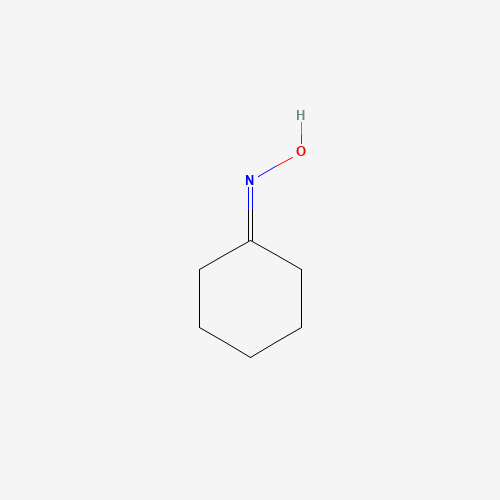
First Aid:
INGESTION: DO NOT INDUCE VOMITING. If the victim is conscious and not convulsing, give 1 or 2 glasses of water to dilute the chemical and IMMEDIATELY call a hospital or poison control center. Be prepared to transport the victim to a hospital if advised by a physician. If the victim is convulsing or unconscious, do not give anything by mouth, ensure that the victim's airway is open and lay the victim on his/her side with the head lower than the body. DO NOT INDUCE VOMITING. IMMEDIATELY transport the victim to a hospital. (NTP, 1992)
Fire Hazards:
Flash point data for this chemical are not available; however, it is probably combustible. (NTP, 1992)
Fire Fighting:
Fires involving this material can be controlled with a dry chemical, carbon dioxide or Halon extinguisher. (NTP, 1992)
Health Hazards:
ACUTE/CHRONIC HAZARDS: When heated to decomposition this compound emits toxic fumes of nitrogen oxides. (NTP, 1992)
Adverse Effects:
Methemoglobinemia - The presence of increased methemoglobin in the blood; the compound is classified as secondary toxic effect
Hazards Summary:
Mixtures of cyclohexanone and oxime (varying ratios) produced anesthesia, conjunctivitis, and increased aggression in oral studies of rats; Emergency treatment: Methemoglobinemia; May peroxidize; [CAMEO] Increased methemoglobin levels observed in dermal lethal-dose study or rabbits; Progressive anemia with increased splenic hemosiderin deposition and hematopoiesis observed in 90-day gavage study of rats; No changes in sperm motility or vaginal cytological parameters seen; Limited evidence of mutagenicity in vitro and no evidence in vivo; A major metabolite, cyclohexanone (CAS # 108-94-1), caused reduced fetal body weight and increased frequency of retardation of ossification at levels maternally toxic in inhalation study of rats (LOAEL for maternal and developmental toxicity both...
Reactivity Alerts:
Peroxidizable Compound
Reactivity Profile:
CYCLOHEXANONE OXIME reacts violently with fuming sulfuric acid at temperatures > 302 °F. (NTP, 1992). Several explosions or violent decompositions have occurred during distillation of aldoximes, which may be attributable to the formation of peroxides of various types. This is especially the case in the presence of acid, Chem. Eng. News, 1974, 52(35), 3. A nickel catalyzed aldoxime rearrangement to an amide, went out of control after changing the solvent employed, J. Loss Prev., 1993, 6(2), 69.
TSCA Test Submissions:
UNREVIEWED | Cyclohexanone oxime was examined for mutagenic activity in Salmonella typhimurium tester strains TA98, TA100, TA1535, TA1537 and TA1538 in the presence and absence of metabolic activation provided by rat liver S9 fraction. The method used to induce liver enzyme activities was not reported. The test article was not mutagenic in the plate incorporation assay at concentrations of 5 to 5000 ug/plate with or without activation. The investigators observed toxicity at the high dose level, but did not report the degree of toxicity or in which strain(s) it was observed.
Nonfire Spill Response:
STORAGE PRECAUTIONS: You should store this material under ambient temperatures. (NTP, 1992)
Regulatory Information:
New Zealand EPA Inventory of Chemical Status: Cyclohexanone oxime: Does not have an individual approval but may be used under an appropriate group standard
Air and Water Reactions:
Insoluble in water.
Isolation and Evacuation:
FIRE: If tank, rail tank car or highway tank is involved in a fire, ISOLATE for 800 meters (1/2 mile) in all directions; also, consider initial evacuation for 800 meters (1/2 mile) in all directions. (ERG, 2024)
Other Safety Information:
Chemical Assessment: IMAP assessments - Cyclohexanone, oxime: Human health tier I assessment
Non-Human Toxicity Excerpts:
ACUTE TOXIC EFFECTS OF CYCLOHEXANONE & OXIME & MIXTURES OF BOTH IN DIFFERENT RATIOS WERE TESTED BY ORAL PROBING IN RATS. THE ANESTHETIC EFFECT, CONJUNCTIVITIS & INCREASED AGGRESSIONS WERE PARTICULARLY STRIKING.
Hazard Classes and Categories:
Aquatic Chronic 3 (15.3%)
Personal Protective Equipment (PPE):
RECOMMENDED RESPIRATOR: Where the neat test chemical is weighed and diluted, wear a NIOSH-approved half face respirator equipped with an organic vapor/acid gas cartridge (specific for organic vapors, HCl, acid gas and SO2) with a dust/mist filter. (NTP, 1992)