

Information CBL0137 HCl CBL0137 (CBLC137, Curaxin 137) HCl activates p53 and inhibits NF-kB with EC50s of 0.37 μM and 0.47 μM in the cell-based p53 and NF-kB reporter assays, respectively. It also inhibits histone chaperone FACT (facilitates chromatin transcription complex). Targets FACT ; p53 (Cell-free assay); NF-κB (Cell-free assay) ; 0.37 μM(EC50); 0.47 μM(EC50) In vitro CBL0137 is a potent inducer of apoptosis in pancreatic cancer cell lines and is toxic not only for proliferating bulk tumor cells, but also for pancreatic cancer stem cells. CBL0137 and related molecules can simultaneously activate p53 and inhibit cellular stress pathways mediated by NF-κB and HSF-1. CBL0137 binds DNA but does not cause any sort of chemical modifications in DNA and therefore lacks genotoxicity. However, CBL0137 binding to DNA leads to functional inactivation of the Facilitates Chromatin Transcription (FACT) complex, a chromatin remodeling complex involved in transcription, replication, and DNA repair. In CBL0137-treated cells, FACT is lost from the nucleoplasm and trapped in chromatin, resulting in the inhibition of FACT-dependent transcription, including NF-kB-mediated transcription. Additionally, chromatin trapping of FACT leads to casein kinase 2 (CK2)-dependent phosphorylation and activation of p53. In vivo In mice, CBL0137 is effective against several Pancreatic ductal adenocarcinoma (PDA) models, including orthotopic gemcitabine resistant PANC-1 model and patient derived xenografts, in which CBL0137 anti-tumor effect correlated with overexpression of FACT. CBL0137 targets glioblastoma (GBM) according to its proposed mechanism of action, crosses the blood-brain barrier, and is efficacious in both TMZ-responsive and -resistant orthotopic models. The property of crossing the blood-brain barrier, especially when administered i.v, bodes well for the potential of this drug to treat CNS tumors. In orthotopic models, i.v. administration leads to greater tumor tissue accumulation than oral dosing, leading to greater bioavailability. Normal brain tissue accumulation of CBL0137 does not cause observable neurotoxicity. Cell Research(from reference) Cell lines:tumor (HT1080, RCC45, MiaPaca) and normal cells (Wi38, NKE-hTERT) Concentrations:2 μM Incubation Time:24 h
All
Chemical Reagents
Biomedicine
Organic raw materials
Inorganic chemical industry
intermediate
Agricultural chemicals
Auxiliaries and catalysts
Fragrances and Flavors
Dyes and Pigments
Daily chemical industry
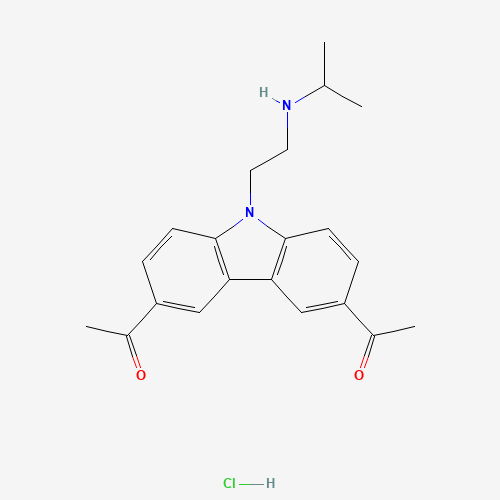
CBL0137 HCl
CAS number:1197397-89-9 molecular formula:C21H24N2O2 • HCl
overview
compound introduction
Specs
| Chinese alias | - | ||
| English alias | 1,1'-(9-(2-(Isopropylamino)ethyl)-9H-carbazole-3,6-diyl)diethanone hydrochloride | CBL0137(CBL-0137) | Q27278110 | s8483 | 1,1'-(9-(2-(Isopropylamino)ethyl)-9H-carbazole-3,6-diyl)bis(ethan-1-one) hydrochloride | CCG-268335 | 1,1'-(9-(2-((1-Methylethyl)imi | ||
| CAS number | 1197397-89-9 | molecular formula | C21H24N2O2 • HCl |
| molecular weight | 372.9 g/mol | Exact mass | ≥99% |
| PSA | 51.100 Ų | logp | - |
numbering system
No numbering system information yet
physicochemical properties
No physical and chemical property information yet
Safety information
No safety information yet
Production methods and uses
No production method and use information yet
Related
upstream information
No upstream information yet
downstream information
No downstream information yet
MSDS
Found 0 shareMSDS




