

细菌病原体需要保守的膜组氨酸传感器激酶(QseC)来检测宿主来源的肾上腺素能信号和细菌自身诱导物3(AI-3),从而激活诱导毒力基因表达的信号级联反应。LED209是一种有效的QseC抑制剂,在体外5 pM时可阻断去甲肾上腺素和肾上腺素触发的QseC依赖性毒力基因的表达。虽然LED209抑制肠出血性大肠杆菌,鼠伤寒沙门氏菌和土拉弗朗西斯菌的毒力,但它不抑制病原体的生长,这是抗菌剂防止药物耐药性的高度理想的功能。 Bacterial pathogens require the conserved membrane histidine sensor kinase (QseC) to detect both host-derived adrenergic signals and the bacterial autoinducer-3 (AI-3), thus activating a signaling cascade that induces virulence gene expression. LED209 is a potent QseC inhibitor that blocks both norepinephrine- and epinephrine-triggered QseC-dependent virulence gene expression at 5 pM in vitro. While LED209 inhibits virulence of enterohemorrhagic E. coli, S. typhimurium, and F. tularensis, it does not inhibit pathogen growth, a highly desirable feature of antimicrobial agents to prevent drug resistance.
All
Chemical Reagents
Biomedicine
Organic raw materials
Inorganic chemical industry
intermediate
Agricultural chemicals
Auxiliaries and catalysts
Fragrances and Flavors
Dyes and Pigments
Daily chemical industry
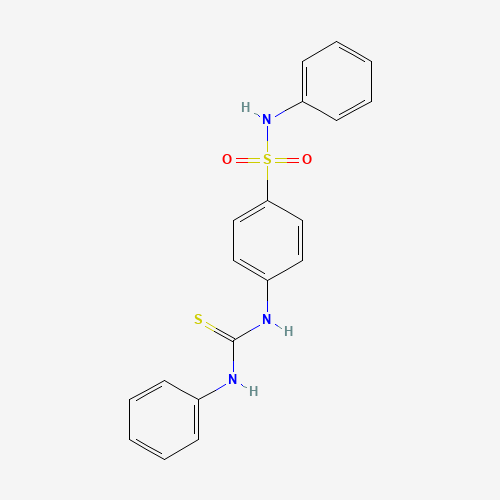
LED209
CAS number:245342-14-7 molecular formula:C19H17N3O2S2
overview
compound introduction
Specs
| Chinese alias | - | ||
| English alias | LED-209;LED 209 | AC-35928 | SCHEMBL3396831 | C74263 | Benzenesulphonamide, N-phenyl-4-(((phenylamino)thioxomethyl)amino)- | FT-0717959 | BS-16236 | 1-phenyl-3-[4-(phenylsulfamoyl)phenyl]thiourea | 1-Phenyl-3-(4-(phenylsulfamoyl)phenyl)thiourea | LED209 | | ||
| CAS number | 245342-14-7 | molecular formula | C19H17N3O2S2 |
| molecular weight | 383.49 g/mol | Exact mass | - |
| PSA | 111.000 Ų | logp | 3.700 |
numbering system
No numbering system information yet
physicochemical properties
No physical and chemical property information yet
Safety information
No safety information yet
Production methods and uses
No production method and use information yet
Related
upstream information
No upstream information yet
downstream information
No downstream information yet
MSDS
Found 0 shareMSDS




