
BCECF, AM是一种可以穿透细胞膜检测细胞内pH的荧光染料。BCECF, AM没有荧光,进入细胞后可以被细胞内的酯酶剪切形成BCECF,从而被滞留在细胞内。BCECF在适当的pH值情况下可以被激发形成绿色荧光。最大激发波长和发射波长因pH的不同而有所不同,最大激发波长在503nm左右,最大发射波长在520nm左右,实际检测时推荐使用的激发波长为488nm,发射波长为535nm。 BCECF, AM不仅被广泛用于哺乳动物细胞的研究,也有报道用于动物组织、植物细胞、细菌和酵母等的细胞内pH水平检测。在有细胞内pH变化的细胞毒性、细胞凋亡、细胞粘附、药物抵抗、细胞趋化等过程中BCECF, AM被广泛应用。 用于细胞内pH检测时,常用的BCECF, AM的浓度为1~10μM。 BCECF-AM 是一种细胞膜穿透的荧光指示剂,可以测量细胞内的 pH 值。 操作说明(for Human Neutrophil) (1)试剂 1 mM的BCECF, AM/DMSO HEPES 缓冲液(20 mM HEPES, 153 mM NaCl, 5 mM KCl, 5 mM glucose, pH 7.4) (2)操作 ①. 用HEPES制备细胞悬液,细胞浓度为4×10⁷个/mL。 ②. 将1mM的BCECF, AM/DMSO溶液加入细胞悬液中(细胞悬液的1/300体积),BCECF, AM终浓度为3µM。 ③. 在37 ºC培养30分钟。 ④. 用HEPES缓冲液清洗细胞3次,制成3×10⁶个/mL的细胞悬液。 ⑤. 使用荧光显微镜或带有图像分析系统的激光共聚显微镜检测细胞的荧光强度。 *标记的条件因细胞种类而异,在每次实验前,请先确定最佳条件。以上方法仅供参考。 注意事项 1)BCECF, AM可能对人体有害,请注意适当防护。 2)荧光染料均存在淬灭问题,请尽量注意避光,以减缓荧光淬灭。 3)为了您的安全和健康,请穿实验服并戴一次性手套操作。 BCECF, AM is a fluorescent dye that can penetrate the cell membrane to detect intracellular pH. BCECF and AM have no fluorescence. After entering the cell, they can be cleaved by the intracellular esterase to form BCECF, thereby being retained in the cell. BCECF can be excited to form green fluorescence under proper pH. The maximum excitation wavelength and emission wavelength are different due to different pH. The maximum excitation wavelength is around 503nm, and the maximum emission wavelength is around 520nm. The recommended excitation wavelength for actual detection is 488nm and emission wavelength is 535nm. BCECF and AM are not only widely used in the research of mammalian cells, but also reported to be used in the detection of intracellular pH levels in animal tissues, plant cells, bacteria and yeast. BCECF and AM are widely used in processes such as cytotoxicity, apoptosis, cell adhesion, drug resistance, and cell chemotaxis with changes in intracellular pH. When used for intracellular pH detection, the commonly used concentration of BCECF and AM is 1~10μM. BCECF-AM is a cell membrane permeable compound widely used as a fluorescent indicator for intracellular pH. Operating Instructions (for Human Neutrophil) (1) Reagent 1 mM BCECF, AM/DMSO HEPES buffer (20 mM HEPES, 153 mM NaCl, 5 mM KCl, 5 mM glucose, pH 7.4) (2) Operation ①. Prepare cell suspension with HEPES, the cell concentration is 4×10⁷ cells/mL. ②. Add 1mM BCECF, AM/DMSO solution to the cell suspension (1/300 volume of the cell suspension), the final concentration of BCECF, AM is 3μM. ③. Incubate at 37 ºC for 30 minutes. ④. Wash the cells 3 times with HEPES buffer to make a cell suspension of 3×10⁶ cells/mL. ⑤. Use a fluorescence microscope or a laser copolymerization microscope with an image analysis system to detect the fluorescence intensity of the cells. *The labeling conditions vary depending on the cell type. Before each experiment, please determine the best conditions. The above method is for reference only. Precautions 1) BCECF, AM may be harmful to human body, please pay attention to proper protection. 2) Fluorescent dyes have quenching problems, please try to avoid light to slow down fluorescence quenching. 3) For your safety and health, please wear lab coats and disposable gloves for operation.
All
Chemical Reagents
Biomedicine
Organic raw materials
Inorganic chemical industry
intermediate
Agricultural chemicals
Auxiliaries and catalysts
Fragrances and Flavors
Dyes and Pigments
Daily chemical industry
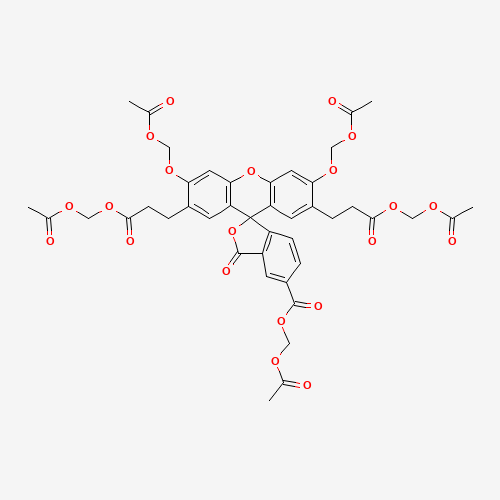
BCECF-AM
Dangerous GoodsCAS number:117464-70-7 molecular formula:C39H36O19
overview
compound introduction
Specs
| Chinese alias | 2',7'-二-(2-羧乙基)-5(6)-羧基荧光素乙酰甲酯 | ||
| English alias | BCECF-acetoxymethyl | acetyloxymethyl 3',6'-bis(acetyloxymethoxy)-2',7'-bis[3-(acetyloxymethoxy)-3-oxopropyl]-3-oxospiro[2-benzofuran-1,9'-xanthene]-5-carboxylate | Spiro[isobenzofuran-1(3H),9'-[9H]xanthene]-2',7'-dipropanoic acid | BCECF-AM | 2',7'-bis-( | ||
| CAS number | 117464-70-7 | molecular formula | C39H36O19 |
| molecular weight | 808.69 g/mol | Exact mass | ≥90%(HPLC) |
| PSA | 264.000 Ų | logp | 4.000 |
numbering system
No numbering system information yet
physicochemical properties
No physical and chemical property information yet
Safety information
WGK Germany:
1
Production methods and uses
No production method and use information yet
Related
upstream information
No upstream information yet
downstream information
No downstream information yet
MSDS
Found 0 shareMSDS