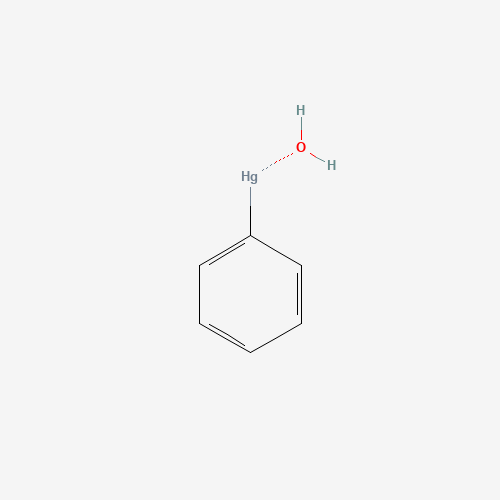
First Aid:
ERG2024, Guide 151 (Phenylmercuric hydroxide): In Canada, an Emergency Response Assistance Plan (ERAP) may be required for this product. Please consult the shipping paper and/or the "ERAP" section.
Fire Hazards:
ERG2024, Guide 151 (Phenylmercuric hydroxide): · Runoff may pollute waterways.
Fire Fighting:
FIRE INVOLVING TANKS, RAIL TANK CARS OR HIGHWAY TANKS: Fight fire from maximum distance or use unmanned master stream devices or monitor nozzles. Do not get water inside containers. Cool containers with flooding quantities of water until well after fire is out. Withdraw immediately in case of rising sound from venting safety devices or discoloration of tank. ALWAYS stay away from tanks in direct contact with flames. For massive fire, use unmanned master stream devices or monitor nozzles; if this is impossible, withdraw from area and let fire burn. (ERG, 2024)
Health Hazards:
ERG2024, Guide 151 (Phenylmercuric hydroxide): · Runoff from fire control or dilution water may be corrosive and/or toxic and cause environmental contamination.
Reactive Group:
Organometallics
Adverse Effects:
Dermatotoxin - Skin burns.
Hazards Summary:
Causes burns; [eChemPortal: ESIS] May be fatal by inhalation, skin absorption, or ingestion; May cause irritation; Targets nerves; [MSDSonline] See Mercury, aryl compounds and linked occupational diseases.
DOT ID and Guide:
1894 151
Reactivity Profile:
Bases or alkalis are chemically similar to sodium hydroxide (NaOH) or sodium oxide (Na2O). They neutralize acids exothermically to form salts plus water. When soluble in water they give solutions having a pH greater than 7.0. Mixing these materials with water can generate troublesome amounts of heat as the base is dissolved or diluted. Bases react with certain metals (such as aluminum and zinc) to form oxides or hydroxides of the metal and generate gaseous hydrogen. Bases may initiate polymerization reactions in polymerizable organic compounds, especially epoxides). They may generate flammable and/or toxic gases with ammonium salts, nitrides, halogenated organics, various metals, peroxides, and hydroperoxides. Materials of this group often serve as catalysts.
Nonfire Spill Response:
Do not touch damaged containers or spilled material unless wearing appropriate protective clothing. Stop leak if you can do it without risk. Prevent entry into waterways, sewers, basements or confined areas. Cover with plastic sheet to prevent spreading. Absorb or cover with dry earth, sand or other non-combustible material and transfer to containers. DO NOT GET WATER INSIDE CONTAINERS. For solids, prevent dust cloud and avoid inhalation of dust. (ERG, 2024)
Regulatory Information:
New Zealand EPA Inventory of Chemical Status: Phenylmercury hydroxide: HSNO Approval: HSR004634 Approved with controls
Air and Water Reactions:
Slightly soluble in water.
Isolation and Evacuation:
Evacuation: ERG2024, Guide 151 (Phenylmercuric hydroxide): · If tank, rail tank car or highway tank is involved in a fire, ISOLATE for 800 meters (1/2 mile) in all directions; also, consider initial evacuation for 800 meters (1/2 mile) in all directions.
DOT Hazard Classification:
Placard/Label(s)
Accidental Release Measures:
Spill or Leak: ERG2024, Guide 151 (Phenylmercuric hydroxide): · For solids, prevent dust cloud and avoid inhalation of dust.
Threshold Limit Values (TLV):
0.1 [mg/m3], as Hg
Hazard Classes and Categories:
Aquatic Chronic 1
Permissible Exposure Limit (PEL):
0.1 [mg/m3], as Hg
Personal Protective Equipment (PPE):
Wear positive pressure self-contained breathing apparatus (SCBA). Wear chemical protective clothing that is specifically recommended by the manufacturer when there is NO RISK OF FIRE. Structural firefighters' protective clothing provides thermal protection but only limited chemical protection. (ERG, 2024)
Emergency Response Planning Guidelines:
Emergency Response: ERG2024, Guide 151 (Phenylmercuric hydroxide): · For massive fire, use unmanned master stream devices or monitor nozzles; if this is impossible, withdraw from area and let fire burn.
Exposure Control and Personal Protection:
Protective Clothing: ERG2024, Guide 151 (Phenylmercuric hydroxide): · Structural firefighters' protective clothing provides thermal protection but only limited chemical protection.
Immediately Dangerous to Life or Health (IDLH):
10.0 [mg/m3], as Hg