

compound introduction
All
Chemical Reagents
Biomedicine
Organic raw materials
Inorganic chemical industry
intermediate
Agricultural chemicals
Auxiliaries and catalysts
Fragrances and Flavors
Dyes and Pigments
Daily chemical industry
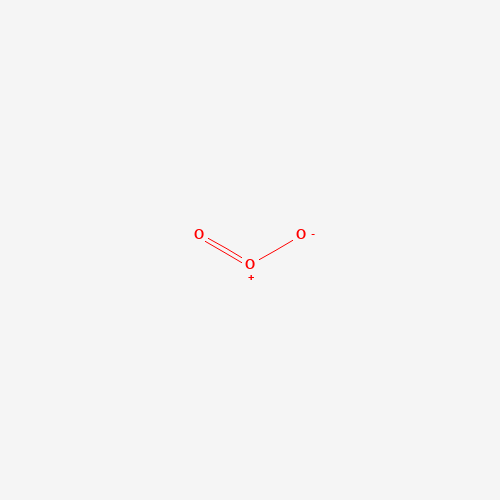
Ozone
CAS number:10028-15-6 molecular formula:O3
overview
Specs
| Chinese alias | - | ||
| English alias | Atmosphericozone; Healozone; Oxygen, mol. (O3); Ozone (O3); Ozone(16O16O16O); Triatomicoxygen | ||
| CAS number | 10028-15-6 | molecular formula | O3 |
| molecular weight | 47.9982 | Exact mass | - |
| PSA | - | logp | - |
numbering system
| CAS | 10028-15-6 |
| UNII | 66H7ZZK23N |
| ChEBI ID | 25812 |
| Wikidata | Q36933 |
| ChEMBL ID | CHEMBL2447938 |
| UN Number | 1955 |
| Wikipedia | Ozone |
| AIDS Number | 003384 |
| DrugBank ID | DB12510 |
| ICSC Number | 0068 |
| PubChem CID | 24823 |
| RTECS Number | RS8225000 |
| Deprecated CAS | 855426-80-1 |
| Nikkaji Number | J2.505.688D |
| Pharos Ligand ID | 6297 |
| DSSTox Substance ID | DTXSID0021098 |
| European Community (EC) Number | 233-069-2 |
| PubChem Reference Collection SID | 481107432 |
| MEP ID | _26F0RK2XX |
physicochemical properties
| XLogP3 | XLogP3-AA: -1.7 |
| Density | 1.66(relative gas density) |
| Complexity | 4.8 |
| Exact Mass | 47.984743858 |
| Pesticides | Active substance -> EU Pesticides database: Pending |
| Solubility | (32 °F): 0.001% |
| Boiling Point | -169 °F |
| Formal Charge | 0 |
| Melting Point | -315 °F |
| Vapor Density | 1.66 |
| Food Additives | ANTIMICROBIAL AGENT -> FDA Substance added to food |
| Odor Threshold | Odor threshold from AIHA |
| Vapor Pressure | >1 atm |
| Chemical Classes | Reactive agents - 3rd degree |
| Heavy Atom Count | 3 |
| Molecular Weight | 47.998 |
| Refractive Index | INDEX OF REFRACTION: 1.2226 (LIQ) |
| Monoisotopic Mass | 47.984743858 |
| Isotope Atom Count | 0 |
| Ionization Potential | 12.52 eV |
| Physical Description | Colorless to blue gas with a very pungent odor. |
| Rotatable Bond Count | 0 |
| Stability/Shelf Life | Liquefiable at -12 °C. |
| Hydrogen Bond Donor Count | 0 |
| Covalently-Bonded Unit Count | 1 |
| Hydrogen Bond Acceptor Count | 2 |
| Other Experimental Properties | An allotropic form of oxygen |
| Topological Polar Surface Area | 41.1 Ų |
| Defined Atom Stereocenter Count | 0 |
| Defined Bond Stereocenter Count | 0 |
| Undefined Atom Stereocenter Count | 0 |
| Undefined Bond Stereocenter Count | 0 |
Safety information
DOT Label:
Poison Gas
First Aid:
Breathing: Fresh air; 100% O2
Treatment:
EYES: Hold eye open and rinse slowly and gently with water for 15-20 minutes. Remove contact lenses, if present, after the first 5 minutes, then continue rinsing eye. Call a poison control center or doctor for treatment advice. INHALATION: Move person to fresh air. If person is not breathing, call 911 or an ambulance, then give artificial respiration, preferably by mouth-to-mouth if possible. Call a poison control center or doctor for further treatment advice.
Fire Hazards:
Not combustible but enhances combustion of other substances. Many reactions may cause fire or explosion. Risk of fire and explosion on contact with combustible substances.
Safe Storage:
Fireproof if in building. Separated from all substances. Cool.
Fire Fighting:
In case of fire in the surroundings, use appropriate extinguishing media. Combat fire from a sheltered position.
Target Organs:
Eyes, respiratory system
Toxicity Data:
0.1 to 1 umol/mol will cause acute toxic effects. 40 nmol/mol will cause long term lung problems. Pulmonary edema developed in welders who had a severe acute exposure to an estimated 9 ppm ozone plus other air pollutants.
Eye Prevention:
Wear face shield or eye protection in combination with breathing protection.
Fire Potential:
Dangerous fire ... risk in contact with organic materials.
Health Effects:
At acute levels, ozone is an irritant and lachrymator. At chronically low doses (~40 nmol/mol) there is a great deal of evidence to show that ground level ozone can harm lung function and irritate the respiratory system. Long-term exposure to ozone and the pollutants that produce it is linked to premature death, asthma, bronchitis, heart attacks and other cardiopulmonary problems. Long-term exposure to ozone has been shown to increase risk of death from respiratory illness. An 18-year study on 450,000 people in the US revealed that those living in cities with high ozone levels such as Houston or Los Angeles had an over 30% increased risk of dying from lung disease. Both acute and chronic exposures to ozone can negatively impact the barrier function of the lung, and these exposures can i...
Health Hazards:
Ozone is highly toxic via inhalation or by contact of liquid to skin, eyes, or mucous membranes. It is capable of causing acute to chronic lung damage, burns, and death or permanent injury. Ozone can be toxic at a concentration of 100 ppm for 1 minute. Ozone is capable of causing death from pulmonary edema. It increases sensitivity of the lungs to bronchoconstrictors and allergens, increases susceptibility to and severity of lung bacterial and viral infections. (EPA, 1998)
Reactive Group:
Oxidizing Agents, Strong
Adverse Effects:
ACGIH Carcinogen - Not Classifiable.
Exposure Routes:
Inhalation
Fire Prevention:
NO open flames, NO sparks and NO smoking. NO contact with combustible substances. Closed system, ventilation, explosion-proof electrical equipment and lighting.
Hazards Summary:
Like phosgene and nitrogen dioxide, ozone is classified as less soluble relative to more soluble irritant inhalants like ammonia and chlorine. The less soluble vapors are more likely to cause potentially fatal pulmonary edema without the signs of severe upper respiratory injury. (See Comments for phosgene.) [LaDou, p. 564] Ozone is fibrogenic to the lungs in the context of an acute inhalation exposure complicated by bronchiolitis obliterans.
Inhalation Risk:
A harmful concentration of this gas in the air will be reached very quickly on loss of containment.
Skin Prevention:
Cold-insulating gloves.
Disposal Methods:
In the fume hood, wastes to be slowly released to air.
Flammable Limits:
Flammability: Nonflammable Gas, but a powerful oxidizer.
Physical Dangers:
The gas is heavier than air.
Toxicity Summary:
Ozone is a strong oxidant and reacts directly with organic double bonds. When ozone breaks down to dioxygen it gives rise to oxygen free radicals, which are highly reactive and capable of damaging many organic molecules. Moreover, it is believed that the powerful oxidizing properties of ozone may be a contributing factor of inflammation. When inhaled, ozone reacts with compounds lining the lungs to form specific, cholesterol-derived metabolites that are thought to facilitate the build-up and pathogenesis of atherosclerotic plaques. These metabolites have been confirmed as naturally occurring in human atherosclerotic arteries and are categorized into a class of secosterols termed atheronals, generated by ozonolysis of cholesterol's double bond to form a 5,6 secosterol. Ozone has also bee...
Reactivity Alerts:
Strong Oxidizing Agent
Spillage Disposal:
Evacuate danger area! Consult an expert! Personal protection: chemical protection suit including self-contained breathing apparatus. Ventilation.
Environmental Fate:
REACTION BETWEEN ATOMIC OXYGEN & MOL OXYGEN RESULTS IN FORMATION OF OZONE, THE PRINCIPAL OXIDIZING AGENT OF PHOTOCHEMICAL SMOG. FURTHER REACTIONS INVOLVE OZONE & REACTIVE HYDROCARBONS (OLEFINS) TO PRODUCE MANY PRODUCTS, NATURE OF WHICH IS NOT YET FULLY KNOWN.
First Aid Measures:
Eye First Aid: First rinse with plenty of water for several minutes (remove contact lenses if easily possible), then refer for medical attention.
Minimum Risk Level:
Susceptible people can be adversely affected by ozone levels as low as 40 nmol/mol. In the EU, the current target value for ozone concentrations is 120 µg/m³ which is about 60 nmol/mol. In the US the recommended EPA standard is 75 nmol/mol.
Reactivity Profile:
OZONE is a propellant; ignites upon contact with alcohols, amines, ammonia, beryllium alkyls, boranes, dicyanogen, hydrazines, hydrocarbons, hydrogen, nitroalkanes, powdered metals, silanes, or thiols [Bretherick 1979. p.174]. Aniline in a atmosphere of ozone produces a white galatinous explosive ozobenzene [Mellor 1:911. 1946-47]. A mixture of ether and ozone forms aldehyde and acetic acid and a heavy liquid, ethyl peroxide, an explosive [Mellor 1:911. 1946-47]. Severe explosions occur attempting to form tribromic octaoxide from bromine and ozone [Mellor 2, Supp. 1:748. 1956]. Mixtures of ozone and dinitrogen pentaoxide are flammable or explosive [Mellor 8, Supp. 2:276. 1967]. Ozone and ethylene react explosively [Berichte 38:3837]. Nitrogen dioxide and ozone react with the evolution o...
Signs and Symptoms:
Exposure of 0.1 to 1 μmol/mol produces headaches, burning eyes and irritation to the respiratory passages. Exposure to 10 ppm ozone will cause pulmonary edema. Low doses act as a depressant and will induce sleep in certain individuals.
Storage Conditions:
Store in well-ventilated, cool, dark places. Detached storage is preferred. Avoid storage near combustible materials.
Exposure Prevention:
STRICT HYGIENE!
Preventive Measures:
SRP: The scientific literature for the use of contact lenses in industry is conflicting. The benefit or detrimental effects of wearing contact lenses depend not only upon the substance, but also on factors including the form of the substance, characteristics and duration of the exposure, the uses of other eye protection equipment, and the hygiene of the lenses. However, there may be individual substances whose irritating or corrosive properties are such that the wearing of contact lenses would be harmful to the eye. In those specific cases, contact lenses should not be worn. In any event, the usual eye protection equipment should be worn even when contact lenses are in place.
RAIS Toxicity Values:
Inhalation Acute Reference Concentration Reference: CALEPA
Inhalation Prevention:
Use ventilation, local exhaust or breathing protection.
Nonfire Spill Response:
Isolate area and deny entry. Stay upwind; keep out of low areas. Ventilate closed spaces before entering them. Workers handling liquid ozone should wear protective equipment designed for exposure to cryogenic liquid. (EPA, 1998)
Air and Water Reactions:
No rapid reaction with air. No rapid reaction with water.
ICSC Environmental Data:
This substance may be hazardous to the environment. Special attention should be given to plants.
Isolation and Evacuation:
FIRE: If tank, rail tank car or highway tank is involved in a fire, ISOLATE for 800 meters (1/2 mile) in all directions; also, consider initial evacuation for 800 meters (1/2 mile) in all directions. (ERG, 2024)
Carcinogen Classification:
No indication of carcinogenicity (not listed by IARC) (L135). Tests in mice found no carcinogenic effect (A15094).
Natural Pollution Sources:
FOUND IN ATMOSPHERE IN VARYING PROPORTIONS (ABOUT 0.05 PPM @ SEA LEVEL), SINCE IT IS PRODUCED CONTINUOUSLY INTHE OUTER LAYERS OF THE ATMOSPHERE BY THE ACTION OF SOLAR UV RADIATION ON THE OXYGEN OF THE AIR.
Highly Hazardous Substance:
OSHA Highly Hazardous Chemicals, Toxics and Reactives: Note: Ozone in quantities at or above above 100lb presents a potential for a catastrophic event as a toxic or reactive highly hazardous chemical.
Respirator Recommendations:
Important additional information about respirator selection
Populations at Special Risk:
Preclude from exposure those personnel with pulmonary diseases.
Artificial Pollution Sources:
Simultaneous, high resolution measurements of ozone (O3), NO, CO, dew point temp, and UV flux obtained during the NASA Global Tropospheric Experiment Chemical Instrumentation Test and Evaluation (GTE/CITE l) spring 1984 airborne field exercise over the eastern North Pacific Ocean were analyzed. The mid tropospheric O3 mixing ratio averaged about 48 + or - 15 parts per billion by volume (ppbv). Statistical analysis of the high resolution data indicates the existence of two O3 sources: one related to the downward transport of ozone- rich air from the upper troposphere and stratosphere and the other to the transport of O3-rich air from the continents.
Threshold Limit Values (TLV):
TLV-TWA (Time Weighted Average): Heavy work: 0.05 ppm (0.10 mg/m³), Moderate work: 0.08 ppm (0.16 mg/m³), Light work: 0.10 ppm (0.20 mg/m³) [1995]
Effects of Long Term Exposure:
Repeated or prolonged inhalation of the gas may cause effects on the lungs.
Hazard Classes and Categories:
Reactive agents - 3rd degree
Effects of Short Term Exposure:
The substance is irritating to the eyes and respiratory tract. The substance may cause effects on the central nervous system. This may result in impaired vigilance and performance. Inhalation of the gas may cause lung oedema. The effects may be delayed. The liquid may cause frostbite.
Antidote and Emergency Treatment:
Treatment is supportive, similar to that for smoke inhalation and chlorine
Permissible Exposure Limit (PEL):
TWA 0.1 ppm (0.2 mg/m3) See Appendix G
Protective Action Criteria (PAC):
PAC-3: 5.0 [ppm]
Recommended Exposure Limit (REL):
C 0.1 ppm (0.2 mg/m3)
Critical Temperature and Pressure:
CRITICAL TEMP: -12.1 °C; CRITICAL PRESSURE: 53.8 ATM
Environmental Abiotic Degradation:
Measurements from the eastern north Pacific stratocumulus regime have been used to study components of the regional ozone budget. The surface destruction rate was determined by eddy correlation of ozone and vertical velocity measured during 8 flights of a low flying aircraft. Significant variability (2580 to 6460 s/m) was found in the measured surface resistance; it was partially correlated with friction velocity but appears to have other controlling influences as well. The mean resistance was 4190 + or - 840 s/m, which is higher (slower destruction) than most previous estimates for seawater. Flux and mean measurements throughout the marine boundary layer were used to estimate the net rate of in situ photochemical production/destruction of ozone. Averaged over the flights, ozone concn w...
Probable Routes of Human Exposure:
... FOUND ... AROUND SOURCES OF X-RAYS AND UV RAYS, ELECTRIC ARCS (WELDING AND SPECTROGRAPHIC EQUIPMENT, FOR EXAMPLE), MERCURY VAPOR LAMPS, ULTRA-BILLION-VOLT LINEAR ACCELERATORS AND ELECTRICAL DISCHARGES IN GENERAL.
Occupational Exposure Limits (OEL):
MAK (Maximale Arbeitsplatz Konzentration): carcinogen category: 3
Skin, Eye, and Respiratory Irritations:
Gas irritates the upper respiratory system strongly.
Hazardous Reactivities and Incompatibilities:
/Other/ incompatabilities: Alkenes, aromatic compounds, rubber, dicyanogen, dinitrogen tetroxide, 4-hydroxy-4-methyl-1,6-heptadiene, nitrogen trichloride, stibine, tetrafluorohydrazine.
Immediately Dangerous to Life or Health (IDLH):
See: 10028156
Production methods and uses
Production method
IN THE LAB OZONE IS PREPD BY PASSING DRY AIR BETWEEN TWO PLATE ELECTRODES CONNECTED TO AN ALTERNATING CURRENT SOURCE OF SEVERAL THOUSAND VOLTS. THE REACTION IS REVERSIBLE, & AFTER A LITTLE OZONE HAS BEEN PRODUCED IT IS DECR AT THE SAME RATE AS IT IS GENERATED. OBTAINED IN PURE FORM BY COOLING OZONIZED AIR TO -180 °C WHEN IT SEPARATES AS A DARK BLUE LIQ.
purpose
Uses:
Produced by white blood cells, generated by lightning, photocopiers and UV light. Used as an industrial chemical in the preparation of pharmaceuticals, synthetic lubricants. Used for bleaching and as a disinfectant.
Industry Uses:
Oxidizing agent
General Manufacturing Information:
Industry Processing Sectors: Other (requires additional information)
Related
upstream information
Methods of Manufacturing:
OZONE (CID:24823); silver difluoride (CID:21909742)
downstream information
No downstream information yet
MSDS
Found 0 shareMSDS




