

compound introduction
All
Chemical Reagents
Biomedicine
Organic raw materials
Inorganic chemical industry
intermediate
Agricultural chemicals
Auxiliaries and catalysts
Fragrances and Flavors
Dyes and Pigments
Daily chemical industry
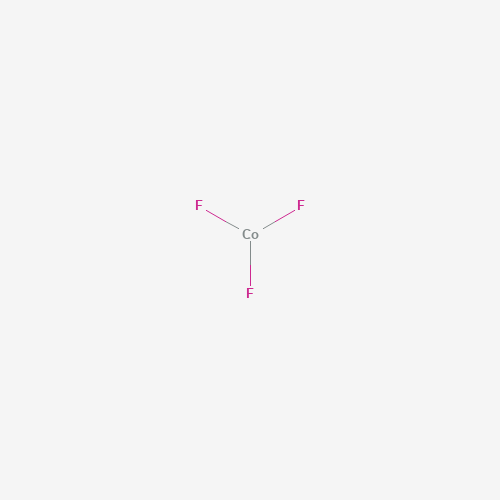
Cobalt(III) fluoride
Dangerous GoodsCAS number:10026-18-3 molecular formula:CoF3
overview
Specs
| Chinese alias | 三氟化钴 | ||
| English alias | MFCD00010942 | Cobalt(III) fluoride | EINECS 233-062-4 | Trifluorocobalt | CoF3 | J-000078 | FT-0624005 | DTXSID1064908 | UNII-O3R680UKNX | Q419602 | Cobalt fluoride (CoF3) | ||
| CAS number | 10026-18-3 | molecular formula | CoF3 |
| molecular weight | 115.93 g/mol | Exact mass | ≥99% |
| PSA | 0.000 Ų | logp | - |
numbering system
| CAS | 10026-18-3 |
| Wikipedia | Cobalt(III) fluoride |
| PubChem CID | 66208 |
| Deprecated CAS | 2437331-24-1 |
| DSSTox Substance ID | DTXSID1064908 |
| European Community (EC) Number | 233-062-4 |
| PubChem Reference Collection SID | 505573948 |
physicochemical properties
| Complexity | 8 |
| Exact Mass | 115.928403 |
| Formal Charge | 0 |
| Chemical Classes | Metals -> Metals, Inorganic Compounds |
| Heavy Atom Count | 4 |
| Molecular Weight | 115.92840 |
| Monoisotopic Mass | 115.928403 |
| Isotope Atom Count | 0 |
| Physical Description | Light brown solid |
| Rotatable Bond Count | 0 |
| Hydrogen Bond Donor Count | 0 |
| Covalently-Bonded Unit Count | 1 |
| Hydrogen Bond Acceptor Count | 3 |
| Topological Polar Surface Area | 0 Ų |
| Defined Atom Stereocenter Count | 0 |
| Defined Bond Stereocenter Count | 0 |
| Undefined Atom Stereocenter Count | 0 |
| Undefined Bond Stereocenter Count | 0 |
Safety information
Treatment:
Treatment of cobalt poisoning is symptomatic. (L29)
Health Effects:
Exposure to high amount of cobalt can cause heart, lung, kidney, and liver damage. Skin contact is known to result in contact dermatitis. Cobalt may also have mutagenic and carcinogenic effects. (L29, L30)
Adverse Effects:
Skin Sensitizer - An agent that can induce an allergic reaction in the skin.
Exposure Routes:
Inhalation (L29); oral (L29); dermal (L29)
Hazards Summary:
Toxic if swallowed; May cause skin sensitization; May cause skin burns; [MSDSonline] See Cobalt and FLUORIDES.
Toxicity Summary:
Cobalt is believed to exhibit its toxicity through a oxidant-based and free radical-based processes. It produces oxygen radicals and may be oxidized to ionic cobalt, causing increased lipid peroxidation, DNA damage, and inducing certain enzymes that lead to cell apoptosis. Cobalt has also been shown to block inorganic calcium channels, possibly impairing neurotransmission. Cobalt can also chelate lipoic acids, impairing oxidation of pyruvate or fatty acids. In addition, cobalt may inhibit DNA repair by interacting with zinc finger DNA repair proteins, and has also been shown to inhibit heme synthesis and glucose metabolism. Cobalt may activate specific helper T-lymphocyte cells and interact directly with immunologic proteins, such as antibodies (IgA and IgE) or Fc receptors, resulting i...
Minimum Risk Level:
Chronic Inhalation: 0.0001 mg/m3 (L134) Intermediate Oral: 0.01 mg/kg/day (L134)
Signs and Symptoms:
Cobalt inhalation can cause asthma-like breathing problems. Skin contact is known to result in contact dermatitis, which is characterized by irritation and rashes. Ingesting large amounts of cobalt may cause nausea and vomiting. (L2090)
Carcinogen Classification:
2B, possibly carcinogenic to humans. (L135)
Threshold Limit Values (TLV):
2.5 [mg/m3], as F (0.02 mg/m3, as Co)
Hazard Classes and Categories:
Skin Sens. 1 (13.3%)
Permissible Exposure Limit (PEL):
2.5 [mg/m3], as F
Exposure Control and Personal Protection:
Maximum Allowable Concentration (MAK): 1.0 [mg/m3], inhalable fraction, as F[German Research Foundation (DFG)]
Production methods and uses
purpose
Sources/Uses: Used as a fluorinating agent
Related
upstream information
No upstream information yet
downstream information
No downstream information yet
MSDS
Found 1 shareMSDS
10026-18-3 | cobalt fluoride | cobaltic fluoride | cobalt trifluoride




