
3-Deoxyglucosone (3-Deoxy-D-glucosone) is a reactive intermediate of the Maillard reaction and the polyol pathway. 3-Deoxyglucosone rapidly reacts with protein amino groups to form advanced glycation end products ( AGEs ), such as imidazolone, it is the most specific AGE for 3-DG. 3-Deoxyglucosone synergizes with low glucose to potentiate GLP-1 secretion and is considered as a biomarker for diabetes . In Vitro 3-Deoxyglucosone (80 ng/ml-1000 ng/ml; 1 hour) markedly increases GLP-1 secretion by 1.23-folds in 300 ng/ml or 1000 ng/ml 3DG-treated group. But at alower concentration (80 ng/ml) has no effects. 3-Deoxyglucosone (300 ng/ml; 1 hour) dramatically increases intracellular Ca 2+ levels by Fluo-3/AM determination (2.5 μM for 30 mins). But 3DG does not affect intracellular cAMP levels in a cAMP Elisa assay. 3-Deoxyglucosone (300 ng/ml; 1 hour) significantly increases the protein expression levels of TAS1R2, TAS1R3, and TRPM5 under both glucose-free and highconditions. MCE has not independently confirmed the accuracy of these methods. They are for reference only. Western Blot AnalysisCell Line: STC-1 cells Concentration: 300 ng/ml Incubation Time: 1 hour Result: Upregulated TAS1R2, TAS1R3, and TRPM5 expression. In Vivo 3-Deoxyglucosone (intragastric administration; 20 mg/kg; single dose) impairs glucose tolerance with increased AUC, but the plasma Glukagon levels are not significantly different. It developes impaired glucose regulation (IGR) with obviously pancreatic islet cell dysfunction in kunming mice and SD-rats. 3-deoxyglucosone (gastric gavage; 5-50 mg/kg; once daily; 2 weeks) is significantly increased in the upper small intestine (1.4-fold), lower small intestine (1.4-fold), ileum (1.4-fold) and colon (two fold) compared with the basal levels in the corresponding control group. In addition, the protein expressions of TAS1R2, TAS1R3 and TRPM5 in both duodenum and colon are significantly decreased. MCE has not independently confirmed the accuracy of these methods. They are for reference only. Animal Model: SD ratsDosage: 5, 20 and 50 mg/kg Administration: oral administration; once daily; 2 weeks Result: Was capable of accumulating in intestinal tissue and thereby decreased secretion of GLP-1 and insulin.
All
Chemical Reagents
Biomedicine
Organic raw materials
Inorganic chemical industry
intermediate
Agricultural chemicals
Auxiliaries and catalysts
Fragrances and Flavors
Dyes and Pigments
Daily chemical industry
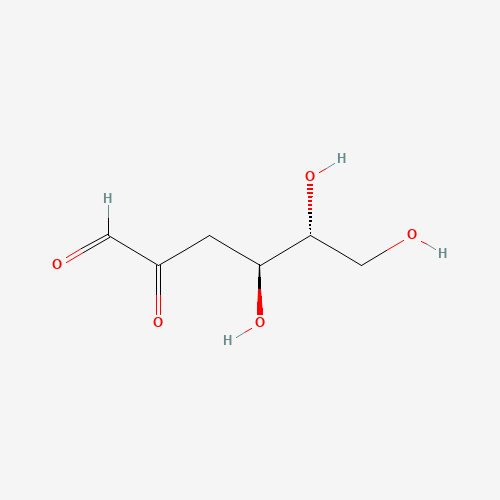
3-Deoxyglucosone
Dangerous GoodsCAS number:4084-27-9 molecular formula:C6H10O5
overview
compound introduction
Specs
| Chinese alias | 3-脱氧葡萄糖醛酮 | ||
| English alias | CCRIS 4272 | erythro-Hexosulose, 3-deoxy- | UNII-EXV5374VEY | EXV5374VEY | (4S,5R)-4,5,6-trihydroxy-2-oxohexanal | 3-deoxy-2-ketoglucose | ZGCHLOWZNKRZSN-NTSWFWBYSA-N | 3-Deoxy-erythro-hexosulose | 0797E864-9E7E-48FF-A385-2CCDC0C15AB6 | HY-N7426 | 2-Keto- | ||
| CAS number | 4084-27-9 | molecular formula | C6H10O5 |
| molecular weight | 162.14 g/mol | Exact mass | - |
| PSA | 94.800 Ų | logp | -2.400 |
numbering system
No numbering system information yet
physicochemical properties
No physical and chemical property information yet
Safety information
pictogram:
GHS07
Signal word:
Warning
Hazard Statement:
H315: 引起皮肤刺激 H319: 引起严重眼睛刺激 H335: 可能引起呼吸道刺激
Statement of Preventive Measures:
P261: 避免吸入灰尘/烟雾/气体/雾/蒸汽/喷雾 P305+P351+P338: 如进入眼睛:用水小心冲洗几分钟。如戴隐形眼镜并可方便地取出,取出隐形眼镜。继续冲洗。 P280: 戴防护手套/穿防护服/戴防护眼罩/戴防护面具。 P302+P352: 如皮肤沾染:用水充分清洗。 P321: 特殊处理(请参阅此标签上的...)。 P405: 密闭存放 P501: 将内容物/容器处理到。。。 P264: 处理后要彻底洗手。 P271: 仅在室外或通风良好的地方使用。 P304+P340: 如误吸入:将人转移
WGK Germany:
3
RTECS:
MQ3390000
Production methods and uses
No production method and use information yet
Related
upstream information
No upstream information yet
downstream information
No downstream information yet
MSDS
Found 1 shareMSDS
4084-27-9 | 3-Glucosone | 3-Deoxyglucosone