All
Chemical Reagents
Biomedicine
Organic raw materials
Inorganic chemical industry
intermediate
Agricultural chemicals
Auxiliaries and catalysts
Fragrances and Flavors
Dyes and Pigments
Daily chemical industry

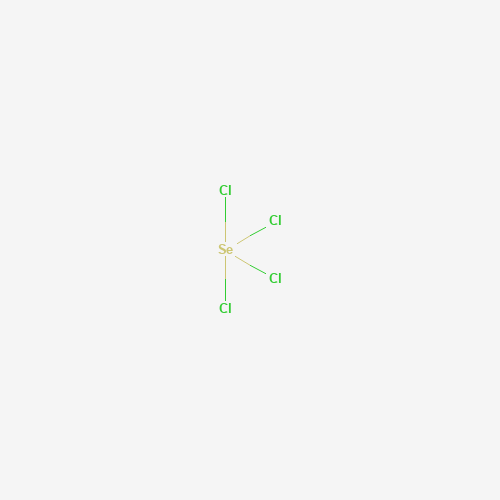
Selenium tetrachloride

Dangerous Goods

CAS number:10026-03-6    molecular formula:SeCl4

overview

compound introduction

潮湿空气和水中分解。305℃升华。不溶于乙醇、乙醚、二硫化碳和液溴,溶于水、氧氯化磷。在酸或碱中均分解。受热升华,分解为二氯化硒和氯气。保存于安瓿中。

Specs

Chinese alias氯化硒
English alias-
CAS number10026-03-6molecular formulaSeCl4
molecular weight220.77 g/molExact mass≥99%
PSA0.000 Ųlogp-

numbering system

CAS10026-03-6
UNII4GB8868P5J
WikidataQ2207705
WikipediaSelenium tetrachloride
PubChem CID66205
Nikkaji NumberJ134.352A
DSSTox Substance IDDTXSID6064903
European Community (EC) Number233-053-5
PubChem Reference Collection SID500825710
MEP ID_25Q1B3FM5

physicochemical properties

Complexity19.1
Exact Mass221.78898
Formal Charge0
Heavy Atom Count5
Molecular Weight220.8
Monoisotopic Mass219.79193
Isotope Atom Count0
Rotatable Bond Count0
Hydrogen Bond Donor Count0
Covalently-Bonded Unit Count1
Hydrogen Bond Acceptor Count0
Topological Polar Surface Area0 Ų
Defined Atom Stereocenter Count0
Defined Bond Stereocenter Count0
Undefined Atom Stereocenter Count0
Undefined Bond Stereocenter Count0

Safety information

Health Effects:
Chronic oral exposure to high concentrations of selenium compounds can produce a disease called selenosis. The major signs of selenosis are hair loss, nail brittleness, and neurological abnormalities (such as numbness and other odd sensations in the extremities). Animal studies have shown that selenium may also affect sperm production and the female reproductive cycle. (L619)
Exposure Routes:
Oral (L619); inhalation (L619); dermal (L619)
Toxicity Summary:
Selenium readily substitutes for sulfur in biomolecules and in many biochemical reactions, especially when the concentration of selenium is high and the concentration of sulfur is low. Inactivation of the sulfhydryl enzymes necessary for oxidative reactions in cellular respiration, through effects on mitochondrial and microsomal electron transport, might contribute to acute selenium toxicity. Selenomethionine (a common organic selenium compound) also appears to randomly substitute for methionine in protein synthesis. This substitution may affect the structure and functionability of the protein, for example, by altering disulfide bridges. Inorganic forms of selenium appear to react with tissue thiols by redox catalysis, resulting in formation of reactive oxygen species and causing damage...
Minimum Risk Level:
Chronic Oral: 0.005 mg/kg/day (L134)
Signs and Symptoms:
Short-term oral exposure to high concentrations of selenium may cause nausea, vomiting, and diarrhea. Brief exposures to high levels of elemental selenium or selenium dioxide in air can result in respiratory tract irritation, bronchitis, difficulty breathing, and stomach pains. Longer-term exposure to either of these air-borne forms can cause respiratory irritation, bronchial spasms, and coughing. (L619)
Regulatory Information:
The Australian Inventory of Industrial Chemicals: Chemical: Selenium chloride (SeCl4), (T-4)-
Carcinogen Classification:
3, not classifiable as to its carcinogenicity to humans. (L135)
Hazard Classes and Categories:
Aquatic Chronic 1 (100%)

Production methods and uses

No production method and use information yet

Related

upstream information

No upstream information yet

downstream information

No downstream information yet

MSDS

Found 1 shareMSDS
10026-03-6 | selenium tetrachloride | selenium tetrachloride