

p-Phenylene diisothiocyanate can be used in various applications including the following: · Synthesis of hydroxamate containing chelators for labeling antibodies with 89Zr and 68Ga for imaging with positron emission tomography (immunoPET). · Synthesis of fluorescent chemosensors for Hg2+ sensing in living cells. · Synthesis of polythiourea derivatives as capacitor dielectric materials. · Synthesis of 4-isothiocyanato-4′-nitrodiphenylamine, an anthelmintic agent, popularly known as amoscanate. p-Phenylene diisothiocyanate can be used in various applications including the following: · Synthesis of hydroxamate containing chelators for labeling antibodies with 89Zr and 68Ga for imaging with positron emission tomography (immunoPET). · Synthesis of fluorescent chemosensors for Hg2+ sensing in living cells. · Synthesis of polythiourea derivatives as capacitor dielectric materials. · Synthesis of 4-isothiocyanato-4′-nitrodiphenylamine, an anthelmintic agent, popularly known as amoscanate.
All
Chemical Reagents
Biomedicine
Organic raw materials
Inorganic chemical industry
intermediate
Agricultural chemicals
Auxiliaries and catalysts
Fragrances and Flavors
Dyes and Pigments
Daily chemical industry
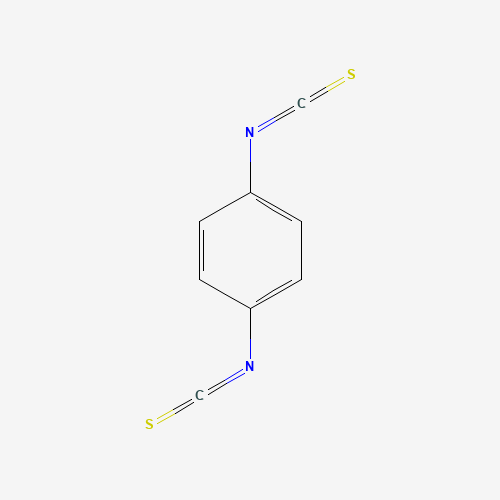
p-Phenylene diisothiocyanate(PDITC)
Dangerous GoodsCAS number:4044-65-9 molecular formula:C8H4N2S2
overview
compound introduction
Specs
| Chinese alias | 双硫氰苯 | 1,4-苯二异硫氰酸酯 | 1,4-亚苯基二异硫氰酸酯 | ||
| English alias | PDITC | Bitoscanate [INN] | Benzene 1,4-Diisothiocyanate | Bitoscanatum [Latin] | HSDB 6435 | SBI-0207088.P001 | 1,4-Diisothiocyanatobenzene | 4-13-00-00174 (Beilstein Handbook Reference) | HY-B1160 | EINECS 223-741-3 | InChI=1/C8H4N2S2/c11-5-9-7-1-2-8(4- | ||
| CAS number | 4044-65-9 | molecular formula | C8H4N2S2 |
| molecular weight | 192.26 g/mol | Exact mass | ≥98% |
| PSA | 88.900 Ų | logp | 4.700 |
numbering system
No numbering system information yet
physicochemical properties
No physical and chemical property information yet
Safety information
pictogram:
GHS06 , GHS08 , GHS05 , GHS07
Signal word:
Danger
Hazard Statement:
H315: 引起皮肤刺激 H319: 引起严重眼睛刺激 H335: 可能引起呼吸道刺激 H301: 吞咽会中毒 H314: 造成严重的皮肤灼伤和眼睛损伤 H334: 吸入可能引起过敏或哮喘病症状或呼吸困难
Statement of Preventive Measures:
P261: 避免吸入灰尘/烟雾/气体/雾/蒸汽/喷雾 P305+P351+P338: 如进入眼睛:用水小心冲洗几分钟。如戴隐形眼镜并可方便地取出,取出隐形眼镜。继续冲洗。 P280: 戴防护手套/穿防护服/戴防护眼罩/戴防护面具。 P302+P352: 如皮肤沾染:用水充分清洗。 P321: 特殊处理(请参阅此标签上的...)。 P405: 密闭存放 P501: 将内容物/容器处理到。。。 P264: 处理后要彻底洗手。 P260: 不要吸入灰尘/烟雾/气体/雾/蒸汽/喷雾。 P284: 如果通风不良,请
WGK Germany:
3
Personal protective equipment:
dust mask type N95 (US), Eyeshields, Faceshields, Gloves
RTECS:
NX9150000
UN Number:
2928
Packing Group:
Ⅰ
Production methods and uses
No production method and use information yet
Related
upstream information
No upstream information yet
downstream information
No downstream information yet
MSDS
Found 1 shareMSDS
4044-65-9 | p-Phenylene diisothiocyanate.pdf




