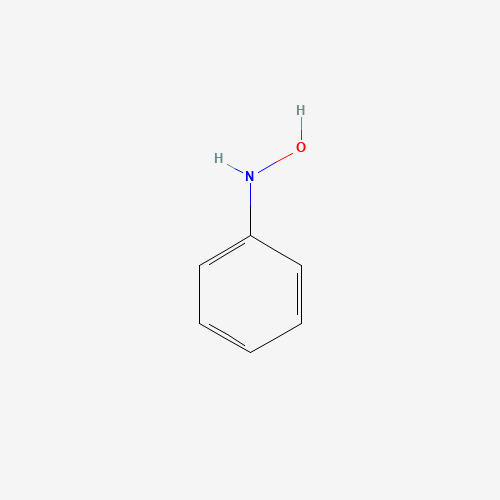
First Aid:
INGESTION: If the victim is conscious and not convulsing, give 1 or 2 glasses of water to dilute the chemical and IMMEDIATELY call a hospital or poison control center. Generally, the induction of vomiting is NOT recommended outside of a physician's care due to the risk of aspirating the chemical into the victim's lungs. However, if the victim is conscious and not convulsing and if medical help is not readily available, consider the risk of inducing vomiting because of the high toxicity of the chemical ingested. Ipecac syrup or salt water may be used in such an emergency. IMMEDIATELY transport the victim to a hospital. If the victim is convulsing or unconscious, do not give anything by mouth, ensure that the victim's airway is open and lay the victim on his/her side with the head lower t...
Fire Hazards:
Flash point data for this chemical are not available but it is probably nonflammable. (NTP, 1992)
Interactions:
NORHARMAN WAS COMUTAGENIC WITH PHENYLHYDROXYLAMINE WHEN TESTED WITH SALMONELLA TYPHIMURIUM TA98 IN THE PRESENCE OF S-9 MIX. THE COMUTAGENIC EFFECTS WERE FOUND ONLY WITH THE FRAMESHIFT-TYPE MUTANTS OF S TYPHIMURIUM.
Fire Fighting:
Fires involving this chemical should be controlled with a dry chemical, carbon dioxide, foam or halon extinguisher. (NTP, 1992)
Health Hazards:
ACUTE/CHRONIC HAZARDS: This chemical is toxic and has hazardous decomposition products;it is an irritant. (NTP, 1992)
Reactive Group:
Amines, Phosphines, and Pyridines
Adverse Effects:
Methemoglobinemia - The presence of increased methemoglobin in the blood; the compound is classified as primary toxic effect.
Hazards Summary:
Occupational cases of severe poisoning have been reported; Markedly increases sister chromatid exchange in cultured human fibroblasts; Causes methemoglobinemia in rats and mice; Lethal-dosed rats did not exhibit methemoglobin levels sufficiently high to cause death by anoxia, suggesting that methemoglobinemia is not responsible for acute toxicity; Emergency treatment: Methemoglobinemia; An irritant; [CAMEO] Irritating to human skin; Causes hematuria and methemoglobinemia in subcutaneous, lethal-dose studies of rats and rabbits; Repeated dose studies of rats produce weight loss and changes to blood; [RTECS] May cause irritation; [Aldrich MSDS]
Reactivity Profile:
N-PHENYLHYDROXYLAMINE neutralizes acids in exothermic reactions to form salts plus water. May be incompatible with isocyanates, halogenated organics, peroxides, phenols (acidic), epoxides, anhydrides, and acid halides. Flammable gaseous hydrogen may be generated in combination with strong reducing agents, such as hydrides.
Nonfire Spill Response:
STORAGE PRECAUTIONS: You should protect this chemical from exposure to light. Keep the container tightly closed under an inert atmosphere, and store it in a freezer. (NTP, 1992)
Air and Water Reactions:
Soluble in hot water.
Human Toxicity Excerpts:
HUMAN FIBROBLASTS WERE ALLOWED TO ATTACH TO PLASTIC PETRI DISHES FOR 4 HOURS AND EXPOSED IN SERUM-FREE MEDIUM FOR 2 HOURS TO N-PHENYLHYDROXYLAMINE (0.001-0.5 MMOL). THE TREATMENT MEDIUM WAS REPLACED WITH COMPLETE MEDIUM CONTAINING 5-BROMODEOXYURIDINE (10 MUMOL), AND CELLS WERE ALLOWED TO GROW FOR 48 HOURS WITH COLCEMIDE PRESENT FOR THE FINAL 4.5 HOURS. CELL CYCLE ANALYSES (PERCENTAGE OF CELLS IN 1ST, 2ND, OR 3RD DIVISION) REVEALED THAT N-PHENYLHYDROXYLAMINE INHIBITED CELL PROLIFERATION. CELL DEATH WAS SEEN AT DOSES OF 0.5 MMOL. SIGNIFICANT INCREASES IN SISTER CHROMATID EXCHANGE WERE FOUND. N-PHENYLHYDROXYLAMINE INDUCED A DOSE-RELATED INCREASE IN SISTER CHROMATID EXCHANGE FREQUENCY WITH A 1.4-FOLD ELEVATION.
Isolation and Evacuation:
FIRE: If tank, rail tank car or highway tank is involved in a fire, ISOLATE for 800 meters (1/2 mile) in all directions; also, consider initial evacuation for 800 meters (1/2 mile) in all directions. (ERG, 2024)
Artificial Pollution Sources:
THE NONENZYMATIC REDUCTION OF NITROSOBENZENE BY NADPH AND NADH IN AQUEOUS BUFFER SOLUTION AT 25 °C IS DESCRIBED. BOTH REACTANTS QUANTITATIVELY CONVERT NITROSOBENZENE TO PHENYLHYDROXYLAMINE. THE OXIDATION OF PHENYLHYDROXYLAMINE BY NAD(P) TO NITROSOBENZENE IS ONLY STIMULATED BY A FACTOR OF 1.2 OVER OXIDATION IN ITS ABSENCE (WHEN THE RATIO OF NADP:PHENYLHYDROXYLAMINE WAS 8:1).
Hazard Classes and Categories:
Acute Tox. 3 (97.6%)
Personal Protective Equipment (PPE):
RECOMMENDED RESPIRATOR: Where the neat test chemical is weighed and diluted, wear a NIOSH-approved half face respirator equipped with a combination filter cartridge, i.e. organic vapor/acid gas/HEPA (specific for organic vapors, HCl, acid gas, SO2 and a high efficiency particulate filter). (NTP, 1992)