

compound introduction
All
Chemical Reagents
Biomedicine
Organic raw materials
Inorganic chemical industry
intermediate
Agricultural chemicals
Auxiliaries and catalysts
Fragrances and Flavors
Dyes and Pigments
Daily chemical industry
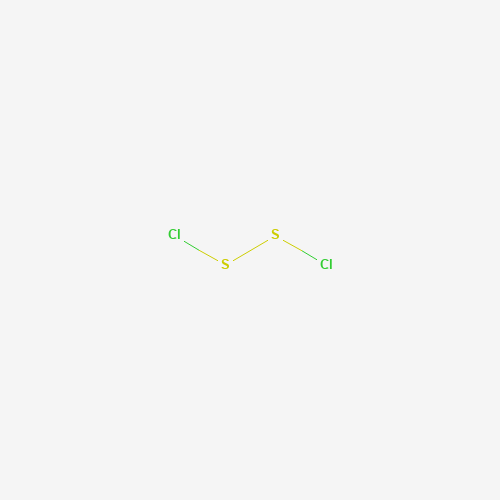
Disulfur dichloride
Dangerous GoodsCAS number:10025-67-9 molecular formula:Cl2S2
overview
Specs
| Chinese alias | - | ||
| English alias | Sulfur chloride | ||
| CAS number | 10025-67-9 | molecular formula | Cl2S2 |
| molecular weight | 135.03 | Exact mass | - |
| PSA | - | logp | - |
numbering system
| CAS | 10025-67-9 |
| UNII | NJ7YR2EV0D |
| Wikidata | Q414657 |
| UN Number | 1828 |
| Wikipedia | Disulfur dichloride |
| HTS Number | 2812.15.00.00 |
| DrugBank ID | DB14647 |
| ICSC Number | 0958 |
| PubChem CID | 24807 |
| RTECS Number | WS4300000 |
| Deprecated CAS | 12771-08-3 |
| Nikkaji Number | J98.297K |
| DSSTox Substance ID | DTXSID3042427 |
| European Community (EC) Number | 233-036-2 |
| PubChem Reference Collection SID | 505885644 |
| MEP ID | _25Q1B3FLT |
physicochemical properties
| Odor | Pungent, nauseating, irritating odor. |
| XLogP3 | XLogP3-AA: 2.5 |
| Density | 1.68 |
| Viscosity | 0.978 cP |
| Color/Form | Light amber to yellowish red oily liquid |
| Complexity | 6 |
| Exact Mass | 133.8818477 |
| Solubility | Decomposes |
| Corrosivity | Sulfur monochloride will attack some forms of plastics, rubber, and coatings. |
| Flash Point | 245 °F |
| Boiling Point | 280 °F |
| Decomposition | Decomposition by water yielding sulfur, hydrogen chloride, sulfur dioxide, hydrogen sulfide, sulfite, thiosulfate |
| Formal Charge | 0 |
| Melting Point | -107 °F |
| Vapor Density | Relative vapor density (air = 1): 4.7 |
| Odor Threshold | Odor low: 7.0 mg/cu m; Odor high: 49.0 mg/cu m; strong irritating odor; Irritating concn= 49.00 mg/cu m. /Hydrochloric acid/ |
| Vapor Pressure | 7 mmHg |
| Surface Tension | 42.5 mN/m at 25 °C |
| Chemical Classes | Reactive agents - 2nd degree |
| Heavy Atom Count | 4 |
| Molecular Weight | 135.0 |
| Refractive Index | Index of refraction: 1.670 at 20 °C/D |
| Monoisotopic Mass | 133.8818477 |
| Isotope Atom Count | 0 |
| Heat of Vaporization | 3.6401X10+4 J/mole |
| Ionization Potential | 9.40 eV |
| Physical Description | Light-amber to yellow-red, oily liquid with a pungent, nauseating, irritating odor. |
| Rotatable Bond Count | 0 |
| Stability/Shelf Life | Stable at ambient temperature |
| Autoignition Temperature | 234 °C |
| Hydrogen Bond Donor Count | 0 |
| Covalently-Bonded Unit Count | 1 |
| Hydrogen Bond Acceptor Count | 2 |
| Topological Polar Surface Area | 50.6 Ų |
| Defined Atom Stereocenter Count | 0 |
| Defined Bond Stereocenter Count | 0 |
| Undefined Atom Stereocenter Count | 0 |
| Undefined Bond Stereocenter Count | 0 |
Safety information
DOT Label:
Corrosive
First Aid:
Swallow: Medical attention immediately - If this chemical has been swallowed, get medical attention immediately.
AEGLs Notes:
AEGLs Status: Interim
AEGLs Table:
8 hr: 4.8
Fire Hazards:
Combustible. Gives off irritating or toxic fumes (or gases) in a fire.
Interactions:
Hydrochloric acid, carbon monoxide, and unsaturated carbon cmpd interactions account for the extreme toxicity of gases from polyvinyl chloride and other chloride containing polymers.
Safe Storage:
Separated from strong oxidants, peroxides, phosphorus oxides, organic compounds and food and feedstuffs. Cool. Dry. Well closed. Ventilation along the floor.
Fire Fighting:
Use powder, carbon dioxide. NO hydrous agents. NO water. In case of fire: keep drums, etc., cool by spraying with water. NO direct contact with water.
Target Organs:
Eyes, skin, respiratory system
Toxicity Data:
LC50 (rat) = 2,500 mg/m3/4H
Eye Prevention:
Wear face shield or eye protection in combination with breathing protection.
Fire Potential:
SULFUR CHLORIDE IS FLAMMABLE LIQUID WHICH GIVES RISE TO MODERATE FIRE HAZARD ...
Health Hazards:
Vapors irritate eyes and respiratory system; pulmonary edema may result. Liquid burns and damages eyes. Unless removed at once, it burns the skin. Ingestion causes severe damage to mouth and stomach. (USCG, 1999)
OSHA Standards:
Vacated 1989 OSHA PEL Ceiling limit 1 ppm (6 mg/cu m) is still enforced in some states.
Reactive Group:
Halogenating Agents
Adverse Effects:
Toxic Pneumonitis - Inflammation of the lungs induced by inhalation of metal fumes or toxic gases and vapors.
Exposure Routes:
inhalation, ingestion, skin and/or eye contact
Fire Prevention:
NO open flames.
Hazards Summary:
The major hazards encountered in the use and handling of sulfur monochloride stem from its toxicologic properties. Toxic by all routes (ie, inhalation, ingestion, and dermal contact), exposure to this yellowish-red, strong smelling, oily liquid may occur from its use as an intermediate and chlorinating agent in the manufacture of high pressure lubricants and cutting oils, sulfur dyes, and insecticides, as a cross-linking catalyst in polymer technology, as a solvent for sulfur compounds, as a rubber extender, and in the purification of sugar juices. Effects from exposure may include headache, dizziness, nausea, burns to the skin and eyes, shortness of breath, respiratory irritation, pulmonary edema, respiratory distress and failure. OSHA has established a Ceiling limit of 1 ppm as a fina...
Inhalation Risk:
A harmful contamination of the air can be reached very quickly on evaporation of this substance at 20 °C.
Skin Prevention:
Protective gloves. Protective clothing.
Special Reports:
Organization for the Prohibition of Chemical Weapons; Convention on the Prohibition of the Development, Production, Stockpiling and Use of Chemical Weapons and Their Destruction. Available from http://www.opcw.org as of November 12, 2008. The Chemical Weapons Convention (CWC) is an international treaty which bans the development, production, stockpiling, and transfer or use of chemical weapons. The Convention mandates the destruction and prohibition of chemical weapons and related facilities and provides for restrictions on international trade in toxic chemicals and precursors.
DOT ID and Guide:
1828 137
Disposal Methods:
Principles and methods for destruction of chemical weapons: ... "Destruction of chemical weapons" means a process by which chemicals are converted in an essentially irreversible way to a form unsuitable for production of chemical weapons, and which in an irreversible manner renders munitions and other devices unusable as such. ... Each ... /nation/ shall determine how it shall destroy chemical weapons, except that the following processes may not be used: dumping in any body of water, land burial or open-pit burning. It shall destroy chemical weapons only at specifically designated and appropriately designed and equipped facilities. ... Each ... /nation/ shall ensure that its chemical weapons destruction facilities are constructed and operated in a manner to ensure the destruction of the...
Flammable Limits:
Flammability: Class IIIB Combustible Liquid: Fl.P. at or above 200 °F.
EC Classification:
Symbol: T, C, N; R: 14-20-25-29-35-50; S: (1/2)-26-36/37/39-45-61
Reactivity Alerts:
Air-Reactive
Spillage Disposal:
Consult an expert! Personal protection: chemical protection suit including self-contained breathing apparatus. Ventilation. Cautiously neutralize spilled liquid with mixture of dry soda ash and slaked lime.
UN Classification:
UN Hazard Class: 8; UN Pack Group: I
First Aid Measures:
Ingestion First Aid: Rinse mouth. Do NOT induce vomiting. Refer for medical attention .
Reactivity Profile:
SULFUR MONOCHLORIDE poses a fire hazard in contact with organic matter. Can react violently with oxidizing agents to form toxic gases. Reacts violently with sodium peroxide, chromyl chloride, phosphorus trioxide. Emits highly toxic fumes of sulfur oxides and chlorides when heated to decomposition [Lewis, 3rd ed., 1993, p. 1196]. Reacts exothermically with tin, antimony, antimony sulfide, arsenic sulfide, mercury oxide. A mixture with potassium is shock-sensitive and explodes violently on heating [Mellor, 1947, 10, p.642]. Reacts particularly violently with dimethyl sulfoxide [Buckley, A., J. Chem. Ed., 1965, 42, p. 674].
Signs and Symptoms:
irritation eyes, skin, mucous membrane; lacrimation (discharge of tears); cough; eye, skin burns; pulmonary edema
Storage Conditions:
Aldehydes and epoxides in the presence of hydrochloric acid cause violent polymerization. Alcohol and glycols in the presence of hydrochloric acid lead to dehydration reactions. /Hydrochloric acid/
Exposure Prevention:
AVOID ALL CONTACT!
Firefighting Hazards:
Confined fires with high fuel loads of polyvinyl chloride, such as a fire in a vault with a high load of polyvinyl chloride-coated electrical wiring, may generate sufficient hydrogen chloride to cause irritation in fire fighters. Rapid combustion of relatively large amt of polymer may yield ... hydrogen chloride ... . /Hydrochloric acid/
Ingestion Prevention:
Do not eat, drink, or smoke during work.
Medical Surveillance:
The following medical procedures should be made available to each employee who is exposed to hydrogen chloride at potentially hazardous levels: 1. Initial medical examination: A complete history and physical examination: the purpose is to detect existing conditions that might place the exposed employee at increased risk, and to establish a baseline for future health monitoring. Examination of the respiratory system, skin, and eyes should be stressed. -- 14" x 17" chest roentgenogram: Hydrogen chloride causes lung damage. Surveillance of the lung is indicated. -- FVC and FEV (1 sec): Hydrogen chloride is a respiratory irritant. Persons with impaired pulmonary function may be at increased risk from exposure. Periodic surveillance is indicated. 2. Periodic Medical Examination: The aforemen...
Inhalation Prevention:
Use ventilation, local exhaust or breathing protection.
NIOSH Recommendations:
Recommended Exposure Limit: Ceiling value: 1 ppm (6 mg/cu m).
Nonfire Spill Response:
SMALL SPILL: Cover with DRY earth, DRY sand or other non-combustible material followed with plastic sheet to minimize spreading or contact with rain. Use clean, non-sparking tools to collect material and place it into loosely covered plastic containers for later disposal. Prevent entry into waterways, sewers, basements or confined areas. (ERG, 2024)
Air and Water Reactions:
Based on a scenario where the chemical is spilled into an excess of water (at least 5 fold excess of water), half of the maximum theoretical yield of Hydrogen Chloride gas will be created in 1.8 minutes. Experimental details are in the following: "Development of the Table of Initial Isolation and Protective Distances for the 2008 Emergency Response Guidebook", ANL/DIS-09-2, D.F. Brown, H.M. Hartmann, W.A. Freeman, and W.D. Haney, Argonne National Laboratory, Argonne, Illinois, June 2009.
Packaging and Labelling:
Do not transport with food and feedstuffs.
Fire Fighting Procedures:
Extinguish fire using agent suitable for type of surrounding fire. (Material itself does not burn or burns with difficulty). Use water in flooding quantities as fog. Cool all affected containers with flooding quantities of water. Apply water from as far a distance as possible. /Hydrochloric acid/
Isolation and Evacuation:
FIRE: If tank, rail tank car or highway tank is involved in a fire, ISOLATE for 800 meters (1/2 mile) in all directions; also, consider initial evacuation for 800 meters (1/2 mile) in all directions. (ERG, 2024)
Other Safety Information:
Chemical Assessment: IMAP assessments - Sulfur chloride (S2Cl2): Human health tier I assessment
Toxic Combustion Products:
Toxic gases and vapors (such as hydrogen chloride, sulfur dioxide, hydrogen sulfide, & carbon monoxide) may be released in fire involving sulfur monochloride.
NFPA Hazard Classification:
NFPA Specific Notice: W - No water: Materials that react violently or explosively with water.
Respirator Recommendations:
Important additional information about respirator selection
Non-Human Toxicity Excerpts:
/LABORATORY ANIMALS: Acute Exposure/ ... Exposure for 1 min at a concentration of 150 ppm was fatal to mice. A concentration of 12 ppm for 15 min was tolerated by cats, but 4 times that concentration, also for 15 min, could lead to death after few days.
Threshold Limit Values (TLV):
TLV-C (Ceiling): 1 ppm [1986]
Hazard Classes and Categories:
Aquatic Acute 1
Effects of Short Term Exposure:
Lachrymation. The substance is corrosive to the eyes, skin and respiratory tract. Corrosive on ingestion. Inhalation of the vapour may cause lung oedema. The effects may be delayed. Medical observation is indicated.
Explosive Limits and Potential:
Behavior in fire: Pressurized container may explode and release toxic, irritating vapors. /Hydrocloric acid/
Standard Transportation Number:
49 323 80; Sulfur chloride (mono); chloride of sulfur
Permissible Exposure Limit (PEL):
TWA 1 ppm (6 mg/m3) See Appendix G
Protective Action Criteria (PAC):
PAC-3: 15 [ppm]
Recommended Exposure Limit (REL):
C 1 ppm (6 mg/m3)
Shipment Methods and Regulations:
The International Maritime Dangerous Goods Code lays down basic principles for transporting hazardous chemicals. Detailed recommendations for individual substances and a number of recommendations for good practice are included in the classes dealing with such substances. A general index of technical names has also been compiled. This index should always be consulted when attempting to locate the appropriate procedures to be used when shipping any substance or article.
Critical Temperature and Pressure:
Critical temperature: 392 °C
Probable Routes of Human Exposure:
The following list include some common operations in which exposure to sulfur monochloride may occur ... Use for production of white vulcanized oils used for coating and impregnating textiles; use as natural and synthetic rubber extenders and modifying agents in erasers, and extruded rubber goods; use with unsaturated fatty acids in production of additives to extreme pressure lubricants and cutting oils; use as a cross linking catalyst in polymer technology; use in chemical synthesis for production of intermediates for dyes, pharmaceuticals, insecticides, and war gases; use for treatment of drying oils for production of varnishes, inks, paints, and cements; use for cold vulcanizing of thin rubber articles; use as a solvent for sulfur and sulfur cmpd.
Shipping Name/ Number DOT/UN/NA/IMO:
IMO 8.0; Sulfur monochloride
Skin, Eye, and Respiratory Irritations:
Irritating Concn 12.00 mg/cu m
Exposure Control and Personal Protection:
Exposure Summary: TIH (Toxic Inhalation Hazard) - Term used to describe gases and volatile liquids that are toxic when inhaled. Some are TIH materials themselves, e.g., chlorine, and some release TIH gases when spilled in water, e.g., chlorosilanes. [ERG 2016].
Other Standards Regulations and Guidelines:
Australia, Belgium, Finland, Japan, Netherlands, Switzerland, West Germany, and Yugoslavia, 1 ppm; Poland, 0.9 ppm; and Romania, 0.3 ppm with a 0.9 ppm max.
Immediately Dangerous to Life or Health (IDLH):
See: 10025679
Production methods and uses
Production method
Prepared by passing chlorine into molten sulfur, can be purified by fractional distillation.
purpose
Industry Uses:
Intermediate
General Manufacturing Information:
Industry Processing Sectors: CBI
Related
upstream information
Methods of Manufacturing:
Disulfur dichloride (CID:24807); carbon tetrachloride (CID:5943); trichloromethylsulfenyl chloride (CID:11666); sulfur chloride (CID:5362496); ferric chloride (CID:24380)
downstream information
No downstream information yet
MSDS
Found 1 shareMSDS
10025-67-9 | sulfur monochloride | disulphur dichloride | sulfur monochloride




