

compound introduction
All
Chemical Reagents
Biomedicine
Organic raw materials
Inorganic chemical industry
intermediate
Agricultural chemicals
Auxiliaries and catalysts
Fragrances and Flavors
Dyes and Pigments
Daily chemical industry
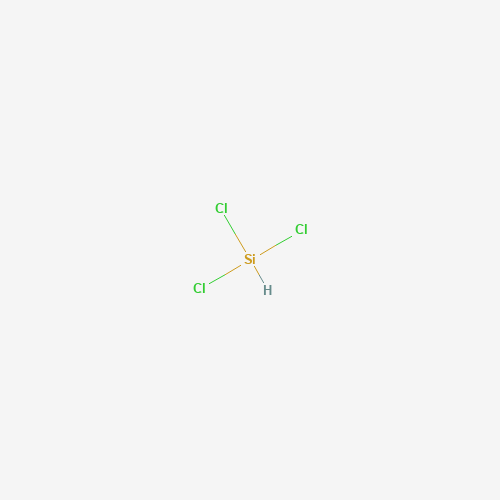
trichlorosilane
Dangerous GoodsCAS number:10025-78-2 molecular formula:Cl3HSi
overview
Specs
| Chinese alias | - | ||
| English alias | Silicochloroform; Silicon chloride hydride (SiCl3H); Silicon chloride hydride (SiHCl3); Trichloromonosilane; Trichlorosilane; Trichlorosilane (HSiCl3); Trichlorosilane(SiHCl3) | ||
| CAS number | 10025-78-2 | molecular formula | Cl3HSi |
| molecular weight | 135.45 | Exact mass | - |
| PSA | - | logp | - |
numbering system
| CAS | 10025-78-2 |
| Wikidata | Q419041 |
| UN Number | 1295 |
| Wikipedia | Silicochloroform |
| ICSC Number | 0591 |
| PubChem CID | 24811 |
| European Community (EC) Number | 419-930-7 |
| PubChem Reference Collection SID | 482317386 |
| MEP ID | _25Q1B3FLZ |
physicochemical properties
| Odor | ACRID ODOR |
| Density | 1.331 @25 °C |
| Viscosity | 0.397 centipoise at 0 °C; 0.332 centipoise at 20 °C; 0.316 centipoise at 25 °C |
| Color/Form | Colorless liquid |
| Complexity | 8 |
| Exact Mass | 133.891310 |
| Solubility | Solubility in water: reaction |
| Corrosivity | Corrodes metal after reacting with moisture to form hydrochloric acid |
| Flash Point | -27 °C c.c. |
| Boiling Point | 33 °C @760 [mm Hg] |
| Decomposition | When heated to decomposition it emits toxic fumes of /hydrogen chloride/. |
| Formal Charge | 0 |
| Melting Point | -128.2 °C |
| Vapor Density | Relative vapor density (air = 1): 4.7 |
| Vapor Pressure | 750 [mm Hg] @31.6 °C |
| Chemical Classes | Reactive agents - 2nd degree |
| Heavy Atom Count | 4 |
| Molecular Weight | 135.45 |
| Refractive Index | Index of refraction: 1.4020 at 20 °C/D; 1.3983 at 25 °C/D |
| Monoisotopic Mass | 133.891310 |
| Isotope Atom Count | 0 |
| Heat of Vaporization | 85 BTU/lb= 47 Cal/g= 2.0X10+5 J/kg |
| Physical Description | COLOURLESS VOLATILE FUMING LIQUID WITH PUNGENT ODOUR. |
| Rotatable Bond Count | 0 |
| Stability/Shelf Life | Volitile, moblie liquid. Fumes in air. |
| Autoignition Temperature | 185 °C |
| Hydrogen Bond Donor Count | 0 |
| Covalently-Bonded Unit Count | 1 |
| Hydrogen Bond Acceptor Count | 0 |
| Topological Polar Surface Area | 0 Ų |
| Defined Atom Stereocenter Count | 0 |
| Defined Bond Stereocenter Count | 0 |
| Undefined Atom Stereocenter Count | 0 |
| Undefined Bond Stereocenter Count | 0 |
Safety information
DOT Label:
Dangerous When Wet Flammable Liquid Corrosive
First Aid:
ERG2024, Guide 139 (Trichlorosilane): In Canada, an Emergency Response Assistance Plan (ERAP) may be required for this product. Please consult the shipping paper and/or the "ERAP" section.
AEGLs Notes:
AEGLs Status: Final
AEGLs Table:
8 hr: 8.7
Fire Hazards:
Extremely flammable. Gives off irritating or toxic fumes (or gases) in a fire. Vapour/air mixtures are explosive.
Safe Storage:
Fireproof. Separated from food and feedstuffs and incompatible materials. See Chemical Dangers. Cool. Dry. Well closed. Ventilation along the floor.
Fire Fighting:
NO water. Use AFFF, powder, carbon dioxide. In case of fire: keep drums, etc., cool by spraying with water. NO direct contact with water.
Toxicity Data:
LCLo (rat) = 500 ppm/4h
Eye Prevention:
Wear face shield or eye protection in combination with breathing protection.
Fire Potential:
Flammable liquid ... Low ignition energy ...
Health Hazards:
ERG2024, Guide 139 (Trichlorosilane): · Runoff from fire control or dilution water may cause environmental contamination.
Reactive Group:
Chlorosilanes
Adverse Effects:
Toxic Pneumonitis - Inflammation of the lungs induced by inhalation of metal fumes or toxic gases and vapors.
Cleanup Methods:
Eliminate all ignition sources. Approach release from upwind. Keep water away from release. Stop or control the leak, if this can be done without undue risk. Prompt cleanup and removal are necessary. May ignite spontaneously in insulating materials (absorbent materials) depending on size of piles. Control runoff and isolate discharged material for proper disposal.
Exposure Routes:
The substance can be absorbed into the body by inhalation of its vapour and by ingestion.
Fire Prevention:
NO open flames, NO sparks and NO smoking. Closed system, ventilation, explosion-proof electrical equipment and lighting. Do NOT use compressed air for filling, discharging, or handling.
Hazards Summary:
Reacts with water to release HCl; Corrosive to skin and can produce pneumonitis after inhalation of high concentrations; May ignite on exposure to air; [CSH, p. 418] Highly corrosive to skin; [Quick CPC] A lachrymator; See the Process, Toxic Gas from Spilling Chemical in Water.
Inhalation Risk:
No indication can be given about the rate at which a harmful concentration of this substance in the air is reached on evaporation at 20 °C.
Skin Prevention:
Protective gloves. Protective clothing.
Special Reports:
ITC/USEPA; Information Review #223 (Draft) Chlorosilanes (1981)
DOT ID and Guide:
1295 139
Disposal Methods:
SRP: The most favorable course of action is to use an alternative chemical product with less inherent propensity for occupational exposure or environmental contamination. Recycle any unused portion of the material for its approved use or return it to the manufacturer or supplier. Ultimate disposal of the chemical must consider: the material's impact on air quality; potential migration in soil or water; effects on animal, aquatic, and plant life; and conformance with environmental and public health regulations.
Flammable Limits:
1.2%-90.5% IN AIR
Physical Dangers:
The vapour is heavier than air and may travel along the ground; distant ignition possible.
EC Classification:
Symbol: F+, C; R: 12-14-17-20/22-29-35; S: (2)-7/9-16-26-36/37/39-43-45
Reactivity Alerts:
Pyrophoric
Spillage Disposal:
Evacuate danger area! Consult an expert! Personal protection: chemical protection suit including self-contained breathing apparatus. Ventilation. Do NOT wash away into sewer. Collect leaking and spilled liquid in sealable non-plastic containers as far as possible. Absorb remaining liquid in dry sand or inert absorbent. Then store and dispose of according to local regulations.
UN Classification:
UN Hazard Class: 4.3; UN Subsidiary Risks: 3 and 8; UN Pack Group: I
Environmental Fate:
ATMOSPHERIC FATE: In arid regions, some transport of chlorosilanes to the stratosphere might occur. In the stratosphere, photolysis by short wavelength light is expected. /Chlorosilanes/
First Aid Measures:
Ingestion First Aid: Rinse mouth. Do NOT induce vomiting. Give nothing to drink. Refer for medical attention .
Reactivity Profile:
TRICHLOROSILANE reacts with alcohols, acetone, light metals with generation of heat and combustible (H2) and corrosive (HCl) gases [Handling Chemicals Safely 1980. p. 924].
Signs and Symptoms:
Ingestion Exposure: Burning sensation. Abdominal pain. Shock or collapse.
Storage Conditions:
Separate from water, alcohols, organic acids, peroxides, amines, and oxidizing materials. Outside or detached storage is preferred. Store away from heat, oxidizing materials, and sunlight. Must be stored in a dry location. Inside storage should be in a standard flammable liquids storage warehouse, room, or cabinet.
Exposure Prevention:
STRICT HYGIENE! IN ALL CASES CONSULT A DOCTOR!
Firefighting Hazards:
Reacts violently with fire extinguishing agents such as water.
Ingestion Prevention:
Do not eat, drink, or smoke during work.
Inhalation Prevention:
Use ventilation, local exhaust or breathing protection.
Hazards Identification:
ERG Hazard Classes: Water-reactive material (WR)
Nonfire Spill Response:
POWDER SPILL: Cover powder spill with plastic sheet or tarp to minimize spreading and keep powder dry. DO NOT CLEAN-UP OR DISPOSE OF, EXCEPT UNDER SUPERVISION OF A SPECIALIST. (ERG, 2024)
Air and Water Reactions:
Based on a scenario where the chemical is spilled into an excess of water (at least 5 fold excess of water), half of the maximum theoretical yield of Hydrogen Chloride gas will be created in 0.03 minutes. Experimental details are in the following: "Development of the Table of Initial Isolation and Protective Distances for the 2008 Emergency Response Guidebook", ANL/DIS-09-2, D.F. Brown, H.M. Hartmann, W.A. Freeman, and W.D. Haney, Argonne National Laboratory, Argonne, Illinois, June 2009.
Human Toxicity Excerpts:
/SIGNS AND SYMPTOMS/ ACUTE ... SYMPTOMS: Inhalation--Cough. Sore throat. Burning sensation. Labored breathing. Shortness of breath. Symptoms may be delayed ... Skin--Redness. Pain. Blisters. Skin burns; Eyes--Redness. Pain. Severe deep burns; Ingestion--Burning sensation. Abdominal pain. Shock or collapse.
Packaging and Labelling:
Do not transport with food and feedstuffs.
Fire Fighting Procedures:
No water. Aqueous film forming foams (AFFF), powder, carbon dioxide ... Cool drums, etc, by spraying with water but avoid contact of the substance with water.
Isolation and Evacuation:
Protection: - PROTECT people from downwind during NIGHT time: 1.5 km (0.9 mi)
Soil Adsorption/Mobility:
All silicon chlorides are immediately and completely hydrolyzed by water(1). Trichlorosilane has been reported to hydrolyze in water releasing HCl(2); therefore, adsorption to soil is not expected to be an important fate process(SRC).
DOT Hazard Classification:
Placard/Label(s)
Non-Human Toxicity Values:
LC50 Mouse inhalation 1.5 mg/L/2 hr
Toxic Combustion Products:
Toxic hydrogen chloride & phosgene gases may form in fires.
Highly Hazardous Substance:
OSHA Highly Hazardous Chemicals, Toxics and Reactives: Note: Trichlorosilane in quantities at or above above 5000lb presents a potential for a catastrophic event as a toxic or reactive highly hazardous chemical.
NFPA Hazard Classification:
NFPA Specific Notice: W - No water: Materials that react violently or explosively with water.
Accidental Release Measures:
Spill or Leak: ERG2024, Guide 139 (Trichlorosilane): · DO NOT CLEAN-UP OR DISPOSE OF, EXCEPT UNDER SUPERVISION OF A SPECIALIST.
Lower Explosive Limit (LEL):
12000 [ppm]
Non-Human Toxicity Excerpts:
/GENOTOXICITY/ Ames test /in/ Salmonella typhimurium, /using trichlorosilane at/ 0.5, 5, 100, 500 uL/plate, with and without metabolic activation, /showed/ negative results.[European Chemicals Bureau; IUCLID Dataset, Trichlorosilane (10025-78-2) (2000 CD-ROM edition). Available from, as of October 16, 2006: http://esis.jrc.ec.europa.eu/]
Upper Explosive Limit (UEL):
90.5 % (USCG, 1999)
Artificial Pollution Sources:
Trichlorosilane's production and use as an intermediate in silicone synthesis(1) may result in its release to the environment through various waste streams(SRC).
Hazard Classes and Categories:
Eye Dam. 1
Toxic-by-Inhalation (TIH) Gas:
HCl - when spill Trichlorosilane into water.
Effects of Short Term Exposure:
The substance is corrosive to the eyes, skin and respiratory tract. Corrosive on ingestion. Inhalation of the vapour may cause lung oedema. Inhalation may cause asthma-like reactions. Exposure could cause death. Medical observation is indicated.
Environmental Bioconcentration:
Trichlorosilane has been reported to hydrolyze immediately upon contact with water(1) and therefore bioconcentration of trichlorosilane is not expected(SRC).
Explosive Limits and Potential:
Explosive limits, vol% in air: 1.2-90.5
Standard Transportation Number:
49 006 75; Trichlorosilane
Volatilization from Water/Soil:
The high volatility of /chlorosilanes/ suggests that they will move freely into the atmosphere. /Chlorosilanes/
DHS Chemicals of Interest (COI):
Security Issue: Sabotage/Contamination: Chemical or material that can be mixed with readily available materials.
Antidote and Emergency Treatment:
FIRST AID: Inhalation--Fresh air, rest. Half-upright position. Artificial respiration may be needed. Refer for medical attention ... The symptoms of lung oedema often do not become manifest until a few hours have passed and they are aggravated by physical effort. Rest and medical observation are therefore essential. Immediate administration of an appropriate inhalation therapy by a doctor or a person authorized by him/her, should be considered ... Skin--Remove contaminated clothes. Rinse skin with plenty of water or shower. Refer for medical attention; Eyes--First rinse with plenty of water for several minutes (remove contact lenses if easily possible), then take to a doctor; Ingestion--Rinse mouth. Do NOT induce vomiting. Give nothing to drink. Refer for medical attention.
Protective Action Criteria (PAC):
PAC-3: 33 [ppm]
Environmental Abiotic Degradation:
The rate constant for the vapor-phase reaction of trichlorosilane with photochemically-produced hydroxyl radicals has been estimated as 1.5X10⁻¹³ cu cm/molecule-sec at 25 °C(SRC) using a structure estimation method(1). This corresponds to an atmospheric half-life of about 36 days at an atmospheric concentration of 5X10+5 hydroxyl radicals per cu cm(1). All silicon chlorides are immediately and completely hydrolyzed by water(2) and trichlorosilane has been reported to hydrolyze in water releasing hydrochloric acid(3). Methyl silanes are transparent to UV radiation >290 nm(4) and therefore methyltrichlorosilane is not expected to undergo direct photolytic degradation(SRC).
Probable Routes of Human Exposure:
NIOSH (NOES Survey 1981-1983) has statistically estimated that 2,201 workers (267 of these are female) are potentially exposed to trichlorosilane in the US(1). Occupational exposure to trichlorosilane may occur through inhalation and dermal contact with this compound at workplaces where trichlorosilane is produced or used(SRC).
Environmental Fate/Exposure Summary:
Trichlorosilane's production and use as an intermediate in silicone synthesis may result in its release to the environment through various waste streams. If released to air, a vapor pressure of 594 mm Hg at 25 °C indicates trichlorosilane will exist solely as a vapor in the atmosphere. Vapor-phase trichlorosilane will be degraded in the atmosphere by reaction with photochemically-produced hydroxyl radicals; however, the rate of this reaction is not known. All silicon chlorides are immediately and completely hydrolyzed and trichlorosilane has been reported to hydrolyze instantaneously releasing hydrochloric acid. Trichlorosilane may volatilize from dry soil surfaces based upon its vapor pressure. Due to the rapid hydrolysis, bioconcentration of trichlorosilane is not expected. Occupation...
Personal Protective Equipment (PPE):
Acid-vapor-type respiratory protection; rubber gloves; chemical worker's goggles; other protective equipment as necessary to protect skin and eyes.
Shipping Name/ Number DOT/UN/NA/IMO:
IMO 4.3; Trichlorosilane
Emergency Response Planning Guidelines:
ERPG-3: 25 ppm - one hour exposure limit: 3 = life threatening health effects [AIHA]
Skin, Eye, and Respiratory Irritations:
Corrosive. Causes severe eye and skin burns. Serious health hazard. May be harmful if absorbed through skin or inhaled ...
Exposure Control and Personal Protection:
Exposure Summary: TIH (Toxic Inhalation Hazard) - Term used to describe gases and volatile liquids that are toxic when inhaled. Some are TIH materials themselves, e.g., chlorine, and some release TIH gases when spilled in water, e.g., chlorosilanes. [ERG 2016].
Other Standards Regulations and Guidelines:
Workplace Environmental Exposure Level (WEEL): Short-term Exposure Limit (STEL) 0.5 ppm, ceiling.
Production methods and uses
Production method
REACTION OF HYDROGEN CHLORIDE GAS PASSED THROUGH SILICON OR COPPER SILICON POWDER IN FLUIDIZED BED.
purpose
Uses:
The major application for trichlorosilane is as a raw material for producing high-purity polycrystalline silicon, which eventually becomes the polished silicon wafers used in semiconductor production.
Industry Uses:
Viscosity modifiers
General Manufacturing Information:
Industry Processing Sectors: All Other Basic Organic Chemical Manufacturing
Related
upstream information
Methods of Manufacturing:
HYDROGEN CHLORIDE (CID:313); Trichlorosilane (CID:24811)
downstream information
No downstream information yet
MSDS
Found 1 shareMSDS
10025-78-2 | trichlorosilane | trichlorosilane | silicochloroform




