
compound introduction
All
Chemical Reagents
Biomedicine
Organic raw materials
Inorganic chemical industry
intermediate
Agricultural chemicals
Auxiliaries and catalysts
Fragrances and Flavors
Dyes and Pigments
Daily chemical industry
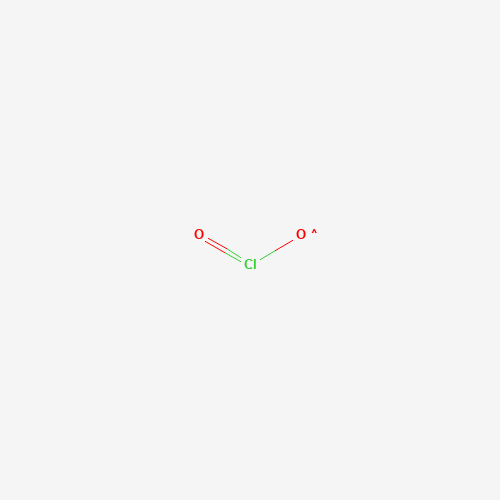
Chlorine dioxide
Dangerous GoodsCAS number:10049-04-4 molecular formula:ClO2
overview
Specs
| Chinese alias | - | ||
| English alias | Alcide; Anthium dioxcide; Chlorine oxide; Chlorine peroxide; Chlorine(IV) oxide; Chloroperoxyl; Chloryl radical; Doxcide 50; | ||
| CAS number | 10049-04-4 | molecular formula | ClO2 |
| molecular weight | 67.45 | Exact mass | - |
| PSA | - | logp | - |
numbering system
| CAS | 10049-04-4 |
| RXCUI | 20799 |
| HMDB ID | HMDB0034826 |
| ChEBI ID | 29415 |
| Wikidata | Q422080 |
| ChEMBL ID | CHEMBL4297725 |
| UN Number | 9191 |
| Wikipedia | Chlorine dioxide |
| DrugBank ID | DB12453 |
| ICSC Number | 0127 |
| PubChem CID | 24870 |
| RTECS Number | FO3000000 |
| Deprecated CAS | 93085-22-4 |
| Nikkaji Number | J342.197J |
| NCI Thesaurus Code | C172619 |
| DSSTox Substance ID | DTXSID5023958 |
| European Community (EC) Number | 233-162-8 |
| PubChem Reference Collection SID | 481107008 |
| MEP ID | _25Q1B3OUL |
physicochemical properties
| Odor | ... Unpleasant odor similar to chlorine and nitric acid. |
| XLogP3 | XLogP3-AA: 1.4 |
| Density | 2.33(relative gas density) |
| Complexity | 7.5 |
| Exact Mass | 66.9586819 |
| Pesticides | Active substance -> EU Pesticides database: Not approved |
| Solubility | (77 °F): 0.3% |
| Flash Point | NA (Gas) ? (Liquid) |
| Boiling Point | 52 °F |
| Decomposition | The major chlorine dioxide /disinfectant by-products/ (DBPs) include chlorite (ClO2 -) and chlorate ions, with no direct formation of organohalogen DBPs. Unlike the other disinfectants, the major chlorine dioxide DBPs are derived from decomposition of the disinfectant as opposed to reaction with precursors. |
| Formal Charge | 0 |
| Melting Point | -74 °F |
| Vapor Density | 2.33 |
| Food Additives | ANTIMICROBIAL AGENT, FLOUR TREATING AGENT, FUMIGANT -> FDA Substance added to food |
| Odor Threshold | [ACGIH] Odor threshold from NJ "Hazardous Substance Fact Sheet" |
| Vapor Pressure | >1 atm |
| Chemical Classes | Reactive agents - 3rd degree |
| Heavy Atom Count | 3 |
| Molecular Weight | 67.45 |
| Monoisotopic Mass | 66.9586819 |
| Heat of Combustion | Standard net heat of combustion (gas): -102.5 kJ/mol |
| Isotope Atom Count | 0 |
| Endocrine Disruptors | Potential endocrine disrupting compound |
| Heat of Vaporization | 30 kJ/mol at 11 °C |
| Ionization Potential | 10.36 eV |
| Physical Description | Yellow to red gas or a red-brown liquid (below 52 °F) with an unpleasant odor similar to chlorine and nitric acid. |
| Rotatable Bond Count | 0 |
| Stability/Shelf Life | Concentrated chlorine dioxide vapor is potentially explosive, and attempts to compress and store this gas, either alone or in combination with other gases, have been commercially unsuccessful. Because of this, chlorine dioxide, like ozone, must be manufactured at the point of use. Chlorine dioxide in water does not hydrolyze to any appreciable extent. Neutral or acidic dilute aqueous solutions are quite stable if kept cool, well sealed and protected from sunlight. |
| Food Contact Substances | FCS -> FDA Inventory of Effective Food Contact Substance (FCS) Notifications |
| Hydrogen Bond Donor Count | 0 |
| Covalently-Bonded Unit Count | 1 |
| Hydrogen Bond Acceptor Count | 1 |
| Other Experimental Properties | Dissolves in alkalies forming a mixture of chlorite and chlorate. Explodes when heated or by reaction with organics. |
| Topological Polar Surface Area | 18.1 Ų |
| Defined Atom Stereocenter Count | 0 |
| Defined Bond Stereocenter Count | 0 |
| Undefined Atom Stereocenter Count | 0 |
| Undefined Bond Stereocenter Count | 0 |
Safety information
DOT Label:
Oxidizer Poison
First Aid:
Swallow: Medical attention immediately (liquid)
AEGLs Notes:
AEGLs Status: Final
AEGLs Table:
8 hr: 0.98
Fire Hazards:
Not combustible but enhances combustion of other substances. Many reactions may cause fire or explosion. Risk of fire and explosion. See Chemical Dangers.
Safe Storage:
Fireproof if in building. Separated from combustible substances and reducing agents. Cool. Keep in the dark. Ventilation along the floor.
Fire Fighting:
In case of fire in the surroundings, use appropriate extinguishing media. In case of fire: keep drums, etc., cool by spraying with water. Combat fire from a sheltered position.
Target Organs:
Eyes, respiratory system
Toxicity Data:
LCLo (rat) = 260 ppm/2H
Eye Prevention:
Wear safety goggles or eye protection in combination with breathing protection.
Health Hazards:
TOXIC; inhalation, ingestion or contact (skin, eyes) with vapors, dusts or substance may cause severe injury, burns or death. Fire may produce irritating and/or toxic gases. Toxic fumes or dust may accumulate in confined areas (basement, tanks, hopper/tank cars, etc.). Runoff from fire control or dilution water may cause environmental contamination. (ERG, 2024)
OSHA Standards:
Vacated 1989 OSHA PEL TWA 0.1 ppm (0.3 mg/cu m); STEL 0.3 ppm (0.9 mg/cu m) is still enforced in some states.
Reactive Group:
Halogenating Agents
Adverse Effects:
Toxic Pneumonitis - Inflammation of the lungs induced by inhalation of metal fumes or toxic gases and vapors.
Cleanup Methods:
1) Remove all ignition sources. 2) Ventilate area of spill or leak. 3) If in gaseous form, stop flow of gas. If source of leak is a cylinder and leak cannot be stopped in place, remove leaking cylinder to safe place in open air, and repair leak or allow cylinder to empty. 4) If in liquid form, evacuate persons not wearing protective equipment. ... Allow ... to evaporate while providing all available ventilation.
EPA Ecotoxicity:
Pesticide Ecotoxicity Data from EPA: 5
Exposure Routes:
inhalation, ingestion (liquid), skin and/or eye contact
Fire Prevention:
NO contact with combustible substances. Closed system, ventilation, explosion-proof electrical equipment and lighting. Do NOT expose to friction or shock.
Hazards Summary:
Corrosive--can cause serious skin burns; [ICSC] Rats exposed to 0.1 ppm for 5 hours/day for 45 days had no adverse effects while exposures to 2.5 ppm for 7 hours/day for 30 days caused severe lung inflammation; [ACGIH]
Inhalation Risk:
A harmful concentration of this gas in the air will be reached very quickly on loss of containment.
Skin Prevention:
Protective gloves. Protective clothing.
DOT ID and Guide:
9191 143(hydrate, frozen)
Disposal Methods:
Use large volume of concentrated solution of ferrous salt or bisulfite solution as reducing agent. Then neutralize and flush to sewer with abundant water.
FDA Requirements:
Chlorine dioxide (CAS Reg. No. 10049-04-4) may be safely used in food in accordance with the following prescribed conditions: (a)(1) The additive is generated by one of the following methods: (i) Treating an aqueous solution of sodium chlorite with either chlorine gas or a mixture of sodium hypochlorite and hydrochloric acid. (ii) Treating an aqueous solution of sodium chlorate with hydrogen peroxide in the presence of sulfuric acid. (iii) Treating an aqueous solution of sodium chlorite by electrolysis. (2) The generator effluent contains at least 90 percent (by weight) of chlorine dioxide with respect to all chlorine species as determined by Method 4500-ClO2 E in the "Standard Methods for the Examination of Water and Wastewater," 20th ed., 1998, or an equivalent method. ... (b)(1) The...
Flammable Limits:
Flammability: Flammable Gas/Combustible Liquid
Physical Dangers:
The gas is heavier than air.
Toxicity Summary:
IDENTIFICATION AND USE: Chlorine dioxide is a yellowish-brown gas with unpleasant odor similar to chlorine and nitric acid. Its uses include bleaching cellulose, paper-pulp, flour, leather, fats and oils, textiles, and beeswax. It is also used for purification of water, taste and odor control of water, cleaning and detanning leather, in the manufacture of chloride salts, and as an oxidizing agent, bactericide, antiseptic and deodorizer. Chlorine dioxide was found to be highly effective against various microorganisms tested at very low concentrations in a minimum contact time of 30 to 60 seconds. HUMAN STUDIES: Potential symptoms of overexposure are irritation of eyes, nose, and throat, as well as coughing, wheezing, bronchitis, and pulmonary edema. Workers industrially exposed to low co...
EC Classification:
Symbol: O, T+, N; R: 6-8-26-34-50; S: (1/2)-23-26-28-36/37/39-38-45-61
Reactivity Alerts:
Water-Reactive
Spillage Disposal:
Evacuate danger area! Consult an expert! Personal protection: complete protective clothing including self-contained breathing apparatus. Ventilation. Remove gas with fine water spray.
Environmental Fate:
/Products formed during oxidative treatment of water/: both oxygenated and chlorinated products may be formed, the latter being found most prominently in connection with reactions of phenolic substances. Other products that might affect health are quinones and 1,2-epoxy compounds.
First Aid Measures:
Eye First Aid: First rinse with plenty of water for several minutes (remove contact lenses if easily possible), then refer for medical attention.
Reactivity Profile:
CHLORINE DIOXIDE is a powerful oxidizer of low stability. Explodes violently on the slightest provocation as gas or liquid even below -100 °C by impact [Sidgwick, 1950, 1203; Stedman, R. F., Chem Eng. News, 1951, 29, p. 5030]. Mixtures with carbon monoxide, methane, ethane, propane, ethylene or butadiene always explode spontaneously. Concentrations of greater than 10% in air are explosive. Severe explosion hazard when heated to 100 °C. Sensitive to shock and sunlight. Explodes on contact with mercury, potassium hydroxide, phosphorus, phosphorus pentachloride, sulfur, difluoramine, trifluoramine, sugar. Very sensitive to the presence of any easily oxidized material. These may, even in minute quantities, trigger a decomposition. Materials such as rubber, hydrocarbons, carbon, iron, rust,...
Signs and Symptoms:
irritation eyes, nose, throat; cough, wheezing, bronchitis, pulmonary edema; chronic bronchitis
Storage Conditions:
Store separately from all other flammable materials. Prior to working with chlorine dioxide you should be trained on its proper handling and storage. This chemical is a powerful oxidizer, and is shock-, light- and heat sensitive. It is violently explosive in air at concentrations over 10%. Keep frozen when not in use. Store in tightly closed containers in a cool, dark, well-ventilated area at temperatures well below 130 °C. Gas explosions may occur above 130 °C. Use only nonsparking tools and equipment, especially when opening and closing containers of this chemical. Sources of ignition, such as smoking and open flames, are prohibited where this chemical is used, handled, or stored in a manner that could create a potential fire or explosion hazard. Use explosion-proof electrical equipme...
Exposure Prevention:
AVOID ALL CONTACT! IN ALL CASES CONSULT A DOCTOR!
Allowable Tolerances:
Residues of the following chemical substances are exempted from the requirement of a tolerance when used in accordance with good manufacturing practice as ingredients in an antimicrobial pesticide formulation, provided that the substance is applied on a semi-permanent or permanent food-contact surface (other than being applied on food packaging) with adequate draining before contact with food. ... (c) The following chemical substances when used as ingredients in an antimicrobial pesticide formulation may be applied to: Food-processing equipment and utensils. ... Pesticide Chemical: Oxychloro species (predominantly chlorite, chlorate and chlorine dioxide in an equilibrium mixture) generated either (i) by directly metering a concentrated chlorine dioxide solution prepared just prior to us...
EPA IRIS Information:
Reference Concentration (RfC), chronic: 2 x 10 ^-4 mg/m^3
Firefighting Hazards:
A powerful oxidizer, this chemical will increase the intensity of a fire, and can cause fire upon contact with combustibles. ... Vapors are heavier than air and will collect in low areas. Containers may explode in fire. Storage containers and parts of containers may rocket great distances, in many directions.
RAIS Toxicity Values:
Oral Chronic Reference Dose Reference: IRIS Current
Inhalation Prevention:
Use closed system or ventilation.
NIOSH Recommendations:
Recommended Exposure Limit: 15 Minute Short Term Exposure Limit: 0.3 ppm (0.9 mg/cu m).
Nonfire Spill Response:
LARGE SPILL: DO NOT CLEAN-UP OR DISPOSE OF, EXCEPT UNDER SUPERVISION OF A SPECIALIST. (ERG, 2024)
Air and Water Reactions:
Reacts with water to produce toxic and corrosive fumes of chlorine. Based on a scenario where the chemical is spilled into an excess of water (at least 5 fold excess of water), half of the maximum theoretical yield of Chlorine gas will be created in 0.14 minutes. Experimental details are in the following: "Development of the Table of Initial Isolation and Protective Distances for the 2008 Emergency Response Guidebook", ANL/DIS-09-2, D.F. Brown, H.M. Hartmann, W.A. Freeman, and W.D. Haney, Argonne National Laboratory, Argonne, Illinois, June 2009.
ICSC Environmental Data:
This substance may be hazardous to the environment. Special attention should be given to aquatic organisms.
Acceptable Daily Intakes:
7-Day exposure: ... One may calculate the SNARL /suggested no adverse response level/ as ... 0.125 mg/L.
Fire Fighting Procedures:
Small fire: Use water. Do not use dry chemicals or foams. CO2 or Halon may provide limited control. Large fire: Flood fire area with water from a distance. Do not move cargo or vehicle if cargo has been exposed to heat. Move containers from fire area if you can do it without risk. Do not get water inside containers: a violent reaction may occur. Fire involving tanks or car/trailer loads: Cool containers with flooding quantities of water until well after fire is out. Dike fire-control water for later disposal. ALWAYS stay away from tanks engulfed in fire. For massive fire, use unmanned hose holders or monitor nozzles; if this is impossible, withdraw from area and let fire burn.
Isolation and Evacuation:
FIRE: If tank, rail tank car or highway tank is involved in a fire, ISOLATE for 800 meters (1/2 mile) in all directions; also, consider initial evacuation for 800 meters (1/2 mile) in all directions. (ERG, 2024)
Other Safety Information:
Chemical Assessment: IMAP assessments - Chlorine oxide, (ClO2): Human health tier I assessment
DOT Hazard Classification:
Hazard Class/Label Code(s): Forbidden explosives/materials (49 eCFR § 173.54/§ 173.21)
Non-Human Toxicity Values:
LD50 Rat oral 94 mg/kg body weight
Other Hazardous Reactions:
A powerful oxidizer.
Toxic Combustion Products:
Poisonous gases, including chlorine, are produced in fire.
Toxicological Information:
CDC-ATSDR Toxicological Profile
Highly Hazardous Substance:
OSHA Highly Hazardous Chemicals, Toxics and Reactives: Note: Chlorine Dioxide in quantities at or above above 1000lb presents a potential for a catastrophic event as a toxic or reactive highly hazardous chemical.
Respirator Recommendations:
Important additional information about respirator selection
Populations at Special Risk:
Individuals with glucose-6-phosphate dehydrogenase (G6PD) deficiency may be more sensitive to chlorine dioxide or chlorite because of a reduced capacity for maintaining significant levels of glutathione, which can lead to destruction of red blood cells and hemolytic anemia. Approximately 10% of the African American population expresses G6PD deficiency. /Investigators/ demonstrated that G6PD-deficient human red blood cells exposed to chlorite exhibited markedly greater decreased glutathione and G6PD activity and increased methemoglobin levels than red blood cells from humans with normal G6PD activity.
Artificial Pollution Sources:
Chlorine dioxide's production and use as an oxidizing bleaching agent in the pulp and paper industry(1) will result in its release to the environment through various waste streams(SRC). Its use as a disinfectant in industrial and municipal water treatment and oxidizer in oil field and pollution abatement processes(1) will result in its direct release to the environment(SRC).
Evidence for Carcinogenicity:
CLASSIFICATION: D; not classifiable as to human carcinogenicity. BASIS FOR CLASSIFICATION: No satisfactory human or animal studies assessing the chronic carcinogenic potential of chlorine dioxide have been located. HUMAN CARCINOGENICITY DATA: None. ANIMAL CARCINOGENICITY DATA: None.
Threshold Limit Values (TLV):
TLV-C (Ceiling): 0.1 ppm [2017]
Effects of Long Term Exposure:
The substance may have effects on the lungs. This may result in chronic bronchitis.
Hazard Classes and Categories:
Aquatic Acute 1
Effects of Short Term Exposure:
The substance is severely irritating to the eyes, skin and respiratory tract. Inhalation of this gas may cause lung oedema. Exposure far above the OEL could cause death. The effects may be delayed. Medical observation is indicated.
Explosive Limits and Potential:
Explosive limits, vol% in air: >10
Standard Transportation Number:
49 181 10; Chlorine dioxide hydrate, frozen
DHS Chemicals of Interest (COI):
Security Issue: Sabotage/Contamination: Chemical or material that can be mixed with readily available materials.
State Drinking Water Guidelines:
(ME) MAINE 210 ug/L
Federal Drinking Water Standards:
EPA 800 ug/L
Permissible Exposure Limit (PEL):
TWA 0.1 ppm (0.3 mg/m3) See Appendix G
Protective Action Criteria (PAC):
PAC-3: 2.4 [ppm]
Recommended Exposure Limit (REL):
TWA 0.1 ppm (0.3 mg/m3) ST 0.3 ppm (0.9 mg/m3)
Critical Temperature and Pressure:
Critical temperature: 465K; critical pressure: 8621.6 kPa
Environmental Abiotic Degradation:
Since chlorite is formed at a rate of 50% of the chlorine dioxide demand, serious consideration must be given to limiting chlorite formation before chlorine dioxide is adopted as disinfectant to replace chlorine.
Federal Drinking Water Guidelines:
EPA 800 ug/L
Probable Routes of Human Exposure:
According to the 2016 TSCA Inventory Update Reporting data, 72 reporting facilities estimate the number of persons reasonably likely to be exposed during the manufacturing, processing, or use of chlorine dioxide in the United States may be as low as 25 workers and as high as 1,000 workers per plant; the data may be greatly underestimated due to confidential business information (CBI) or unknown values(1).
Environmental Water Concentrations:
Proposed limits of use of chlorine dioxide were based primarily upon assessment of hazards of residual chlorite. Concerned with possible in-vivo methemoglobin production by chlorite ... recommended that no chlorite reach the distribution point
Occupational Exposure Limits (OEL):
MAK (Maximale Arbeitsplatz Konzentration): 0.28 mg/m
Skin, Eye, and Respiratory Irritations:
May cause irritation of the eyes, nose, and throat. ...
Exposure Control and Personal Protection:
Maximum Allowable Concentration (MAK): 0.1 [ppm]
Immediately Dangerous to Life or Health (IDLH):
See: 10049044
Hazard Quotient Level 3 or Cancer Risk Level 1E-04:
Fraction of Contaminant Absorbed in Gastrointestinal Tract: 1
Hazard Quotient Level 0.1 or Cancer Risk Level 1E-06:
Fraction of Contaminant Absorbed in Gastrointestinal Tract: 1
Production methods and uses
Production method
... From chlorine and sodium chlorite; ... From potassium chlorate and sulfuric acid; ... By passing nitrogen dioxide through a column of sodium chlorate.
purpose
Industry Uses:
Oxidizing agent
Household Products:
California Safe Cosmetics Program (CSCP): Product count: 1
Use Classification:
Food Additives -> FLOUR_TREATMENT_AGENT; -> JECFA Functional Classes
General Manufacturing Information:
Industry Processing Sectors: Agriculture, Forestry, Fishing and Hunting
Related
upstream information
Methods of Manufacturing:
sodium chlorite (CID:24452); potassium chlorate (CID:19653); sulfuric acid (CID:1118); nitrogen dioxide (CID:3032552); sodium chlorate (CID:24487); methanol (CID:887); sulfur dioxide (CID:1119); chlorate (CID:104770); chloride (CID:312); chlorine dioxide (CID:24870); chloric acid (CID:19654)
downstream information
No downstream information yet
MSDS
Found 1 shareMSDS
10049-04-4 | chlorine dioxide | chlorine dioxide