

神经节苷脂GM3钠盐是神经外系统中主要的神经节苷脂。抑制表皮细胞的生长。GM3被称为主要的神经外神经节苷脂。神经节苷脂GM3钠盐可用作唾液酸酶的底物,在该处理后产生相应的乳糖基神经酰胺。也称为细胞生长因子(EGF和FGF)的共同受体。GM3抗体抑制3T3和NIL细胞生长。 Ganglioside GM3 sodium salt is the major ganglioside of the extra-nervous system. Inhibits growth of epidermal cells. GM3 is known as the main extraneuronal ganglioside. Ganglioside GM3 sodium salt is useful as a substrate for sialidase, after this treatment yields the corresponding lactosylceramide. Also known as the co-receptor of cell growth factor (EGF and FGF). Antibodies to GM3 inhibit 3T3 and NIL cell growth. product description: Gangliosides are acidic glycosphingolipids that form lipid rafts in the outer leaflet of the cell plasma membrane, especially in neuronal cells in the central nervous system. They participate in cellular proliferation, differentiation, adhesion, signal transduction, cell-to-cell interactions, tumorigenesis and metastasis. The accumulation of gangliosides has been linked to several diseases. Ganglioside GM3 is the most abundant ganglioside in mammals. It is involved in several tumor processes by interacting with receptors. It inhibits epidermal cell growth and blocks insulin receptor activity. Exogenous GM3 ganglioside inhibits atherosclerosis.
All
Chemical Reagents
Biomedicine
Organic raw materials
Inorganic chemical industry
intermediate
Agricultural chemicals
Auxiliaries and catalysts
Fragrances and Flavors
Dyes and Pigments
Daily chemical industry
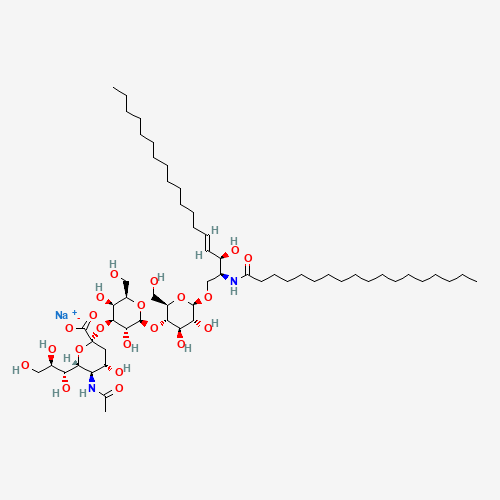
Ganglioside GM3 sodium salt
Dangerous GoodsCAS number:54827-14-4 molecular formula:C59H107N2O21 . Na
overview
compound introduction
Specs
| Chinese alias | - | ||
| English alias | GM3 Na | ||
| CAS number | 54827-14-4 | molecular formula | C59H107N2O21 . Na |
| molecular weight | 1203.47 g/mol | Exact mass | ≥98% |
| PSA | - | logp | - |
numbering system
No numbering system information yet
physicochemical properties
No physical and chemical property information yet
Safety information
WGK Germany:
3
Personal protective equipment:
Eyeshields, Gloves, type N95 (US), type P1 (EN143) respirator filter
Production methods and uses
No production method and use information yet
Related
upstream information
No upstream information yet
downstream information
No downstream information yet
MSDS
Found 0 shareMSDS




