

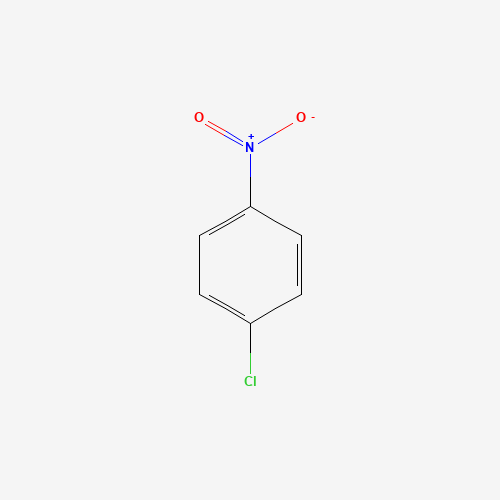
- DOT Label: Poison
- First Aid: Swallow: Medical attention immediately - If this chemical has been swallowed, get medical attention immediately.
- Cancer Sites: [in animals: vascular & liver tumors]
- Fire Hazards: Combustible. Many reactions may cause fire or explosion. Gives off irritating or toxic fumes (or gases) in a fire. Finely dispersed particles form explosive mixtures in air.
- Interactions: ... Ingestion of ethyl alcohol ...aggravates the intoxication. /Nitrochlorobenzene/
- Safe Storage: Separated from combustible substances, reducing agents and food and feedstuffs. Ventilation along the floor. Store in an area without drain or sewer access. Provision to contain effluent from fire extinguishing.
- Fire Fighting: Use water spray, dry powder, foam, carbon dioxide. Combat fire from a sheltered position.
- Target Organs: Blood, liver, kidneys, cardiovascular system, spleen, bone marrow, reproductive system
- Toxicity Data: LCLo (rat) = 16,100 mg/m3/4H
- Eye Prevention: Wear safety goggles, face shield or eye protection in combination with breathing protection if powder.
- Fire Potential: FIRE HAZARD SLIGHT WHEN EXPOSED TO HEAT OR FLAME.
- Health Hazards: Cancer Site: [in animals: vascular & liver tumors] (NIOSH, 2024)
- OSHA Standards: Permissible Exposure Limit: Table Z-1 8-hr Time-Weighted Avg: 1 mg/cu m. Skin Designation.
- Reactive Group: Aryl Halides
- Adverse Effects: ACGIH Carcinogen - Confirmed Animal.
- Cleanup Methods: Environmental considerations-air spill: Apply water spray or mist to knock down vapors. /Chloronitrobenzenes, para, solid/
- Exposure Routes: inhalation, skin absorption, ingestion, skin and/or eye contact
- Fire Prevention: NO open flames. NO contact with flammables. Closed system, dust explosion-proof electrical equipment and lighting. Prevent deposition of dust.
- Hazards Summary: Listed in a table of Industrial Chemicals for Which Methemoglobin Formation is the Principal Cause of Toxicity; liver injury seen in subchronic animal studies; [ACGIH] Can induce methemoglobinemia; May cause skin sensitization; [ICSC]
- Inhalation Risk: A harmful concentration of airborne particles can be reached quickly when dispersed, especially if powdered.
- Skin Prevention: Protective gloves. Protective clothing.
- Special Reports: Organisation for Economic Cooperation and Development; Screening Information Data Set for 1-Chloro-4-nitrobenzene, CAS # 100-00-5 (2002). Available from the Database Query page at: http://www.chem.unep.ch/irptc/sids/OECDSIDS/sidspub.html as of June 26, 2007.
- DOT ID and Guide: 1578 152
- Disposal Methods: 1. By making packages of p-nitrochlorobenzene in paper or other flammable material and burning in a suitable combustion chamber equipped with an appropriate effluent gas cleaning device. 2. By dissolving p-nitrochlorobenzene in a flammable solvent and atomizing in a suitable combustion chamber equipped with an appropriate effluent gas cleaning device.
- Flammable Limits: Flammability: Solid that does not burn, or burns with difficulty.
- Physical Dangers: Dust explosion possible if in powder or granular form, mixed with air.
- Toxicity Summary: 1-Chloro-4-nitrobenzene is rapidly absorbed via skin, gastrointestinal tract or respiratory tract and distributed in the tissue predominantly in fat, blood cells, skeletal muscles, liver and kidney. Most of the substance was excreted with the urine followed by excretion with feces. 1-Chloro-4-nitrobenzene undergoes three major types of transformation in vivo in mammals: nitro-group reduction, displacement of the chloride in glutathione conjugation, and ring hydroxylation. From accidental exposure of workers to 1-chloro-4-nitrophenol, large amounts of 2-chloro-5- nitrophenol, N-acetyl-S-(4-nitrophenyl)-L-cysteine, 4-chloroaniline and 4-chloroformanilide were identified. The oral LD50 for 1-chloro-4-nitrobenzene in male rats is 294 or 694 mg/kg bw and in female rats 565 or 664 mg/kg bw. C...
- Spillage Disposal: Personal protection: complete protective clothing including self-contained breathing apparatus. Do NOT let this chemical enter the environment. Sweep spilled substance into covered sealable containers. If appropriate, moisten first to prevent dusting. Carefully collect remainder. Then store and dispose of according to local regulations. Do NOT absorb in saw-dust or other combustible absorbents.
- UN Classification: UN Hazard Class: 6.1; UN Pack Group: II
- Environmental Fate: ATMOSPHERIC FATE: According to a model of gas/particle partitioning of semivolatile organic compounds in the atmosphere(1), 1-chloro-4-nitrobenzene, which has a vapor pressure of 0.022 mm Hg at 25 °C(2), is expected to exist solely as a vapor in the ambient atmosphere. Vapor-phase 1-chloro-4-nitrobenzene is degraded in the atmosphere by reaction with photochemically-produced hydroxyl radicals(SRC); the half-life for this reaction in air is estimated to be 94 days(SRC), calculated from its rate constant of 1.7X10⁻¹³ cu cm/molecule-sec at 25 °C(SRC) that was derived using a structure estimation method(3). Weak absorption of UV light greater than 290 nm by 1-chloro-4-nitrobenzene in methanol indicates potential for photolysis by sunlight of 1-chloro-4-nitrobenzene in air(4).
- First Aid Measures: Ingestion First Aid: Rinse mouth. Refer for medical attention .
- Reactivity Profile: P-NITROCHLOROBENZENE reacts with oxidizing agents. Reacts violently and finally explosively when added to a solution of sodium methoxide in methanol. (NTP, 1992). Unstable when heated.
- Signs and Symptoms: Anoxia; unpleasant taste; anemia; methemoglobinemia; In Animals: hematuria (blood in the urine); spleen, kidney, bone marrow changes; reproductive effects; [potential occupational carcinogen]
- Storage Conditions: ... materials which are toxic as stored or which can decomp into toxic components ... should be stored in cool, well-ventilated place, out of ... direct rays of ... sun, away from ... high fire hazard ... should be periodically inspected ... incompatible materials should be isolated.
- Exposure Prevention: PREVENT DISPERSION OF DUST! STRICT HYGIENE!
- Ecotoxicity Excerpts: /AQUATIC SPECIES/ Twenty-one-day Daphnia reproduction tests were conducted in line with the provisional procedure proposed by the Federal Environmental Agency (Umweltbundesamt, FRG), as of Jan 1, 1984. Groups of 20, 24-hr old Daphnia magna Straus were exposed to 0.08 to 20 mg/L 1-chloro-4-nitrobenzene in semi-static test vessels. Parent animals in the test and control vessels had to be pipetted 3 times/wk in freshly prepared test and control media at the corresponding concn level. The no observed effect concn (NOEC) was determined from the parameters of mortality of the parent animals, reproduction rate and appearance of the first offspring during the test period. In preliminary acute Daphnia tests, the 24 hr EC50 was 15 mg/l for 1-chloro-4-nitrobenzene, the EC0 was 3.3 mg/L. The nomina...
- Ingestion Prevention: Do not eat, drink, or smoke during work.
- Medical Surveillance: Medical surveillance is based first of all on pre-employment examinations aimed at detecting susceptible persons with red cell glucose-6-phosphate-dehydrogenase defect and/or sickle-cell trait... periodical examinations should include history, medical observation, blood pressure, pulse, weight, blood and urine analysis and liver function tests as appropriate. Additional blood and urine specimens are collected whenever unusually hazardous conditions or known exposures have been encountered.
- RAIS Toxicity Values: Oral Slope Factor Reference: PPRTV Current
- Atmospheric Standards: This action promulgates standards of performance for equipment leaks of Volatile Organic Compounds (VOC) in the Synthetic Organic Chemical Manufacturing Industry (SOCMI). The intended effect of these standards is to require all newly constructed, modified, and reconstructed SOCMI process units to use the best demonstrated system of continuous emission reduction for equipment leaks of VOC, considering costs, non air quality health and environmental impact and energy requirements. p-Chloronitrobenzene is produced, as an intermediate or a final product, by process units covered under this subpart.
- Inhalation Prevention: Use local exhaust or breathing protection.
- NIOSH Recommendations: NIOSH considers p-nitrochlorobenzene to be a potential occupational carcinogen.
- Nonfire Spill Response: STORAGE PRECAUTIONS: You should store this material under ambient temperatures. (NTP, 1992)
- Air and Water Reactions: Insoluble in water.
- Effluent Concentrations: o-, m- and p-Chloronitrobenzene were identified in m-chloronitrobenzene waste water at a concentration of 1.5-1.8 g/L(1).
- ICSC Environmental Data: The substance is toxic to aquatic organisms.
- Packaging and Labelling: Do not transport with food and feedstuffs.
- Fire Fighting Procedures: If material on fire or involved in fire: Do not extinguish fire unless flow can be stopped. Use water in flooding quantities as fog. Solid streams of water may be ineffective. Cool all affected containers with flooding quantities of water. Apply water from as far a distance as possible. Use foam, dry chemical, or carbon dioxide. /Chloronitrobenzenes, para, solid/
- Isolation and Evacuation: FIRE: If tank, rail tank car or highway tank is involved in a fire, ISOLATE for 800 meters (1/2 mile) in all directions; also, consider initial evacuation for 800 meters (1/2 mile) in all directions. (ERG, 2024)
- Other Safety Information: Chemical Assessment: IMAP assessments - Benzene, 1-chloro-4-nitro-: Human health tier II assessment
- Soil Adsorption/Mobility: Using a structure estimation method based on molecular connectivity indices(1), the Koc of 1-chloro-4-nitrobenzene can be estimated to be 310(SRC). According to a classification scheme(2), this estimated Koc value suggests that 1-chloro-4-nitrobenzene is expected to have moderate mobility in soil(SRC).
- Carcinogen Classification: IARC Monographs: Volume 123: (2020) Some Nitrobenzenes and Other Industrial Chemicals
- NFPA Hazard Classification: NFPA Instability Rating: 3 - Materials that in themselves are capable of detonation or explosive decomposition or explosive reaction but that require a strong initiating source or must be heated under confinement before initiation.
- Respirator Recommendations: Important additional information about respirator selection
- Fish/Seafood Concentrations: 1-Chloro-4-nitrobenzene was found in the edible portion of various species of fish taken from the Mississippi River 0, 60 and 150 miles south of St. Louis, MO at concentrations ranging from 0.008 to 0.63 ppm(1).
- Artificial Pollution Sources: 1-Chloro-4-nitrobenzene's production and use as an intermediate in preparing dyes, agricultural and rubber chemicals(1), may result in its release to the environment through various waste streams(SRC).
- Environmental Biodegradation: PURE CULTURE: 61-70% reduction of 1-chloro-4-nitrobenzene after 8 - 13 days was observed when a mixture of 1-chloro-4-nitrobenzene and 2,4-dinitrochlorobenzene under continuous flow conditions involving feeding, aeration, settling and reflux was inoculated with a species of Arthrobacter simplex isolated from industrial waste. When two aeration columns were used, one with A. simplex and the other with A. simplex, Streptomyces coelicolor, Fusarium sp. and Trichoderma viridis isolated from soil, a 90% reduction of the nitro compounds was observed after 10 days. The reduction of 1-chloro-4-nitrobenzene produced p-chloroaniline and some undefined products(1). The yeast Rhodosporidiam sp. reduced 1-chloro-4-nitrobenzene under aerobic conditions to give 4-chloroacetanilide and 4-chloro-2-hydro...
- Threshold Limit Values (TLV): TLV-TWA (Time Weighted Average): 0.1 ppm [1985]
- Effects of Long Term Exposure: The substance may have effects on the blood and liver. This may result in the formation of methaemoglobin, anaemia and liver impairment. This substance is possibly carcinogenic to humans.
- Hazard Classes and Categories: Aquatic Chronic 2
- Effects of Short Term Exposure: The substance may cause effects on the blood. This may result in the formation of methaemoglobin. The effects may be delayed. Medical observation is indicated.
- Environmental Bioconcentration: Carp exposed to solutions containing 0.15 ppm 1-chloro-4-nitrobenzene for 8 weeks had BCF values ranging from 5.8-20.9, and carp exposed to solutions containing 0.015 ppm 1-chloro-4-nitrobenzene had BCF values ranging from 7.5-18.1(1). According to a classification scheme(2), these BCF values suggest bioconcentration in aquatic organisms is low(SRC).
- Standard Transportation Number: 49 214 59; Nitrochlorobenzene, para, solid
- Volatilization from Water/Soil: The Henry's Law constant for 1-chloro-4-nitrobenzene is 4.9X10⁻⁶ atm-cu m/mole(1). This Henry's Law constant indicates that 1-chloro-4-nitrobenzene is expected to volatilize from water surfaces(2). Based on this Henry's Law constant, the volatilization half-life from a model river (1 m deep, flowing 1 m/sec, wind velocity of 3 m/sec)(2) is estimated as 152 hours(SRC). The volatilization half-life from a model lake (1 m deep, flowing 0.05 m/sec, wind velocity of 0.5 m/sec)(2) is estimated as 73 days(SRC). 1-Chloro-4-nitrobenzene's Henry's Law constant indicates that volatilization from moist soil surfaces may occur(SRC). 1-Chloro-4-nitrobenzene is not expected to volatilize from dry soil surfaces(SRC) based upon a vapor pressure of 0.022 mm Hg(3) at 25 °C(3).
- Antidote and Emergency Treatment: ... The dermal absorption of the chemicals was compared, and the absorption, distribution, metabolism, and excretion were partially characterized following oral administration to male F344/N rats. Percutaneous absorption of [14C]-2-chloronitrobenzene and [14C]-4-chloronitrobenzene was demonstrated in rats. For doses ranging from 0.65 to 65 mg/kg of either chemical, 33%; to 40%; of 2-chloronitrobenzene and 51%; to 62%; of 4-chloronitrobenzene were absorbed under nonocclusive conditions. Oral absorption was somewhat higher than dermal absorption for both chemicals, and metabolism was complicated, with over 20 unidentified metabolites isolated from urine of rats given either 2- or 4-chloronitrobenzene.
- Permissible Exposure Limit (PEL): TWA 1 mg/m3 [skin]
- Protective Action Criteria (PAC): PAC-3: 1000 [mg/m3]
- Recommended Exposure Limit (REL): Ca See Appendix A [skin]
- Shipment Methods and Regulations: The International Maritime Dangerous Goods Code lays down basic principles for transporting hazardous chemicals. Detailed recommendations for individual substances and a number of recommendations for good practice are included in the classes dealing with such substances. A general index of technical names has also been compiled. This index should always be consulted when attempting to locate the appropriate procedures to be used when shipping any substance or article.
- Critical Temperature and Pressure: Critical temperature = 751 deg K; Critical pressure = 398X10+6 Pa.
- Environmental Abiotic Degradation: 1-Chloro-4-nitrobenzene was reduced abiotically in bog water from Hyde County NC(1). The 2nd order, carbon normalized rate constants for solutions containing 80 uM 1-chloro-4-nitrobenzene were recorded as 3.6X10⁻⁵ L/hr-mg C at pH 5.5, 3.6X10⁻⁴ L/hr-mg C at pH 7.2 and 1.1X10⁻³ L/hr-mg C at pH 8.6(1). The results from this study demonstrate that natural organic matter mediates the reduction of substituted nitroaromatic compounds in reducing environments. It is suggested that quinone-type species play a predominant role in natural organic matter mediated reductions of chloronitrobenzene(1). Quinoid-type compounds and iron porphyrins were shown to be effective mediators for the reduction of nitroaromatic compounds, including chloronitrobenzenes(2). Reaction conditions are homogeneous aqueou...
- Probable Routes of Human Exposure: NIOSH (NOES Survey 1981-1983) NIOSH (NOES Survey 1981-1983) has statistically estimated that 2948 workers (401 of these are female) are potentially exposed to 1-chloro-4-nitrobenzene in the US(1). Occupational exposure may occur through inhalation and dermal contact with this compound at workplaces where 1-chloro-4-nitrobenzene is produced or used(SRC).
- Environmental Water Concentrations: DRINKING WATER: 1-Chloro-4-nitrobenzene was identified, not quantified, in drinking water from New Orleans, LA(1).
- Occupational Exposure Limits (OEL): MAK (Maximale Arbeitsplatz Konzentration): skin absorption (H); carcinogen category: 3
- Environmental Fate/Exposure Summary: 1-Chloro-4-nitrobenzene's production and use as an intermediate in preparing dyes, agricultural and rubber chemicals, may result in its release to the environment through various waste streams. If released to air, a vapor pressure of 0.022 mm Hg at 25 °C indicates 1-chloro-4-nitrobenzene will exist solely as a vapor in the atmosphere. Vapor-phase 1-chloro-4-nitrobenzene will be degraded in the atmosphere by reaction with photochemically-produced hydroxyl radicals; the half-life for this reaction in air is estimated to be 94 days. Weak absorption of UV light greater than 290 nm by 1-chloro-4-nitrobenzene indicates potential for photolysis by sunlight. If released to soil, 1-chloro-4-nitrobenzene is expected to have moderate mobility in soil based on an estimated Koc value of 310. Volatil...
- Shipping Name/ Number DOT/UN/NA/IMO: IMO 6.1; Nitrochlorobenzene, solid or liquid
- Skin, Eye, and Respiratory Irritations: Causes severe eye & skin burns. Irritating to skin, eyes, & respiratory system. /Chloronitrobenzenes/
- Exposure Control and Personal Protection: Exposure Summary: Biological Exposure Indices (BEI) [ACGIH] - Methemoglobin in blood = 1.5% of hemoglobin during or at end of shift. [ACGIH]
- EPA Provisional Peer-Reviewed Toxicity Values: Weight-Of-Evidence (WOE): Likely to be carcinogenic to humans
- Immediately Dangerous to Life or Health (IDLH): See: 100005
- Hazard Quotient Level 3 or Cancer Risk Level 1E-04: Fraction of Contaminant Absorbed Dermally from Soil: 0.1
- Hazard Quotient Level 0.1 or Cancer Risk Level 1E-06: Fraction of Contaminant Absorbed Dermally from Soil: 0.1
Warm reminder:
Because the manufacturer may temporarily adjust product specifications, prices, inventory, parameters and other information without notice, and there are differences in each user's consultation time and procurement needs, the platform reply content is only of reference value within a certain period. Sorry for the inconvenience caused to you, and thank you for your understanding and support! Please consult the online customer service for the latest details. Everything is subject to the real-time reply of the customer service.!
Please check the quantity, appearance and product information in time when you receive the goods. In case of damage, wrong delivery, abnormal quality and other problems, please feel free to contact us.
Service Hotline:400-6226-992 ,We will handle it for you as soon as possible, thank you for your support and trust.!
p-nitrochlorobenzene Reagent Grade, 98% 100/g
p-nitrochlorobenzene Reagent Grade, 98% 100/g 100-00-5, , .




