

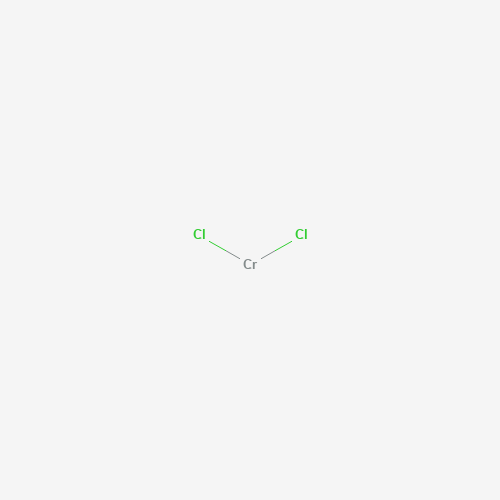
- First Aid: INGESTION: If conscious, make victim drink water or milk, then induce vomiting. (USCG, 1999)
- Treatment: There is no know antidote for chromium poisoning. Exposure is usually handled with symptomatic treatment. (L16)
- Fire Hazards: Not combustible.
- Safe Storage: Separated from strong oxidants and food and feedstuffs. Dry. Well closed. Keep in a well-ventilated room.
- Fire Fighting: In case of fire in the surroundings, use appropriate extinguishing media.
- Toxicity Data: LD50: 1870 mg/kg (Oral, Rat) (T14)
- Eye Prevention: Wear safety goggles.
- Health Effects: Chromium in its trivalent state is not very toxic. It may be oxidized to hexavalent chromium, a known carcinogen. Hexavalent chromium has also been shown to affect reproduction and development. (A12)
- Health Hazards: DUST: Harmful if inhaled. SOLID: Irritating to skin and eyes. Harmful if swallowed. (USCG, 1999)
- OSHA Standards: Permissible Exposure Limit: Table Z-1 8-hr Time Weighted Avg: 0.5 mg/cu m. /Chromium(II) compounds, as Cr/
- Reactive Group: Reducing Agents, Strong
- Cleanup Methods: ACCIDENTAL RELEASE MEASURES; Personal precautions, protective equipment and emergency procedures: Use personal protective equipment. Avoid dust formation. Avoid breathing vapours, mist or gas. Ensure adequate ventilation. Evacuate personnel to safe areas. Avoid breathing dust. Environmental precautions: Do not let product enter drains. Methods and materials for containment and cleaning up: Pick up and arrange disposal without creating dust. Sweep up and shovel. Keep in suitable, closed containers for disposal.
- Exposure Routes: Oral (L16); inhalation (L16); dermal (L16)
- Hazards Summary: The relatively unstable divalent (chromous) ion is rapidly oxidized to the trivalent (Cr(III); chromic] form. [Nordberg, p. 718] Bivalent compounds are unstable and have little commercial value. [Asthma in the Workplace, p. 296] May be harmful after ingestion, inhalation, or skin contact; May damage eyes; Stable under recommended storage conditions. [MSDSonline] A skin and respiratory tract irritant; [ICSC] See Chromium.
- Inhalation Risk: Evaporation at 20 °C is negligible; a harmful concentration of airborne particles can, however, be reached quickly when dispersed.
- Skin Prevention: Protective gloves.
- Toxicity Summary: Trivalent chromium may also form complexes with peptides, proteins, and DNA, resulting in DNA-protein crosslinks, DNA strand breaks, DNA-DNA interstrand crosslinks, chromium-DNA adducts, chromosomal aberrations and alterations in cellular signaling pathways. It has been shown to induce carcinogenesis by overstimulating cellular regulatory pathways and increasing peroxide levels by activating certain mitogen-activated protein kinases. It can also cause transcriptional repression by cross-linking histone deacetylase 1-DNA methyltransferase 1 complexes to CYP1A1 promoter chromatin, inhibiting histone modification. Chromium may increase its own toxicity by modifying metal regulatory transcription factor 1, causing the inhibition of zinc-induced metallothionein transcription. (A12, L16, A34,...
- RCRA Requirements: D007; A solid waste containing chromium may or may not become characterized as a hazardous waste when subjected to the Toxicity Characteristic Leaching Procedure listed in 40 CFR 261.24, and if so characterized, must be managed as a hazardous waste. /Chromium/
- Reactivity Alerts: Air-Reactive
- Spillage Disposal: Sweep spilled substance into covered sealable containers. Carefully collect remainder. Then store and dispose of according to local regulations. Personal protection: P2 filter respirator for harmful particles. Do NOT let this chemical enter the environment.
- Ecotoxicity Values: LC50; Species: Daphnia magna (Water Flea) neonate age <24 hr, 3rd to 5th brood; Conditions: freshwater, static, 20 °C; Concentration: 21531 ug/L for 48 hr (95% confidence interval: 18957-24456 ug/L) /> or =95% purity/
- First Aid Measures: Eye First Aid: First rinse with plenty of water for several minutes (remove contact lenses if easily possible), then refer for medical attention.
- Reactivity Profile: Inorganic reducing agents, such as CHROMOUS CHLORIDE, react with oxidizing agents to generate heat and products that may be flammable, combustible, or otherwise reactive. Their reactions with oxidizing agents may be violent. Long storage of a chromous chloride solution culminated in an explosion. This was ascribed to the slow buildup of hydrogen gas that was produced by reduction of water by the Cr(II) ion [MCA Case History No. 1660].
- Signs and Symptoms: Chromium in its trivalent state is not very toxic, but it may be oxidized to hexavalent chromium. Breathing hexavalent chromium can cause irritation to the lining of the nose, nose ulcers, runny nose, and breathing problems, such as asthma, cough, shortness of breath, or wheezing. Ingestion of hexavalent chromium causes irritation and ulcers in the stomach and small intestine, as well as anemia. Skin contact can cause skin ulcers. (L16)
- Storage Conditions: KEEP WELL CLOSED.
- Exposure Prevention: PREVENT DISPERSION OF DUST!
- Firefighting Hazards: Hydrogen chloride gas, Chromium oxides
- Ingestion Prevention: Do not eat, drink, or smoke during work.
- Inhalation Prevention: Avoid inhalation of dust and mist. Use local exhaust or breathing protection.
- NIOSH Recommendations: Recommended Exposure Limit: 10-hour Time-Weighted Average: 0.5 mg/cu m. /Chromium(II) compounds (as Cr)/
- Air and Water Reactions: Stable in dry air, but oxidizes rapidly in moist air or standing water with liberation of Hydrogen, [Merck, 11th ed., 1989]. Soluble in water.
- ICSC Environmental Data: It is strongly advised not to let the chemical enter into the environment because it is persistent.
- Packaging and Labelling: Do not transport with food and feedstuffs.
- Fire Fighting Procedures: Respiratory protection from soluble chromic and chromous salts while fighting fires: self-contained breathing apparatus with a full facepiece operated in pressure-demand or other positive pressure mode. /Sol chromic & chromous salts/
- Carcinogen Classification: No indication of carcinogenicity (not listed by IARC). (L135)
- Non-Human Toxicity Values: LD50 Rat oral 1870 mg/kg
- EPA Hazardous Waste Number: D007; A waste containing chromium may or may not be characterized as a hazardous waste following testing by the Toxicity Characteristic Leaching Procedure as prescribed by the Resource Conservation and Recovery Act (RCRA) regulations. /Chromium/
- Non-Human Toxicity Excerpts: /GENOTOXICITY/ A chromium[II] compound (chromous chloride) gave negative results in in-vitro tests with animal cells (DNA damage, chromosomal aberrations and aneuploidy).
- Hazard Classes and Categories: STOT SE 3 (86.7%)
- Effects of Short Term Exposure: The substance is irritating to the skin and respiratory tract.
- Explosive Limits and Potential: Chromous chloride solution exploded after prolonged storage; pressure of hydrogen developed by reduction of solvent water by Cr(II)ion.
- Standard Transportation Number: 49 633 24; Chromous chloride (chrome chloride solution)
- Federal Drinking Water Standards: Maximum contaminant level for inorganic contaminants: Contaminant: Chromium; MCL 0.1 mg/L. /Chromium/
- Permissible Exposure Limit (PEL): 0.5 [mg/m3], as Cr
- Protective Action Criteria (PAC): PAC-3: 370 [mg/m3]
- Federal Drinking Water Guidelines: Maximum contaminant level goal for inorganic contaminants: Contaminant: Chromium; MCLG 0.1 mg/L. /Chromium/
- Probable Routes of Human Exposure: NIOSH (NOES Survey 1981-1983) has statistically estimated that 2,639 workers (1,129 of these are female) were potentially exposed to chromium chloride (CAS unspecified) in the US(1).
- Hazardous Reactivities and Incompatibilities: Oxidizing agents
- Immediately Dangerous to Life or Health (IDLH): 250 mg/cu m (as Cr(II)). /Chromium(II) compounds (as Cr)/
Warm reminder:
Because the manufacturer may temporarily adjust product specifications, prices, inventory, parameters and other information without notice, and there are differences in each user's consultation time and procurement needs, the platform reply content is only of reference value within a certain period. Sorry for the inconvenience caused to you, and thank you for your understanding and support! Please consult the online customer service for the latest details. Everything is subject to the real-time reply of the customer service.!
Please check the quantity, appearance and product information in time when you receive the goods. In case of damage, wrong delivery, abnormal quality and other problems, please feel free to contact us.
Service Hotline:400-6226-992 ,We will handle it for you as soon as possible, thank you for your support and trust.!
anhydrouschloro (Ⅱ) 97% 25/g
anhydrouschloro (Ⅱ) 97% 25/g 10049-05-5, , .




