

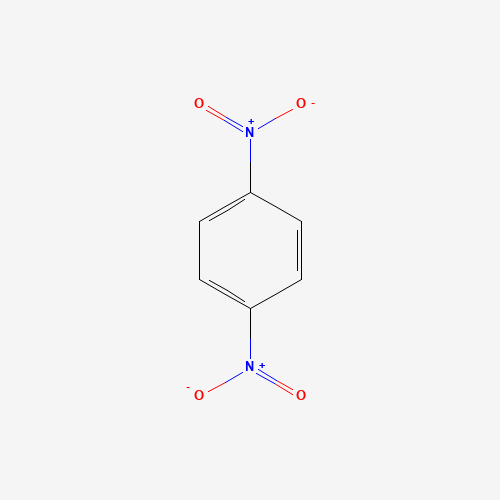
- DOT Label: Poison
- First Aid: Swallow: Medical attention immediately - If this chemical has been swallowed, get medical attention immediately.
- Fire Hazards: Combustible. Gives off irritating or toxic fumes (or gases) in a fire. Finely dispersed particles form explosive mixtures in air.
- Interactions: IN SUBACUTE POISONING, SYMPTOMS MAY BE PRECIPITATED BY SUNLIGHT OR BY INGESTION OF ALCOHOL. /DINITROBENZENE/
- Safe Storage: Separated from strong oxidants, strong bases, strong acids and food and feedstuffs. See Chemical Dangers.
- Fire Fighting: Use water spray, foam, powder, carbon dioxide. In case of fire: keep drums, etc., cool by spraying with water. Combat fire from a sheltered position.
- Target Organs: Eyes, skin, blood, liver, cardiovascular system, central nervous system
- Eye Prevention: Wear face shield or eye protection in combination with breathing protection.
- Health Hazards: INHALATION OR INGESTION: Headache, vertigo, nausea, vomiting, diarrhea, fever, rapid weak pulse, decreased blood pressure, cyanosis, exhaustion, hepatomegaly, jaundice, albuminurea, hematuria, visual scotomata, amblyopia and nystagmus. EYES: Irritation. SKIN: Stains skin yellow; if skin contact is prolonged, can be absorbed into blood causing same symptoms as for inhalation. (USCG, 1999)
- OSHA Standards: Permissible Exposure Limit: Table Z-1 8-hr Time-Weighted Avg: 1 mg/cu m. Skin Designation. /Dinitrobenzene (all isomers)/
- Reactive Group: Nitro, Nitroso, Nitrate, and Nitrite Compounds, Organic
- Adverse Effects: Methemoglobinemia - The presence of increased methemoglobin in the blood; the compound is classified as primary toxic effect.
- Cleanup Methods: SRP: At the time of review, criteria for land treatment or burial (sanitary landfill) disposal practices are subject to significant revision. Prior to implementing land disposal of waste residue (including waste sludge), consult with environmental regulatory agencies for guidance on acceptable disposal practices.
- Exposure Routes: inhalation, skin absorption, ingestion, skin and/or eye contact
- Fire Prevention: NO open flames. Closed system, dust explosion-proof electrical equipment and lighting. Prevent deposition of dust.
- Hazards Summary: The major hazards encountered in the use and handling of 1,4-dinitrobenzene stem from its toxicologic properties and explosivity. Toxic by all routes (ie, inhalation, ingestion, dermal absorption), exposure to this colorless-to yellow, crystalline substance may occur from its production or use in the synthesis of dyes and as a camphor substitute in cellulose nitrate. Effects from exposure may include headache, nausea, vision impairment, contact burns to the skin and eyes, cardiac arrhythmias, methemaglobinemia, cyanosis, hepatic injury, and respiratory failure. Effects may be delayed for up to 1-4 hours. OSHA has established a time-weighted-average (TWA) exposure limit of 1 mg/cu m, with a skin designation. In activities and situations where over-exposure may occur, where a positive pre...
- Inhalation Risk: No indication can be given about the rate at which a harmful concentration of this substance in the air is reached on evaporation at 20 °C.
- Skin Prevention: Protective gloves. Protective clothing.
- Special Reports: Anon; J Appl Toxicol 9 (3): 199-202 (1989). Toxicology update for dinitrobenzene with 42 references on toxicity, metabolism, teratogenicity, mutagenicity, and carcinogenicity.
- DOT ID and Guide: 1597 152
- Disposal Methods: The following wastewater treatment technologies have been investigated for dinitrobenzene: Concentration process: Reverse osmosis. /Dinitrobenzene/
- Flammable Limits: Flammability: Combustible Solid
- Physical Dangers: Dust explosion possible if in powder or granular form, mixed with air.
- EC Classification: Symbol: T+, N; R: 26/27/28-33-50/53; S: (1/2)-28-36/37-45-60-61; Note: C
- Reactivity Alerts: Strong Oxidizing Agent
- Spillage Disposal: Consult an expert! Sweep spilled substance into covered containers. If appropriate, moisten first to prevent dusting. Carefully collect remainder. Then store and dispose of according to local regulations. Do NOT let this chemical enter the environment. Personal protection: complete protective clothing including self-contained breathing apparatus.
- UN Classification: UN Hazard Class: 6.1; UN Pack Group: II
- Ecotoxicity Values: LC50 Pimephales promelas (fathead minnow) 0.603 (0.581-0.627) mg/l 96 hr, wt 164 mg, flow-through bioassay, dissolved oxygen 7.4 (4.6-8.8) mg/l, water hardness 44.9 (42.4-46.6) mg/l as CaCO3, pH 6.9-7.7, alkalinity 42.9 (39.6-61.4) mg/l CaCO3, temp: 26.4 +/- 1.4 °C, Purity 98%
- Environmental Fate: ATMOSPHERIC FATE: According to a model of gas/particle partitioning of semivolatile organic compounds in the atmosphere(1), 1,4-dinitrobenzene, which has an estimated vapor pressure of 6.5X10⁻⁵ mm Hg at 25 °C(SRC), determined from a fragment constant method(2), is expected to exist in both the vapor and particulate phases in the ambient atmosphere. Vapor-phase 1,4-dinitrobenzene is degraded in the atmosphere by reaction with photochemically-produced hydroxyl radicals(SRC); the half-life for this reaction in air is estimated to be 753 days(SRC), calculated from its rate constant of 2.1X10⁻¹⁴ cu cm/molecule-sec at 25 °C (SRC) determined using a structure estimation method(3). 1,4-Dinitrobenzene absorbs light greater than 290 nm and may be susceptible to direct photolysis(4), but the kinet...
- First Aid Measures: Ingestion First Aid: Rinse mouth. Give a slurry of activated charcoal in water to drink. Refer for medical attention .
- Reactivity Profile: All three isomers have similar properties and may react vigorously with oxidizing materials. Their reaction with nitric acid (nitration) will lead to a mixture of trinitrobenzenes possessing high-explosive properties [Urbanski, 1967, vol. 3, p. 290]. If heat and reaction conditions of the nitration are not controlled, detonation comparable to TNT may occur [Anon., J. R. Inst. Chem., 1960, 84, p. 451]. Mixture of 1,3-dinitrobenzene with tetranitromethane was found highly explosive [Urbanski, 1964, vol. 1, 592]. 1,2-dinitrobenzene is a severe explosion hazard when shocked or exposed to heat or flame. When heated to decomposition all dinitrobenzens emit toxic fumes of nitrogen oxides [Sax, 9th ed., 1996, p. 1374].
- Signs and Symptoms: Anoxia, cyanosis; visual disturbance, central scotomas; bad taste, burning mouth, dry throat, thirst; yellowing hair, eyes, skin; anemia; liver damage
- Exposure Prevention: PREVENT DISPERSION OF DUST! STRICT HYGIENE!
- Ingestion Prevention: Do not eat, drink, or smoke during work. Wash hands before eating.
- Medical Surveillance: A complete blood count: Dinitrobenzene has been shown to cause methemoglobinemia. ... A complete blood count should be performed, including a red cell count, a white cell count, a differential count of a stained smear, as well as hemoglobin and hematocrit. Observe for Heinz bodies. ... Liver function tests: Since liver damage has been observed in humans exposed to dinitrobenzene, a profile of liver function should be performed by using a medically acceptable array of biochemical tests.
- RAIS Toxicity Values: Oral Subchronic Chronic Reference Dose Reference: PPRTV Current
- Inhalation Prevention: Use local exhaust or breathing protection.
- NIOSH Recommendations: Recommended Exposure Limit: 10 Hr Time-Weighted avg: 1 mg/cu m; skin.
- Nonfire Spill Response: ELIMINATE all ignition sources (no smoking, flares, sparks or flames) from immediate area. Do not touch damaged containers or spilled material unless wearing appropriate protective clothing. Stop leak if you can do it without risk. Prevent entry into waterways, sewers, basements or confined areas. Cover with plastic sheet to prevent spreading. Absorb or cover with dry earth, sand or other non-combustible material and transfer to containers. DO NOT GET WATER INSIDE CONTAINERS. (ERG, 2024)
- Air and Water Reactions: Slowly mixes with water.
- ICSC Environmental Data: The substance is toxic to aquatic organisms.
- Packaging and Labelling: Do not transport with food and feedstuffs.
- Fire Fighting Procedures: If /dinitrobenzene, solid/ is on fire, or involved in fire: Use water in flooding quantities as fog, and cool all affected containers with flooding quantities of water. Apply water from as far a distance as possible, and use alcohol foam, carbon dioxide, or dry chemical. If fire is massive, back off, protect surroundings, and let burn. /Dinitrobenzene, solid/
- Isolation and Evacuation: FIRE: If tank, rail tank car or highway tank is involved in a fire, ISOLATE for 800 meters (1/2 mile) in all directions; also, consider initial evacuation for 800 meters (1/2 mile) in all directions. (ERG, 2024)
- Soil Adsorption/Mobility: The Koc of 1,4-dinitrobenzene is estimated as 150(SRC), using a measured log Kow of 1.46(1) and a regression-derived equation(2). According to a classification scheme(3), this estimated Koc value suggests that 1,4-dinitrobenzene is expected to have high mobility in soil. It has been shown that nitrophenols and nitrobenzenes adsorb strongly to clay through an interaction between the nitro group and the water molecules or metallic cations in the clay(4), and 1,4-dinitrobenzene is expected to similarly bind to clays(SRC). The adsorption of 1,4-dinitrobenzene was studied in monmorillonite, kaolinite and illite clays(5). Adsorption coefficients (Kd) of 188, 1,460 and 3,100 L/kg were measured in kaolinite, illite and monmorillonite, respectively(5).
- Respirator Recommendations: Important additional information about respirator selection
- Populations at Special Risk: Those with blood disorders may be at increased risk.
- Artificial Pollution Sources: 1,4-Dinitrobenzene's production and use in the manufacture of dyes, as an organic synthesis reagent and as a camphor substitute in cellulose nitrate(1) may result in its release to the environment(SRC). 1,4-Dinitrobenzene is also an impurity in the production of 2,4,6-trinitrotoluene (TNT)(2).
- Environmental Biodegradation: More than 64 days were required to achieve a total loss of 1,4-dinitrobenzene when incubated with Niagara silt loam inoculum at 25 °C(1). No additional data were available concerning 1,4-dinitrobenzene, but 1,2-dinitrobenzene and 1,3-dinitrobenzene are degraded to aromatic amines and ring opened species upon anaerobic and aerobic incubation, respectively, with sewage effluent(2). Dinitrobenzene (isomer not specified), present at 100 mg/l, reached 0 percent of its theoretical BOD in 2 weeks using an activated sludge inoculum at 30 mg/l and the Japanese MITI test(3), suggesting biodegradation occurs slowly(SRC).
- Threshold Limit Values (TLV): 0.15 ppm as TWA; (skin); BEI issued.
- Effects of Long Term Exposure: The substance may have effects on the blood. This may result in anaemia. The substance may have effects on the liver. This may result in liver impairment.
- Hazard Classes and Categories: Aquatic Chronic 1
- Effects of Short Term Exposure: The substance is irritating to the eyes and respiratory tract. The substance may cause effects on the blood. This may result in the formation of methaemoglobin. The effects may be delayed. Medical observation is indicated.
- Environmental Bioconcentration: A BCF value of 5 was measured for 1,4-dinitrobenzene in fish(1). BCF values of 2-38 were measured in carp exposed to dinitrobenzene (isomer not specified) over a 6 week incubation period(2). According to a classification scheme(3), this BCF value suggest bioconcentration in aquatic organisms is low to moderate(SRC).
- Explosive Limits and Potential: Mixture with nitric acid is a high explosive.
- Standard Transportation Number: 49 214 21; Dinitrobenzene, solid
- Volatilization from Water/Soil: The Henry's Law constant for 1,4-dinitrobenzene is estimated as 8.4X10⁻⁸ atm-cu m/mole(SRC) using a fragment constant estimation method(1). This Henry's Law constant indicates that 1,4-dinitrobenzene is expected to be essentially nonvolatile from water(2). 1,4-Dinitrobenzene's Henry's Law constant(1) indicates that volatilization from moist soil surfaces is not expected to occur(SRC). 1,4-Dinitrobenzene is not expected to volatilize from dry soil surfaces(SRC) based upon an estimated vapor pressure of 6.5X10⁻⁴ mm Hg(SRC), determined from a fragment constant method(3).
- Permissible Exposure Limit (PEL): TWA 1 mg/m3 [skin]
- Recommended Exposure Limit (REL): TWA 1 mg/m3 [skin]
- Shipment Methods and Regulations: The International Maritime Dangerous Goods Code lays down basic principles for transporting hazardous chemicals. Detailed recommendations for individual substances and a number of recommendations for good practice are included in the classes dealing with such substances. A general index of technical names has also been compiled. This index should always be consulted when attempting to locate the appropriate procedures to be used when shipping any substance or article.
- Environmental Abiotic Degradation: The rate constant for the vapor-phase reaction of 1,4-dinitrobenzene with photochemically-produced hydroxyl radicals has been estimated as 2.1X10⁻¹⁴ cu cm/molecule-sec at 25 °C(SRC) using a structure estimation method(1). This corresponds to an atmospheric half-life of about 753 days at an atmospheric concentration of 5X10+5 hydroxyl radicals per cu cm(1). Nitrobenzenes absorb light greater than 290 nm(2), which suggests that 1,4-dinitrobenzene may be susceptible to direct photolysis in the environment(SRC). Hydrolysis is not expected to be an important fate process for 1,4-dinitrobenzene since this compound lacks functional groups that undergo hydrolysis under environmental conditions(2).
- Probable Routes of Human Exposure: Occupational exposure to 1,4-dinitrobenzene may occur through inhalation and dermal contact with this compound at workplaces where 1,4-dinitrobenzene is produced or used. (SRC)
- Occupational Exposure Limits (OEL): MAK (Maximale Arbeitsplatz Konzentration): skin absorption (H); carcinogen category: 3
- Environmental Fate/Exposure Summary: 1,4-Dinitrobenzene's production and use in the manufacture of dyes, as an organic synthesis reagent and as a camphor substitute in cellulose nitrate may result in its release to the environment. 1,4-Dinitrobenzene is also an impurity in the production of 2,4,6-trinitrotoluene (TNT). If released to air, an estimated vapor pressure of 6.5X10⁻⁵ mm Hg at 25 °C indicates 1,4-dinitrobenzene will exist in both the vapor and particulate phases in the ambient atmosphere. Vapor-phase 1,4-dinitrobenzene will be degraded in the atmosphere by reaction with photochemically-produced hydroxyl radicals; the half-life for this reaction in air is estimated to be 753 days. 1,4-Dinitrobenzene absorbs light at wavelengths greater than 290 nm and may be susceptible to direct photolysis, but the kinetics of th...
- Shipping Name/ Number DOT/UN/NA/IMO: IMO 6.1; Dinitrobenzenes, liquid or solid
- Skin, Eye, and Respiratory Irritations: Eyes are irritated by liquid. /1,3-Dinitrobenzene/
- Exposure Control and Personal Protection: Exposure Summary: Biological Exposure Indices (BEI) [ACGIH] - Methemoglobin in blood = 1.5% of hemoglobin during or at end of shift. [ACGIH]
- Other Standards Regulations and Guidelines: Czechoslovakia, East & West Germany, Sweden & USSR: 0.15 ppm (no date)
- Hazardous Reactivities and Incompatibilities: Mixture with nitric acid is a high explosive.
- EPA Provisional Peer-Reviewed Toxicity Values: Weight-Of-Evidence (WOE): Inadequate information to assess carcinogenic potential
- Immediately Dangerous to Life or Health (IDLH): See: IDLH INDEX
- Hazard Quotient Level 3 or Cancer Risk Level 1E-04: Fraction of Contaminant Absorbed Dermally from Soil: 0.1
- Hazard Quotient Level 0.1 or Cancer Risk Level 1E-06: Fraction of Contaminant Absorbed Dermally from Soil: 0.1
Warm reminder:
Because the manufacturer may temporarily adjust product specifications, prices, inventory, parameters and other information without notice, and there are differences in each user's consultation time and procurement needs, the platform reply content is only of reference value within a certain period. Sorry for the inconvenience caused to you, and thank you for your understanding and support! Please consult the online customer service for the latest details. Everything is subject to the real-time reply of the customer service.!
Please check the quantity, appearance and product information in time when you receive the goods. In case of damage, wrong delivery, abnormal quality and other problems, please feel free to contact us.
Service Hotline:400-6226-992 ,We will handle it for you as soon as possible, thank you for your support and trust.!
Research chemical >99. 9%; 1g
Research chemical >99. 9%; 1g; supplied for laboratory research, analysis, inspection, and scientific procurement use; specifications: >99. 9%; 1g.




