
- DOT Label: Corrosive Flammable Liquid
- First Aid: Swallow: Medical attention immediately - If this chemical has been swallowed, get medical attention immediately.
- Fire Hazards: Flammable. Gives off irritating or toxic fumes (or gases) in a fire. Above 52 °C explosive vapour/air mixtures may be formed.
- Safe Storage: Fireproof. Separated from strong oxidants and strong acids. Cool. Dry.
- Fire Fighting: Use water spray, powder, alcohol-resistant foam, carbon dioxide. In case of fire: keep drums, etc., cool by spraying with water.
- Target Organs: Eyes, skin, respiratory system
- Toxicity Data: LCLo (rat) = 4,500 mg/m3/4H
- Eye Prevention: Wear face shield or eye protection in combination with breathing protection.
- Fire Potential: Flammable; moderate fire hazard
- Health Hazards: ERG2024, Guide 132 (2-Diethylaminoethanol): · Runoff from fire control or dilution water may cause environmental contamination.
- Reactive Group: Amines, Phosphines, and Pyridines
- Adverse Effects: Asthma - Reversible bronchoconstriction (narrowing of bronchioles) initiated by the inhalation of irritating or allergenic agents.
- Cleanup Methods: 1. Remove all ignition sources. 2. Ventilate area of spill or leak. 3. For small quantities, absorb on paper towels. Evaporate in a safe place (such as a fume hood). Allow sufficient time for evaporating vapors to completely clear the hood ductwork. Burn the paper in a suitable location away from combustible materials. Large quantities can be reclaimed or collected and atomized in a suitable combustion chamber equipped with an appropriate effluent gas cleaning device. Diethylaminoethanol should not be allowed to enter a confined space, such as a sewer, because of the possibility of an explosion. Sewers designed to preclude the formation of explosive concentrations of diethylaminoethanol vapors are permitted.
- Exposure Routes: inhalation, skin absorption, ingestion, skin and/or eye contact
- Fire Prevention: NO open flames, NO sparks and NO smoking. Above 52 °C use a closed system and ventilation.
- Hazards Summary: Corrosive to skin; [Quick CPC] Possible cause of asthma; [Reference #1] Causes upper and lower respiratory tract irritation; Rats show signs of upper respiratory irritation with exposures above 120 mg/m3; [NIOSH Criteria Document] May cause allergic contact dermatitis; [CAMEO] Corrosive to the eyes; [ICSC]
- Inhalation Risk: A harmful contamination of the air can be reached very quickly on evaporation of this substance at 20 °C.
- Skin Prevention: Protective gloves. Protective clothing.
- DOT ID and Guide: 2686 132
- Disposal Methods: Drain into the sewer with abundant water. (a) Dissolve in a combustible solvent such as alcohols, etc. Burn in an open furnace by igniting from a safe distance with the utmost care or sprinkle into the fire chamber of the furnace with afterburner and scrubber. (b) Pour into sodium bisulfate in a large evaporating dish. Sprinkle water and neutralize. Drain into the sewer with sufficient water.
- Flammable Limits: Flammability: Class II Combustible Liquid: Fl.P. at or above 100 °F and below 140 °F.
- EC Classification: Symbol: C; R: 10-20/21/22-34; S: (1/2)-25-26-36/37/39-45
- Spillage Disposal: Personal protection: filter respirator for organic gases and vapours adapted to the airborne concentration of the substance. Collect leaking and spilled liquid in sealable containers as far as possible. Wash away remainder with plenty of water.
- UN Classification: UN Hazard Class: 8; UN Subsidiary Risks: 3; UN Pack Group: II
- Ecotoxicity Values: LC50 Pimephales promelas (fathead minnow) 1780 mg/l/96 hr (95% confidence limit 1660-1920 mg/l), flow-through bioassay with measured concentrations, 24.9 °C, dissolved oxygen 6.5 mg/l, hardness 40.8 mg/l calcium carbonate, alkalinity 40.9 mg/l calcium carbonate, and pH 7.70
- First Aid Measures: Ingestion First Aid: Rinse mouth. Give one or two glasses of water to drink. Do NOT induce vomiting. Refer for medical attention .
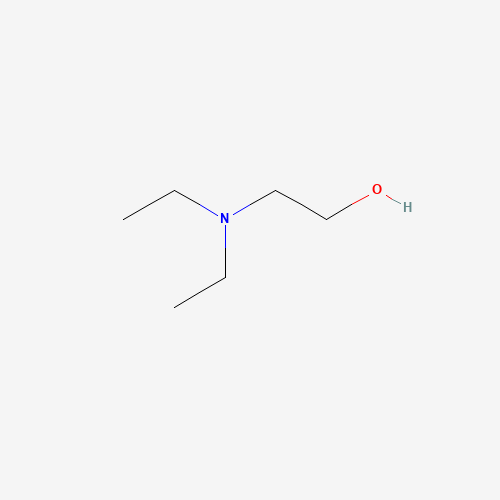
- Reactivity Profile: 2-DIETHYLAMINOETHANOL is an organic compound with both amine and alcohol substituents. Amines are chemical bases. They neutralize acids to form salts plus water. These acid-base reactions are exothermic. The amount of heat that is evolved per mole of amine in a neutralization is largely independent of the strength of the amine as a base. Amines may be incompatible with isocyanates, halogenated organics, peroxides, phenols (acidic), epoxides, anhydrides, and acid halides. Flammable gaseous hydrogen is generated by amines in combination with strong reducing agents, such as hydrides. This compound can react with strong oxidizers and acids. (NTP, 1992)
- Signs and Symptoms: irritation eyes, skin, respiratory system; nausea, vomiting
- Ingestion Prevention: Do not eat, drink, or smoke during work.
- Medical Surveillance: Employees should be screened for history of certain medical conditions which might place the employee at increased risk from diethylaminoethanol exposure. /These are/ chronic respiratory disease ... skin disease ... /and/ eye disease. ... Any employee developing the above-listed conditions should be referred for further medical examination.
- Inhalation Prevention: Use ventilation, local exhaust or breathing protection.
- Nonfire Spill Response: LARGE SPILL: Dike far ahead of liquid spill for later disposal. Water spray may reduce vapor, but may not prevent ignition in closed spaces. (ERG, 2024)
- Air and Water Reactions: Flammable. Soluble in water. This chemical is sensitive to moisture. Slowly hydrolyzes.
- Human Toxicity Excerpts: On March 23, 1981, the National Institute for Occupational Safety and Health (NIOSH) received a request for a Health Hazard Evaluation from Boehring Ingelheim, Ltd, Ridgefield, Connecticut. The request stated that approximately 15 employees in the office support area of a production building had been experiencing rashes since the beginning of March 1981. Environmental samplinq did not reveal any diethylaminoethanol in air samples. However, results of sampling suggested the presence of a conjugated amine which possesses acidic properties. The specific agent could not be identified. Skin examinations revealed an irritant-type rash on the exposed areas of the face neck and hands. The distribution of the rash was consistent with and suggestive of a phototoxic skin reaction. Both the environ...
- Fire Fighting Procedures: If material on fire or involved in fire: Do not extinguish fire unless flow can be stopped. Use water in flooding quantities as fog. Solid streams of water may be ineffective. Cool all affected containers with flooding quantities of water. Apply water from as far a distance as possible. Use "alcohol" foam, carbon dioxide or dry chemical.
- Isolation and Evacuation: Evacuation: ERG2024, Guide 132 (2-Diethylaminoethanol): · If tank, rail tank car or highway tank is involved in a fire, ISOLATE for 800 meters (1/2 mile) in all directions; also, consider initial evacuation for 800 meters (1/2 mile) in all directions.
- Other Safety Information: Chemical Assessment: IMAP assessments - Ethanol, 2-(diethylamino)-: Environment tier I assessment
- DOT Hazard Classification: Placard/Label(s)
- Toxic Combustion Products: Toxic gases and vapors (such as oxides of nitrogen and carbon monoxide) may be released in a fire involving diethylamino ethanol.
- NFPA Hazard Classification: NFPA Instability Rating: 0 - Materials that in themselves are normally stable, even under fire conditions.
- Respirator Recommendations: Important additional information about respirator selection
- Accidental Release Measures: Spill or Leak: ERG2024, Guide 132 (2-Diethylaminoethanol): · Water spray may reduce vapor, but may not prevent ignition in closed spaces.
- Lower Explosive Limit (LEL): 6.7%
- Populations at Special Risk: In persons with impaired pulmonary function, especially those with obstructive airway diseases, the breathing of diethylaminoethanol might cause exacerbation of symptoms due to its irritant properties. ... Persons with pre-existing skin disorders may be more susceptible to the effects of this agent. ... Those with pre-existing eye problems may be at increased risk from exposure.
- Upper Explosive Limit (UEL): 11.7%
- Threshold Limit Values (TLV): TLV-TWA (Time Weighted Average): 2 ppm [1991]
- Hazard Classes and Categories: Skin Corr. 1B
- Effects of Short Term Exposure: The substance is corrosive to the eyes. The substance is severely irritating to the skin and respiratory tract. The substance may cause effects on the nervous system.
- Explosive Limits and Potential: Explosive limits, vol% in air: 1.9-28
- Standard Transportation Number: 49 131 86; Diethylaminoethanol
- Permissible Exposure Limit (PEL): TWA 10 ppm (50 mg/m3) [skin]
- Protective Action Criteria (PAC): PAC-3: 500 [ppm]
- Recommended Exposure Limit (REL): TWA 10 ppm (50 mg/m3) [skin]
- Shipment Methods and Regulations: The International Maritime Dangerous Goods Code lays down basic principles for transporting hazardous chemicals. Detailed recommendations for individual substances and a number of recommendations for good practice are included in the classes dealing with such substances. A general index of technical names has also been compiled. This index should always be consulted when attempting to locate the appropriate procedures to be used when shipping any substance or article.
- Occupational Exposure Limits (OEL): MAK (Maximale Arbeitsplatz Konzentration): 24 mg/m
- Shipping Name/ Number DOT/UN/NA/IMO: IMO 3.3; Diethylaminoethanol
- Emergency Response Planning Guidelines: Emergency Response: ERG2024, Guide 132 (2-Diethylaminoethanol): · For massive fire, use unmanned master stream devices or monitor nozzles; if this is impossible, withdraw from area and let fire burn.
- Skin, Eye, and Respiratory Irritations: Diethylaminoethanol vapor is a skin, eye, and respiratory irritant.
- Exposure Control and Personal Protection: Maximum Allowable Concentration (MAK): 2.0 [ppm] (Ceiling = 5 ppm)[German Research Foundation (DFG)]
- Immediately Dangerous to Life or Health (IDLH): See: 100378
Warm reminder:
Because the manufacturer may temporarily adjust product specifications, prices, inventory, parameters and other information without notice, and there are differences in each user's consultation time and procurement needs, the platform reply content is only of reference value within a certain period. Sorry for the inconvenience caused to you, and thank you for your understanding and support! Please consult the online customer service for the latest details. Everything is subject to the real-time reply of the customer service.!
Please check the quantity, appearance and product information in time when you receive the goods. In case of damage, wrong delivery, abnormal quality and other problems, please feel free to contact us.
Service Hotline:400-6226-992 ,We will handle it for you as soon as possible, thank you for your support and trust.!
diethylaminoethanol 99% 10/L
diethylaminoethanol 99% 10/L 100-37-8, , .