
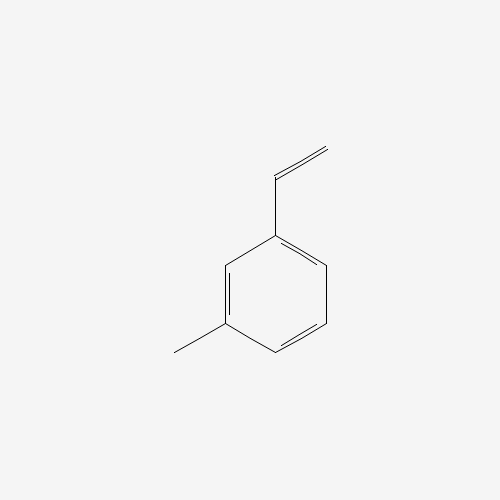
- Fire Hazards: Flammable. Above 51 °C explosive vapour/air mixtures may be formed.
- Safe Storage: Fireproof. Separated from strong oxidants and strong acids. Well closed. Store only if stabilized. Provision to contain effluent from fire extinguishing. Store in an area without drain or sewer access.
- Fire Fighting: Use water spray, foam, powder, carbon dioxide. In case of fire: keep drums, etc., cool by spraying with water.
- Eye Prevention: Wear safety spectacles.
- Adverse Effects: Occupational hepatotoxin - Secondary hepatotoxins: the potential for toxic effect in the occupational setting is based on cases of poisoning by human ingestion or animal experimentation.
- Cleanup Methods: ACCIDENTAL RELEASE MEASURES; Personal precautions, protective equipment and emergency procedures: Use personal protective equipment. Avoid breathing vapors, mist or gas. Ensure adequate ventilation. Remove all sources of ignition. Evacuate personnel to safe areas. Beware of vapors accumulating to form explosive concentrations. Vapors can accumulate in low areas. Environmental precautions: Prevent further leakage or spillage if safe to do so. Do not let product enter drains. Methods and materials for containment and cleaning up: Contain spillage, and then collect with an electrically protected vacuum cleaner or by wet-brushing and place in container for disposal according to local regulations
- Exposure Routes: The substance can be absorbed into the body by inhalation and by ingestion.
- Fire Prevention: NO open flames, NO sparks and NO smoking. Above 51 °C use a closed system, ventilation and explosion-proof electrical equipment.
- Hazards Summary: May polymerize if heated; A skin, eye, and respiratory tract irritant; Inhalation of high concentrations may cause CNS effects; Repeated or prolonged exposure may cause kidney and liver injury; [ICSC] Stabilized with 4-tert-butylcatechol (CAS# 98-29-3); An irritant; Harmful by ingestion (may cause lung damage by aspiration); [Alfa Aesar MSDS] See 4-Vinyltoluene. Vinyltoluenes, stabilized (UN2618) has warning of explosive polymerization; [ERG 2016] See Vinyl toluene.
- Inhalation Risk: A harmful contamination of the air will be reached rather slowly on evaporation of this substance at 20 °C.
- Skin Prevention: Protective gloves.
- Disposal Methods: Product: Burn in a chemical incinerator equipped with an afterburner and scrubber but exert extra care in igniting as this material is highly flammable. Offer surplus and non-recyclable solutions to a licensed disposal company. Contact a licensed professional waste disposal service to dispose of this material. Contaminated packaging: Dispose of as unused product.
- Physical Dangers: Vapours are uninhibited and may polymerize, causing blockage of vents.
- Toxicity Summary: IDENTIFICATION AND USE: 3-Vinyltoluene is a monomer of vinyltoluene. Vinyl toluene is used in the coatings industry as a modifier for drying oils and oil-modified alkyds. It is also used as a replacement for styrene in unsaturated polyester resins where high-temperature cures and little shrinkage are desired. HUMAN STUDIES: Central nervous system effects, such as depression, poor memory, slow visuomotor performance and electrophysiological changes, have often been associated with heavy occupational exposure to vinyl toluenes. Contact allergy to styrene related compounds was studied in a human subject. A patient known from previous studies to be sensitive to styrene was patch tested with styrene and 18 compounds structurally related to styrene. Positive results were obtained with 3-methy...
- Spillage Disposal: Remove all ignition sources. Personal protection: filter respirator for organic gases and vapours adapted to the airborne concentration of the substance, protective clothing and protective gloves. Do NOT let this chemical enter the environment. Collect leaking and spilled liquid in sealable containers as far as possible. Absorb remaining liquid in sand or inert absorbent. Then store and dispose of according to local regulations. Do NOT wash away into sewer.
- UN Classification: UN Hazard Class: 3; UN Pack Group: III
- Environmental Fate: ATMOSPHERIC FATE: According to a model of gas/particle partitioning of semivolatile organic compounds in the atmosphere(1), 3-vinyltoluene, which has a vapor pressure of 1.7 mm Hg at 25 °C(2), is expected to exist solely as a vapor in the ambient atmosphere. Vapor-phase 3-vinyltoluene is degraded in the atmosphere by reaction with photochemically-produced hydroxyl radicals and ozone(SRC); the half-lives for these reactions in air are estimated to be 12 and 13 hours(SRC), calculated from its estimated rate constants of 3.1X10⁻¹¹ and 2.1X10⁻¹⁷ cu cm/molecule-sec, respectively(3). 3-Vinyltoluene absorbs at wavelengths >290 nm(4) and, therefore, may be susceptible to direct photolysis by sunlight(SRC).
- First Aid Measures: Ingestion First Aid: Rinse mouth. Do NOT induce vomiting. Refer for medical attention .
- Signs and Symptoms: Ingestion Exposure: Aspiration hazard! Abdominal pain. Nausea. Vomiting.
- Storage Conditions: Keep container tightly closed in a dry and well-ventilated place. Containers which are opened must be carefully resealed and kept upright to prevent leakage. Storage class (TRGS 510): Flammable liquids
- Exposure Prevention: PREVENT GENERATION OF MISTS!
- Firefighting Hazards: Special hazards arising from the substance or mixture: Carbon oxides
- Ingestion Prevention: Do not eat, drink, or smoke during work.
- Inhalation Prevention: Use ventilation, local exhaust or breathing protection.
- NIOSH Recommendations: Recommended Exposure Limit: 10 Hour Time-Weighted Average: 100 ppm (480 mg/cu m). /Vinyl toluene/
- Regulatory Information: The Australian Inventory of Industrial Chemicals: Chemical: Benzene, 1-ethenyl-3-methyl-
- Effluent Concentrations: Motorboats emitted 3-vinyltoluene to canal water; concentrations were not reported(1). Use of unleaded gasoline by a four-stroke outboard motor emitted 3-vinyltoluene to test water at 6.2 mg/10 min(2). 3-Vinyltoluene was detected in the leachate plume of Norman, OK landfill sampled Nov 1995 and Apr 1996(3).
- Human Toxicity Excerpts: /GENOTOXICITY/ ... In human lymphocytes exposed in whole blood cultures, vinyl toluene induced both sister chromatid exchange and chromosomal aberrations in a dose-dependent manner, in the absence of exogenous metabolic activation. The induction of sister chromatid exchange was dependent on the number of erythrocytes present. Significant increases in the frequencies of sister chromatid exchange were observed in human lymphocytes exposed in whole blood cultures to ortho, meta and para isomer. The strongest responses were seen with the meta and para isomers, which are the dominant species in vinyl toluene.
- ICSC Environmental Data: The substance is toxic to aquatic organisms. Bioaccumulation of this chemical may occur in the environment. It is strongly advised not to let the chemical enter into the environment.
- Packaging and Labelling: Marine pollutant.
- Fire Fighting Procedures: Suitable extinguishing media: Use water spray, alcohol-resistant foam, dry chemical or carbon dioxide. Advice for firefighters: Wear self-contained breathing apparatus for firefighting if necessary. Further information: Use water spray to cool unopened containers.
- Soil Adsorption/Mobility: Using a structure estimation method based on molecular connectivity indices(1), the Koc of 3-vinyltoluene can be estimated to be 720(SRC). According to a classification scheme(2), this estimated Koc value suggests that 3-vinyltoluene is expected to have low mobility in soil(SRC).
- Artificial Pollution Sources: 3-Vinyltoluene's production and use as a laboratory chemical(1) may result in its release to the environment through various waste streams(SRC).
- Evidence for Carcinogenicity: Vinyl toluene is not classifiable as to its carcinogenicity to humans (Group 3)
- Effects of Long Term Exposure: The substance defats the skin, which may cause dryness or cracking. The substance may have effects on the liver.
- Hazard Classes and Categories: Aquatic Chronic 1 (68%)
- Effects of Short Term Exposure: The substance is irritating to the eyes, skin and respiratory tract. The substance may cause effects on the nervous system. If swallowed the substance easily enters the airways and could result in aspiration pneumonitis.
- Environmental Bioconcentration: A BCF of 35 was measured for 3-vinyltoluene in goldfish(1). According to a classification scheme(2), this BCF suggests the potential for bioconcentration in aquatic organisms is moderate(SRC).
- Explosive Limits and Potential: Explosive limits, vol% in air: 1.9-6.1
- Volatilization from Water/Soil: The Henry's Law constant for 3-vinyltoluene is estimated as 3.0X10⁻³ atm-cu m/mole(SRC) derived from its vapor pressure, 1.7 mm Hg(1), and water solubility, 89 mg/L(2). This Henry's Law constant indicates that 3-vinyltoluene is expected to volatilize rapidly from water surfaces(3). Based on this Henry's Law constant, the volatilization half-life from a model river (1 m deep, flowing 1 m/sec, wind velocity of 3 m/sec)(3) is estimated as 3.5 hours(SRC). The volatilization half-life from a model lake (1 m deep, flowing 0.05 m/sec, wind velocity of 0.5 m/sec)(3) is estimated as 4.4 days(SRC). 3-Vinyltoluene's estimated Henry's Law constant indicates that volatilization from moist soil surfaces may occur(SRC). 3-Vinyltoluene is expected to volatilize from dry soil surfaces(SRC) based upon it...
- Antidote and Emergency Treatment: /SRP:/ Advanced treatment: Consider orotracheal or nasotracheal intubation for airway control in the patient who is unconscious, has severe pulmonary edema, or is in severe respiratory distress. Consider drug therapy for pulmonary edema ... . Positive-pressure ventilation techniques with a bag valve mask device may be beneficial. Consider drug therapy for pulmonary edema ... . Consider administering a beta agonist such as albuterol for severe bronchospasm ... . Monitor cardiac rhythm and treat arrhythmias if necessary ... Start IV administration of D5W /SRP: "To keep open", minimal flow rate/. Use 0.9% saline (NS) or lactated Ringer's (LR) if signs of hypovolemia are present. For hypotension with signs of hypovolemia, administer fluid cautiously. Watch for signs of fluid overload ... .T...
- Shipment Methods and Regulations: The International Maritime Dangerous Goods Code lays down basic principles for transporting hazardous chemicals. Detailed recommendations for individual substances and a number of recommendations for good practice are included in the classes dealing with such substances. A general index of technical names has also been compiled. This index should always be consulted when attempting to locate the appropriate procedures to be used when shipping any substance or article. Vinyltoluenes, stabilized are included on the dangerous goods list. /Vinyltoluenes, stabilized/
- Environmental Abiotic Degradation: The rate constant for the vapor-phase reaction of 3-vinyltoluene with photochemically-produced hydroxyl radicals has been estimated as 3.1X10⁻¹¹ cu cm/molecule-sec at 25 °C(SRC) using a structure estimation method(1). This corresponds to an atmospheric half-life of about 12 hours at an atmospheric concentration of 5X10+5 hydroxyl radicals per cu cm(1). The rate constant for the vapor-phase reaction of 3-vinyltoluene with ozone has been estimated as 2.1X10⁻¹⁷ cu cm/molecule-sec at 25 °C(SRC) that was derived using a structure estimation method(1). This corresponds to an atmospheric half-life of about 13 hours at an atmospheric concentration of 7X10+11 ozone molecules per cu cm(2). 3-Vinyltoluene is not expected to undergo hydrolysis in the environment due to the lack of functional groups...
- Probable Routes of Human Exposure: Occupational exposure to 3-vinyltoluene may occur through inhalation and dermal contact with this compound at workplaces where 3-vinyltoluene is produced or used. Monitoring and use data indicate that the general population is not likely to be exposed to 3-vinyltoluene. (SRC)
- Occupational Exposure Limits (OEL): MAK (Maximale Arbeitsplatz Konzentration): 98 mg/m
- Environmental Fate/Exposure Summary: 3-Vinyltoluene's production and use as a laboratory chemical may result in its release to the environment through various waste streams. If released to air, a vapor pressure of 1.7 mm Hg at 25 °C indicates 3-vinyltoluene will exist solely as a vapor in the atmosphere. Vapor-phase 3-vinyltoluene will be degraded in the atmosphere by reaction with photochemically-produced hydroxyl radicals and ozone; the half-lives for these reactions in air are estimated to be 12 and 13 hours, respectively. 3-Vinyltoluene absorbs at wavelengths >290 nm and, therefore, may be susceptible to direct photolysis by sunlight. If released to soil, 3-vinyltoluene is expected to have low mobility based upon an estimated Koc of 720. Volatilization from moist soil surfaces is expected to be an important fate proces...
- Shipping Name/ Number DOT/UN/NA/IMO: IMO 3; Vinyltoluenes, stabilized
- Skin, Eye, and Respiratory Irritations: Strong eye and nasal irritation was observed at 400 ppm [1930 mg/cu m]
- Hazardous Reactivities and Incompatibilities: Conditions to avoid: Heat, flames and sparks. Incompatible materials: Strong oxidizing agents, strong acids
- Immediately Dangerous to Life or Health (IDLH): 400 ppm. /Vinyl toluene/
Warm reminder:
Because the manufacturer may temporarily adjust product specifications, prices, inventory, parameters and other information without notice, and there are differences in each user's consultation time and procurement needs, the platform reply content is only of reference value within a certain period. Sorry for the inconvenience caused to you, and thank you for your understanding and support! Please consult the online customer service for the latest details. Everything is subject to the real-time reply of the customer service.!
Please check the quantity, appearance and product information in time when you receive the goods. In case of damage, wrong delivery, abnormal quality and other problems, please feel free to contact us.
Service Hotline:400-6226-992 ,We will handle it for you as soon as possible, thank you for your support and trust.!
Research chemical 1ml; ≥97%; GC
Research chemical 1ml; ≥97%; GC; supplied for laboratory research, analysis, inspection, and scientific procurement use; specifications: 1ml; ≥97%; GC.
1ml