

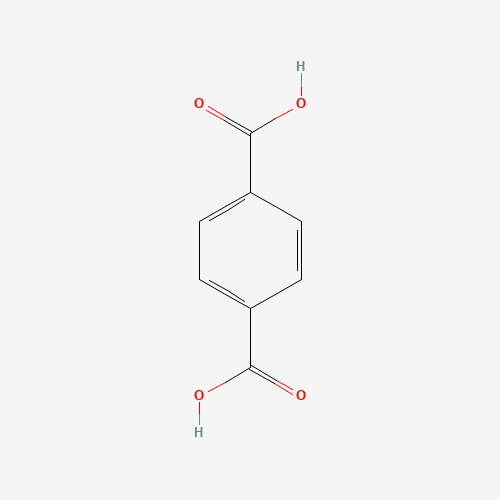
- First Aid: INGESTION: DO NOT INDUCE VOMITING. If the victim is conscious and not convulsing, give 1 or 2 glasses of water to dilute the chemical and IMMEDIATELY call a hospital or poison control center. Be prepared to transport the victim to a hospital if advised by a physician. If the victim is convulsing or unconscious, do not give anything by mouth, ensure that the victim's airway is open and lay the victim on his/her side with the head lower than the body. DO NOT INDUCE VOMITING. IMMEDIATELY transport the victim to a hospital. (NTP, 1992)
- Fire Hazards: Combustible. Finely dispersed particles form explosive mixtures in air.
- Interactions: To study injury of liver and kidney among the workers exposed to terephthalic acid(TPA), ethylene glycol(EG) and(or) dowtherm A(DOW), and research for early biological monitoring indexes. By using the method of occupational epidemiology, an investigation of industrial hygiene in a chemical fibre corporation was carried out and the changes of the liver and kidney functions were analyzed among the workers who had been exposed to TPA, EG, DOW.The values of serum gamma-glutamyl traspetidase(GGT) and total bile acid(TBA) in TPA + EG + DOW group men were (35.45 +/- 16.09) U/L, (10.29 +/- 6.76) umol/L respectively and the values of serum alanine transaminase(ALT) and TBA in TPA + EG + DOW group women were(30.68 +/- 8.58) U/L, (9.53 +/- 6.63) umol/L respectively, significantly higher than those...
- Safe Storage: Separated from strong oxidants.
- Fire Fighting: Use water spray, foam, powder, carbon dioxide. In case of fire: keep drums, etc., cool by spraying with water.
- Eye Prevention: Wear safety goggles.
- Fire Potential: Combustible
- Health Hazards: ACUTE/CHRONIC HAZARDS: This compound is a local irritant. (NTP, 1992)
- Reactive Group: Hydrocarbons, Aromatic
- Adverse Effects: Occupational hepatotoxin - Secondary hepatotoxins: the potential for toxic effect in the occupational setting is based on cases of poisoning by human ingestion or animal experimentation.
- Cleanup Methods: Remove all ignition sources. Collect powdered material in the most convenient and safe manner and deposit in sealed containers. Ventilate area after clean up is complete.
- Exposure Routes: The substance can be absorbed into the body by inhalation and by ingestion.
- Fire Prevention: NO open flames. Closed system, dust explosion-proof electrical equipment and lighting. Prevent deposition of dust.
- Hazards Summary: Practically nontoxic in acute, high-dose animal studies; In high-dose feeding studies in rats, it causes bladder stones and subsequent bladder cancers; The bladder cancers are thought to be secondary to the presence of bladder stones. [ACGIH] A skin and eye irritant; [ICSC] An irritant; Effects in high-dose animal studies include abnormal liver function tests; [MSDSonline]
- Inhalation Risk: Evaporation at 20 °C is negligible; a nuisance-causing concentration of airborne particles can, however, be reached quickly when dispersed.
- Skin Prevention: Protective gloves.
- Special Reports: Nat'l Research Council Canada; Phthalate Esters (1980) NRCC No.17583
- Disposal Methods: After material has been contained, scoop up contaminated soil and place in impervious containers. Material may be /disposed of/ in an approved chemical incinerator. If facilities are not available, material may be /disposed of in/ an approved waste chemical landfill. When dilute, amenable to biological treatment at a municipal sewage treatment plant.
- Physical Dangers: Dust explosion possible if in powder or granular form, mixed with air.
- Spillage Disposal: Personal protection: particulate filter respirator adapted to the airborne concentration of the substance. Sweep spilled substance into covered containers. If appropriate, moisten first to prevent dusting. Carefully collect remainder. Then store and dispose of according to local regulations.
- Ecotoxicity Values: LC50; Species: Tetrahymena pyriformis (Ciliate); Conditions: static, 30 °C; Concentration: 800000 ug/L for 24 hr
- Environmental Fate: ATMOSPHERIC FATE: According to a model of gas/particle partitioning of semivolatile organic compounds in the atmosphere(1), terephthalic acid, which has an extrapolated vapor pressure of 6X10-11 mm Hg at 25 °C(2), is expected to exist solely in the particulate phase in the ambient atmosphere; however, one monitoring study has reported its detection in the gas-phase(3). Terephthalic acid absorbs UV light at wavelengths >290 nm(4), and therefore may be susceptible to direct photolysis by sunlight(SRC).
- First Aid Measures: Ingestion First Aid: Rinse mouth.
- Reactivity Profile: TEREPHTHALIC ACID is a carboxylic acid. It donates hydrogen ions if a base is present to accept them. This "neutralization" generates substantial amounts of heat and produces water plus a salt. Insoluble in water but even "insoluble" carboxylic acids may absorb enough water from the air and dissolve sufficiently in it to corrode or dissolve iron, steel, and aluminum parts and containers. May react with cyanide salts to generate gaseous hydrogen cyanide. Will react with solutions of cyanides to cause the release of gaseous hydrogen cyanide. Flammable and/or toxic gases and heat are generated by reaction with diazo compounds, dithiocarbamates, isocyanates, mercaptans, nitrides, and sulfides. React with sulfites, nitrites, thiosulfates (to give H2S and SO3), dithionites (SO2), to generate...
- Signs and Symptoms: Eye Exposure: Redness.
- Storage Conditions: Store in detached units of noncombustible construction.
- Preventive Measures: SRP: Contaminated protective clothing should be segregated in such a manner so that there is no direct personal contact by personnel who handle, dispose, or clean the clothing. Quality assurance to ascertain the completeness of the cleaning procedures should be implemented before the decontaminated protective clothing is returned for reuse by the workers. Contaminated clothing should not be taken home at end of shift, but should remain at employee's place of work for cleaning.
- Ecotoxicity Excerpts: /PLANTS/ Toxicity of products from polyester hydrolysis such as succinic acid (SA), adipic acid (AA), mandelic acid (MA), terephthalic acid (TA), 1,4-butanediol (1,4-B), ethylene glycol (EG), styrene glycol (SG) and 1,4-cyclohexane dimethanol (1,4-C) was evaluated by phytotoxicity test on germination of young radish seeds ...The phytotoxicity test revealed SG > MA > 1,4-C > AA approximately SA > TA approximately EG > 1,4-B in order of decreasing toxicity taking into consideration the growth behavior after germination as well as the percentage of germination...Tests for the phytotoxicity ...indicated that the aromatic compounds were more harmful than the aliphatic ones...
- Ingestion Prevention: Do not eat, drink, or smoke during work.
- RAIS Toxicity Values: Oral Subchronic Chronic Reference Dose Reference: PPRTV Current
- Atmospheric Standards: This action promulgates standards of performance for equipment leaks of Volatile Organic Compounds (VOC) in the Synthetic Organic Chemical Manufacturing Industry (SOCMI). The intended effect of these standards is to require all newly constructed, modified, and reconstructed SOCMI process units to use the best demonstrated system of continuous emission reduction for equipment leaks of VOC, considering costs, non air quality health and environmental impact and energy requirements. Terephthalic acid is produced, as an intermediate or a final product, by process units covered under this subpart.
- Inhalation Prevention: Use local exhaust or breathing protection.
- TSCA Test Submissions: UNREVIEWED | A one-generation reproduction study was conducted in tandem with a 90-day subchronic toxicity study which evaluated the effects on rats of dietary exposure to terephthalic acid (TA). Male and female Wistar and CD rats (number of animals/group not reported) were exposed to TA in the diet at dose levels of 0, 0.03, 0.125, 0.5, 2.0 or 5% at which time 10 breeding pairs from each dietary level were kept on their respective diet throughout mating, gestation, lactation and postweaning periods. There were significant differences observed between treated and control animals in the following: increased mortality of fetuses and neonates (76% of 17 Wistar pups and 96% of 23 CD pups found dead at birth (Day 0) were from groups of parents ingesting 2 and 5% TA), reduction of newborn via...
- Nonfire Spill Response: STORAGE PRECAUTIONS: You should store this material in a refrigerator. (NTP, 1992)
- Regulatory Information: New Zealand EPA Inventory of Chemical Status: Terephthalic acid: Does not have an individual approval but may be used under an appropriate group standard
- Air and Water Reactions: Insoluble in water.
- Effluent Concentrations: Terephthalic acid was detected at a concentration of 5.3 ppb in the effluent of night soil treatment plant in Japan(1). The concentration of terephthalic acid in the waste water from a dimethyl terephthalate manufacturing plant was 459 mg/L(2).
- Human Toxicity Excerpts: /ALTERNATIVE and IN VITRO TESTS/ Toxicity of products from polyester hydrolysis such as succinic acid (SA), adipic acid (AA), mandelic acid (MA), terephthalic acid (TA), 1,4-butanediol (1,4-B), ethylene glycol (EG), styrene glycol (SG) and 1,4-cyclohexane dimethanol (1,4-C) was evaluated ...by cytotoxicity test on HeLa cells...Toxicity on HeLa cells decreased /in order/ SG > 1,4-C > MA > TA > SA > AA > EG > 1,4-B. Tests for ...cytotoxicity indicated that the aromatic compounds were more harmful than the aliphatic ones...
- Other Safety Information: Chemical Assessment: IMAP assessments - 1,4-Benzenedicarboxylic acid: Human health tier I assessment
- Soil Adsorption/Mobility: Using a structure estimation method based on molecular connectivity indices(1), the Koc of terephthalic acid can be estimated to be 79(SRC). According to a classification scheme(2), this estimated Koc value suggests that terephthalic acid is expected to have high mobility in soil. The pKa1 and pKa2 of terephthalic acid are 3.54 and 4.46 at 25 °C(3), respectively, indicating that this compound will partially exist in anion form in the environment and anions generally do not adsorb more strongly to soils containing organic carbon and clay than their neutral counterparts(4).
- Atmospheric Concentrations: SOURCE DOMINATED: Terephthalic acid was detected at concentrations ranging from 20.8 to 99.6 ng/cu m in the particulates collected from a roadway tunnel in Hong Kong during Aug 2003 to Feb 2004 monitoring(1).
- NFPA Hazard Classification: NFPA Instability Rating: 0 - Materials that in themselves are normally stable, even under fire conditions.
- Artificial Pollution Sources: Terephthalic acid was identified as a metabolite of dimethyl terphthalate and dibutyl terephthalate biodegradation in soil(1). Terephthalic acid was identified as a particulate-phase emission product from motor vehicles(2). Terephthalic acid was identified as a particulate-phase emission product from industrial-scale boilers burning No. 2 disillate fuel oil(3). Terephthalic acid was identified in smoke particulates from the burning plastic bags, road-side litter and landfill trash(4). Airborne terephthalic acid can be produced by the photochemical oxidation of anthropogenic compounds (e.g., p-xylene) during long range transport(5).
- Environmental Biodegradation: PURE CULTURE: A strain of Mycobacterium lacticolum /that can/ degrade ... trerphthalic acid was isolated from terephthalate containing industrial sewage. ...
- Threshold Limit Values (TLV): TLV-TWA (Time Weighted Average): 10 mg/m³ [1990]
- Hazard Classes and Categories: Specific target organ toxicity - Repeated exposure - Category 1 (respiratory system)
- Effects of Short Term Exposure: May cause mechanical irritation to the eyes and respiratory tract.
- Environmental Bioconcentration: An estimated BCF of 3 was calculated in fish for terephthalic acid(SRC), using a log Kow of 2.00(1) and a regression-derived equation(2). According to a classification scheme(3), this BCF suggests the potential for bioconcentration in aquatic organisms is low(SRC).
- Explosive Limits and Potential: Can explode during preparation.
- Volatilization from Water/Soil: The Henry's Law constant for terephthalic acid is estimated as 3.9X10⁻¹³ atm-cu m/mole(SRC) using a fragment constant estimation method(1). This Henry's Law constant indicates that terephthalic acid is expected to be essentially nonvolatile from water surfaces(2). Terephthalic acid's Henry's Law constant indicates that volatilization from moist soil surfaces is not expected to occur(SRC). Terephthalic acid is not expected to volatilize from dry soil surfaces(SRC) based upon an extrapolated vapor pressure of 6X10-11 mm Hg at 25 °C(3).
- Antidote and Emergency Treatment: /SRP:/ Advanced treatment: Consider orotracheal or nasotracheal intubation for airway control in the patient who is unconscious, has severe pulmonary edema, or is in severe respiratory distress. Positive-pressure ventilation techniques with a bag valve mask device may be beneficial. Consider drug therapy for pulmonary edema ... . Consider administering a beta agonist such as albuterol for severe bronchospasm ... . Monitor cardiac rhythm and treat arrhythmias as necessary ... . Start IV administration of D5W /SRP: "To keep open", minimal flow rate/. Use 0.9% saline (NS) or lactated Ringer's if signs of hypovolemia are present. For hypotension with signs of hypovolemia, administer fluid cautiously. Watch for signs of fluid overload ... . Treat seizures with diazepam or lorazepam ... . Use...
- Protective Action Criteria (PAC): PAC-3: 840 [mg/m3]
- Environmental Abiotic Degradation: The rate constant for the vapor-phase reaction of terephthalic acid with photochemically-produced hydroxyl radicals has been estimated as 1.2X10⁻¹² cu cm/molecule-sec at 25 °C(SRC) using a structure estimation method(1). This corresponds to an atmospheric half-life of about 13 days at an atmospheric concentration of 5X10+5 hydroxyl radicals per cu cm(1). Terephthalic acid absorbs UV light at wavelengths >290 nm(2), and therefore may be susceptible to direct photolysis by sunlight(SRC). The rate constant for the reaction of hydroxyl radicals in aqueous solutions at pH 9 is 3.2X10+9 L/mol-sec(3); this corresponds to an aquatic half-life of 250 days(SRC) at an aquatic concentration of 1X10-17 hydroxyl radicals per liter(4). Terephthalic acid is not expected to undergo hydrolysis in the env...
- Probable Routes of Human Exposure: NIOSH (NOES Survey 1981-1983) has statistically estimated that 6,456 workers (2,563 of these were female) were potentially exposed to terephthalic acid in the US(1). Occupational exposure to terephthalic acid may occur through dermal contact with this compound at workplaces where terephthalic acid is produced or used(SRC). Terephthalic acid can form dust clouds(2), therefore, workers handling the compound may be exposed through inhalation(SRC). The detection of terephthalic acid in ambient atmospheric particulate matter(2-4) indicates the general population may be exposed through inhalation of atmospheric particulates(SRC).
- Environmental Water Concentrations: DRINKING WATER: Terephthalic acid was qualitatively detected in a drinking water concentrate from Seattle, WA collected during 1976(2).
- Occupational Exposure Limits (OEL): MAK (Maximale Arbeitsplatz Konzentration): (inhalable fraction): 5 mg/m
- Other Environmental Concentrations: Terephthalic acid was identified as a particulate-phase emission product from motor vehicles(1). Terephthalic acid was identified as a particulate-phase emission product from industrial-scale boilers burning No. 2 disillate fuel oil(2). Terephthalic acid was detected in the organic film collected from both indoor and outdoor windows in Toronto Canada in July 2000(3).
- Environmental Fate/Exposure Summary: Terephthalic acid's production and use to produce saturated polyesters may result in its release to the environment through various waste streams. Terephthalic acid is released to the environment in particulate emissions from motor vehicles, industrial-scale boilers and burning of refuse. It can also be formed in the atmosphere through photooxidation of other organic compounds during long range transport and formed in soils as a biodegradation metabolite. If released to air, an extrapolated vapor pressure of 6X10-11 mm Hg at 25 °C indicates terephthalic acid will exist solely in the particulate phase in the atmosphere. Terephthalic acid absorbs UV light at wavelengths >290 nm, and therefore may be susceptible to direct photolysis by sunlight. If released to soil, terephthalic acid is ex...
- Personal Protective Equipment (PPE): Protection against inhalation and contact with the material. Must wear protective clothing including gloves, boots, safety goggles, and an approved respirator.
- Skin, Eye, and Respiratory Irritations: Material is mild irritant to respiratory tract.
- Exposure Control and Personal Protection: Maximum Allowable Concentration (MAK): 5.0 [mg/m3], inhalable fraction[German Research Foundation (DFG)]
- Hazardous Reactivities and Incompatibilities: Very high sensitivity: [SRP: to mechanical shock] is shown by mixtures with benzene close to the stoicheiometric proportions of around 84% acid.
- EPA Provisional Peer-Reviewed Toxicity Values: Weight-Of-Evidence (WOE): Suggestive evidence of carcinogenic potential
- Hazard Quotient Level 3 or Cancer Risk Level 1E-04: Fraction of Contaminant Absorbed Dermally from Soil: 0.1
- Hazard Quotient Level 0.1 or Cancer Risk Level 1E-06: Fraction of Contaminant Absorbed Dermally from Soil: 0.1
Warm reminder:
Because the manufacturer may temporarily adjust product specifications, prices, inventory, parameters and other information without notice, and there are differences in each user's consultation time and procurement needs, the platform reply content is only of reference value within a certain period. Sorry for the inconvenience caused to you, and thank you for your understanding and support! Please consult the online customer service for the latest details. Everything is subject to the real-time reply of the customer service.!
Please check the quantity, appearance and product information in time when you receive the goods. In case of damage, wrong delivery, abnormal quality and other problems, please feel free to contact us.
Service Hotline:400-6226-992 ,We will handle it for you as soon as possible, thank you for your support and trust.!
Research chemical CAS 100-21-0 10mM 1ml
Research chemical CAS 100-21-0 10mM 1ml, complete specifications, for production, research, laboratory testing and inspection; digital one-stop procurement platform for scientific materials.




