

- DOT Label: Corrosive
- First Aid: Swallow: Medical attention immediately - If this chemical has been swallowed, get medical attention immediately.
- Fire Hazards: Not combustible. Gives off irritating or toxic fumes (or gases) in a fire.
- Safe Storage: Separated from food and feedstuffs and incompatible materials. See Chemical Dangers. Dry. Well closed.
- Fire Fighting: NO water. In case of fire in the surroundings, use appropriate extinguishing media. In case of fire: keep drums, etc., cool by spraying with water. NO direct contact with water.
- Target Organs: Eyes, skin, respiratory system
- Toxicity Data: LC50 (rat) = 205 mg/m3
- Eye Prevention: Wear face shield or eye protection in combination with breathing protection.
- Fire Potential: MODERATE, BY CHEMICAL REACTION. REACTS VIOLENTLY WITH MOISTURE.
- Health Hazards: ERG2024, Guide 137 (Phosphorus pentachloride): · Runoff from fire control or dilution water may cause environmental contamination.
- OSHA Standards: Permissible Exposure Limit: Table Z-1 8-hr Time Weighted Avg: 1 mg/cu m.
- Reactive Group: Halogenating Agents
- Adverse Effects: Toxic Pneumonitis - Inflammation of the lungs induced by inhalation of metal fumes or toxic gases and vapors.
- Cleanup Methods: Use water spray to cool & disperse vapors & protect personnel.
- Exposure Routes: inhalation, ingestion, skin and/or eye contact
- Fire Prevention: NO contact with water.
- Hazards Summary: Eye irritation and acute bronchitis have been reported after occupational exposures. Hydrogen chloride is released upon contact with water. [ACGIH] Toxic to the liver in chronic animal studies; [Desai, H. Phosphorus and Phosphorus Compounds. In: Sullivan J, Krieger G (eds).Hazardous Materials Toxicology.Baltimore:Williams & Wilkins,1992;939] A corrosive substance that can cause pulmonary edema; [ICSC]
- Inhalation Risk: A harmful contamination of the air can be reached rather quickly on evaporation of this substance at 20 °C.
- Skin Prevention: Protective gloves. Protective clothing.
- Special Reports: Organization for the Prohibition of Chemical Weapons; Convention on the Prohibition of the Development, Production, Stockpiling and Use of Chemical Weapons and Their Destruction. Available from http://www.opcw.org as of November 12, 2008. The Chemical Weapons Convention (CWC) is an international treaty which bans the development, production, stockpiling, and transfer or use of chemical weapons. The Convention mandates the destruction and prohibition of chemical weapons and related facilities and provides for restrictions on international trade in toxic chemicals and precursors.
- DOT ID and Guide: 1806 137
- Disposal Methods: Principles and methods for destruction of chemical weapons: ... "Destruction of chemical weapons" means a process by which chemicals are converted in an essentially irreversible way to a form unsuitable for production of chemical weapons, and which in an irreversible manner renders munitions and other devices unusable as such. ... Each ... /nation/ shall determine how it shall destroy chemical weapons, except that the following processes may not be used: dumping in any body of water, land burial or open-pit burning. It shall destroy chemical weapons only at specifically designated and appropriately designed and equipped facilities. ... Each ... /nation/ shall ensure that its chemical weapons destruction facilities are constructed and operated in a manner to ensure the destruction of the...
- Flammable Limits: Flammability: Noncombustible Solid
- Physical Dangers: The vapour is heavier than air.
- EC Classification: Symbol: T+; R: 14-22-26-34-48/20; S: (1/2)-7/8-26-36/37/39-45
- Reactivity Alerts: Air-Reactive
- Spillage Disposal: Evacuate danger area! Personal protection: complete protective clothing including self-contained breathing apparatus. Do NOT wash away into sewer. Sweep spilled substance into covered sealable containers. Carefully collect remainder. Then store and dispose of according to local regulations.
- UN Classification: UN Hazard Class: 8; UN Pack Group: II
- First Aid Measures: Ingestion First Aid: Rinse mouth. Do NOT induce vomiting. Give one or two glasses of water to drink. Refer for medical attention .
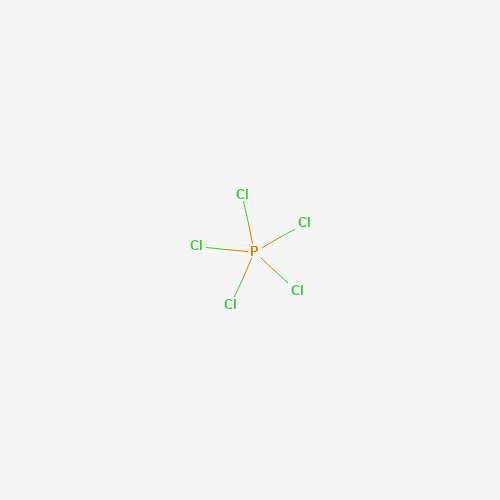
- Reactivity Profile: PHOSPHORUS PENTACHLORIDE is a lightly yellow, fuming crystalline material, highly caustic, corrosive and toxic. Flammable by chemical reaction. Violent exothermic reaction with water or steam. When heated to decomposition it emits highly toxic fumes of chlorides and oxides of phosphorus. Explosive reaction with alkaline metals (sodium, potassium), urea. Ignites on contact with fluorine. Violent reaction with aluminum, chlorine trioxide, hydroxylamine, magnesium oxide, nitrobenzene, phosphorus(III) oxide, potassium. Carbamates form explosive products [Bretherick, 5th ed., 1995, p. 1360]. Reaction with the mixture of chlorine and chlorine dioxide causes explosion [Mellor, 1941, vol. 2, p. 281; 1940, vol. 8, p. 1013].
- Signs and Symptoms: irritation eyes, skin, respiratory system; bronchitis; dermatitis
- Storage Conditions: Store in tightly closed containers in a cool, well ventilated area away from all other combustible and oxidizable materials, and moisture. Where possible, automatically transfer material .from/ storage containers to process containers. Sources of ignition such as smoking and open flames are prohibited where this chemical is handled, used, or stored. Metal containers involving the transfer of this chemical should be grounded and bonded. Use only non-sparking tools and equipment, especially when opening and closing containers of this chemical. Wherever this chemical is used, handled, manufactured, or stored, use explosion-proof electrical equipment and fittings.
- Exposure Prevention: AVOID ALL CONTACT!
- Ingestion Prevention: Do not eat, drink, or smoke during work.
- Medical Surveillance: All workers who will come in contact with phosphorus and its cmpds should have a comprehensive preplacement examination including a careful examination of the oral cavity. Preexisting conditions, particularly of respiratory and GI tract (liver), should be noted. /Unspecified phosphorus cmpds/
- Inhalation Prevention: Use local exhaust or breathing protection.
- NIOSH Recommendations: Recommended Exposure Limit: 10 Hr Time-Weighted Avg: 1 mg/cu m.
- Hazards Identification: ERG Hazard Classes: Water-reactive material (WR)
- Nonfire Spill Response: SMALL SPILL: Cover with DRY earth, DRY sand or other non-combustible material followed with plastic sheet to minimize spreading or contact with rain. Use clean, non-sparking tools to collect material and place it into loosely covered plastic containers for later disposal. Prevent entry into waterways, sewers, basements or confined areas. (ERG, 2024)
- Air and Water Reactions: Phosphorus pentachloride reacts vigorously with water to generate gaseous HCl. Based on a scenario where the chemical is spilled into an excess of water (at least 5 fold excess of water), half of the maximum theoretical yield of Hydrogen Chloride gas will be created in 0.54 minutes. Experimental details are in the following: "Development of the Table of Initial Isolation and Protective Distances for the 2008 Emergency Response Guidebook", ANL/DIS-09-2, D.F. Brown, H.M. Hartmann, W.A. Freeman, and W.D. Haney, Argonne National Laboratory, Argonne, Illinois, June 2009.
- Packaging and Labelling: Do not transport with food and feedstuffs.
- CSL Reaction Information: Create Date: 6/27/17
- Fire Fighting Procedures: Use appropriate extinguishing agents on nearby combustible fires. Dry chemical or carbon dioxide preferred. Use water spray to knock down acid vapors.
- Isolation and Evacuation: Protection: - PROTECT people from downwind during NIGHT time: 0.9 km (0.6 mi)
- Other Safety Information: Chemical Assessment: IMAP assessments - Phosphorane, pentachloro-: Environment tier I assessment
- DOT Hazard Classification: Placard/Label(s)
- Non-Human Toxicity Values: LD50 Rabbit Dermal 660 mg/kg
- Toxic Combustion Products: Not combustible, but if involved in a fire decomposes to produce hydrogen chloride, phosphoric acid, phosphine.
- NFPA Hazard Classification: NFPA Specific Notice: W - No water: Materials that react violently or explosively with water.
- Respirator Recommendations: Important additional information about respirator selection
- Accidental Release Measures: Spill or Leak: ERG2024, Guide 137 (Phosphorus pentachloride): · Prevent entry into waterways, sewers, basements or confined areas.
- Non-Human Toxicity Excerpts: /OTHER TOXICITY INFORMATION/ ...Vapor and fumes are irritating to eyes and respiratory tract.
- Threshold Limit Values (TLV): 0.1 ppm as TWA.
- Effects of Long Term Exposure: Repeated or prolonged contact with skin may cause dermatitis.
- Hazard Classes and Categories: Skin Corr. 1B
- Toxic-by-Inhalation (TIH) Gas: HCl - when spill Phosphorus pentachloride into water.
- Effects of Short Term Exposure: The substance is corrosive to the eyes, skin and respiratory tract. Corrosive on ingestion. Inhalation may cause lung oedema. The effects may be delayed. Medical observation is indicated.
- Explosive Limits and Potential: A solution of phosphorus pentachloride in nitrobenzene is stable at 110 °C but begins to decompose with acceralating violence above 120 °C, with evolution of nitrous fumes.
- DHS Chemicals of Interest (COI): Security Issue: Sabotage/Contamination: Chemical or material that can be mixed with readily available materials.
- Permissible Exposure Limit (PEL): TWA 1 mg/m3
- Protective Action Criteria (PAC): PAC-3: 200 [mg/m3]
- Recommended Exposure Limit (REL): TWA 1 mg/m3
- Shipment Methods and Regulations: The International Maritime Dangerous Goods Code lays down basic principles for transporting hazardous chemicals. Detailed recommendations for individual substances and a number of recommendations for good practice are included in the classes dealing with such substances. A general index of technical names has also been compiled. This index should always be consulted when attempting to locate the appropriate procedures to be used when shipping any substance or article.
- Critical Temperature and Pressure: Critical temperature = 372 °C
- Probable Routes of Human Exposure: NIOSH has statistically estimated that 2,244 workers (187 of these were female) were potentially exposed to phosphorus pentachloride in the US(1). Occupational exposure to phosphorus pentachloride may occur through dermal contact with this compound at workplaces where phosphorus pentachloride is produced or used(SRC).
- Occupational Exposure Limits (OEL): MAK (Maximale Arbeitsplatz Konzentration): (inhalable fraction): 1 mg/m
- Shipping Name/ Number DOT/UN/NA/IMO: IMO 8.2; PHOSPHORUS PENTACHLORIDE, SOLID
- Emergency Response Planning Guidelines: Emergency Response: ERG2024, Guide 137 (Phosphorus pentachloride): · ALWAYS stay away from tanks in direct contact with flames.
- Skin, Eye, and Respiratory Irritations: The primary toxic effects /of phosphorus pentachloride/ ... are on the skin, mucous membranes, and respiratory tract. Characteristic findings upon exposure include conjunctival irritation with photophobia and lacrimation. Pain in the throat, rhinitis, cough, and dyspnea may be followed by respiratory symptoms ranging from mild bronchial spasm to severe respiratory distress and pulmonary edema. ... These symptoms may be delayed, although in significant exposure symptoms usually appear quite promptly. Bronchitis and bronchopneumonia can occur following irritation of the upper airway.
- Exposure Control and Personal Protection: Maximum Allowable Concentration (MAK): 1.0 [mg/m3], inhalable fraction[German Research Foundation (DFG)]
- Other Standards Regulations and Guidelines: DOE Protective Action Criteria (PAC): Temporary Emergency Exposure Limits (TEELs) for Phosphorus pentachloride: TEEL-0: 1 mg/cu m; PAC-1: 2 mg/cu m; PAC-2: 12.5 mg/cu m; PAC-3: 70 mg/cu m (TEEL-0: The threshold concentration below which most people will experience no adverse health effects; PAC-1: The maximum concentration in air below which it is believed nearly all individuals could be exposed for up to one hour without experiencing other than mild transient adverse health effects or perceiving a clearly defined objectionable odor; PAC-2: The maximum concentration in air below which it is believed nearly all individuals could be exposed for up to one hour without experiencing or developing irreversible or other serious health effects or symptoms that could impair their abilities to ta...
- Hazardous Reactivities and Incompatibilities: Hydrolyzes in water (even in humid air) to form hydrochloric acid and phosphoric acid. Corrosive to many metals, forming flammable and explosive hydrogen gas. Attacks plastic and rubber.
- Immediately Dangerous to Life or Health (IDLH): See: 10026138
Warm reminder:
Because the manufacturer may temporarily adjust product specifications, prices, inventory, parameters and other information without notice, and there are differences in each user's consultation time and procurement needs, the platform reply content is only of reference value within a certain period. Sorry for the inconvenience caused to you, and thank you for your understanding and support! Please consult the online customer service for the latest details. Everything is subject to the real-time reply of the customer service.!
Please check the quantity, appearance and product information in time when you receive the goods. In case of damage, wrong delivery, abnormal quality and other problems, please feel free to contact us.
Service Hotline:400-6226-992 ,We will handle it for you as soon as possible, thank you for your support and trust.!
chloro phosphorus Reagent Grade, 98. 0% 12X500/g
chloro phosphorus Reagent Grade, 98. 0% 12X500/g 10026-13-8, , .




