

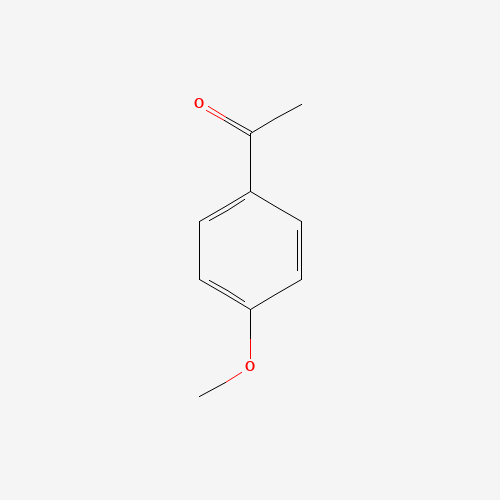
- Fire Potential: Flammable liquid.
- Cleanup Methods: ACCIDENTAL RELEASE MEASURES: Personal precautions, protective equipment and emergency procedures: Use personal protective equipment. Avoid dust formation. Avoid breathing vapors, mist or gas. Ensure adequate ventilation. Avoid breathing dust. Environmental precautions: Do not let product enter drains. Methods and materials for containment and cleaning up: Pick up and arrange disposal without creating dust. Sweep up and shovel. Keep in suitable, closed containers for disposal.
- Hazards Summary: A moderate skin irritant; Causes increased pulse rate and blood pressure elevation in 39-week intermittent inhalation studies of humans; Causes somnolence, muscle weakness, irritability, other degenerative changes to brain and coverings, and weight loss in oral lethal-dose studies of mice; Causes changes in recordings from specific areas of CNS and effects on other transferases and plasma proteins (not involving coagulation) in repeated-dose inhalation studies of rats; [RTECS] Safe when used as a flavoring agent in food; [JECFA] A skin irritant; Harmful by ingestion; [Alfa Aesar MSDS] See Anisole and Acetophenone.
- Disposal Methods: Product: Offer surplus and non-recyclable solutions to a licensed disposal company; Contaminated packaging: Dispose of as unused product.
- FDA Requirements: Acetanisole is a food additive permitted for direct addition to food for human consumption as a synthetic flavoring substance and adjuvant in accordance with the following conditions: a) they are used in the minimum quantity required to produce their intended effect, and otherwise in accordance with all the principles of good manufacturing practice, and b) they consist of one or more of the following, used alone or in combination with flavoring substances and adjuvants generally recognized as safe in food, prior-sanctioned for such use, or regulated by an appropriate section in this part.
- Toxicity Summary: IDENTIFICATION AND USE: 4-Acetylanisole is a colorless to pale-yellow fused solid. It is used in perfumery (for floral odors), and flavoring. HUMAN EXPOSURE AND TOXICITY: Human systemic effects by inhalation: pulse rate increase without fall in blood pressure and blood pressure elevation. ANIMAL STUDIES: In an experiment using isolated bovine eyes, 4-acetylanisole did not show an ocular severe irritant or corrosive potential.
- Environmental Fate: ATMOSPHERIC FATE: According to a model of gas/particle partitioning of semivolatile organic compounds in the atmosphere(1), 4-acetylanisole, which has a vapor pressure of 6.44X10⁻³ mm Hg at 25 °C(2), is expected to exist solely as a vapor in the ambient atmosphere. Vapor-phase 4-acetylanisole is degraded in the atmosphere by reaction with photochemically-produced hydroxyl radicals(SRC); the half-life for this reaction in air is estimated to be 1 day(SRC), calculated from its rate constant of 2.05X10⁻¹¹ cu cm/molecule-sec at 25 °C(SRC) that was derived using a structure estimation method(3). 4-Acetylanisole contains chromophores that absorb at wavelengths >290 nm(4) and, therefore, may be susceptible to direct photolysis by sunlight(SRC). An environmental half-life of 12 days was measure...
- Food Survey Values: 4-Acetylanisole has been detected in grilled and roast beef, sherry, salted and picked plums(1).
- Storage Conditions: Keep container tightly closed in a dry and well-ventilated place. Light sensitive. Storage class (TRGS /technical rules for hazardous substances/ 510): Non Combustible Solids.
- Plant Concentrations: Results of solid phase micro-extraction coupled to gas chromatography and mass spectrometry analyses, accomplished on sporophores of 11 species of truffles and false truffles, are reported. Volatile organic compounds (VOCs) found in Gautieria morchelliformis were dimethyl sulphide, 1,3-octadiene, 3,7-dimethyl-1,6-octadien-3-ol, amorphadiene, isoledene and cis-muurola-3,5-diene. In Hymenogaster luteus var. luteus, presence of 1,3-octadiene, 1-octen-3-ol, 3-octanone, 3-octanol and 4-acetylanisole was revealed. Two VOCs, 4-acetylanisole and beta-farnesene, constituted aroma of Hymenogaster olivaceus. Melanogaster broomeanus exhibited as components of its aroma 2-methyl-1,3-butadiene, 2-methylpropanal, 2-methylpropanol, isobutyl acetate, 3,7-dimethyl-1,6-octadien-3-ol, 3-octanone and beta-c...
- Regulatory Information: New Zealand EPA Inventory of Chemical Status: 4'-Methoxyacetophenone: Does not have an individual approval but may be used under an appropriate group standard
- Human Toxicity Excerpts: /SIGNS AND SYMPTOMS/ Human systemic effects by inhalation: pulse rate increase without fall in blood pressure and blood pressure elevation.
- Fire Fighting Procedures: Advice for firefighters: Wear self-contained breathing apparatus for firefighting if necessary.
- Other Safety Information: Chemical Assessment: Evaluation - Chemicals that are unlikely to require further regulation to manage risks to environment
- Soil Adsorption/Mobility: A log Koc of 2.43 for 4-acetylanisole was measured in a black agricultural soil (silty loam, pH 5.86, 27.2% clay content, 4.78% soil organic matter, 4.01% water content) obtained from Northeastern China(1). This corresponds to a Koc of 270(SRC). According to a classification scheme(2), this Koc value suggests that 4-acetylanisole is expected to have moderate mobility in soil.
- Natural Pollution Sources: 4-Acetylanisole occurs naturally in European cranberry (Vaccinium oxycoccus), guava fruit (Psidium guajava), Vitis labrusca, tomato, anise (Pimpinella anisum), mentha oils, cloudberry (Rubus chamaemorus), Illicium verum and black chokeberry (Aronia melanocarpa ell.).
- Non-Human Toxicity Values: LD50 Mouse oral 820 mg/kg
- Toxic Combustion Products: Special hazards arising from the substance or mixture: Carbon oxides
- Non-Human Toxicity Excerpts: /LABORATORY ANIMALS: Acute Exposure/ /In an experiment using isolated bovine eyes, 4-Acetylanisole/ did not show an ocular severe irritant or corrosive potential.
- Artificial Pollution Sources: 4-Acetylanisole's production and use in perfumery and synthetic flavoring(1) may result in its release to the environment through various waste streams(SRC).
- Hazard Classes and Categories: Eye Irrit. 2A (10.1%)
- Environmental Bioconcentration: An estimated BCF of 3 was calculated in fish for 4-acetylanisole (SRC), using a log Kow of 1.74(1) and a regression-derived equation(2). According to a classification scheme(3), this BCF suggests the potential for bioconcentration in aquatic organisms is low(SRC).
- Volatilization from Water/Soil: The Henry's Law constant for 4-acetylanisole is estimated as 8.9X10⁻⁶ atm-cu m/mole(SRC) using a fragment constant estimation method(1). This Henry's Law constant indicates that 4-acetylanisole is expected to volatilize from water surfaces(2). Based on this Henry's Law constant, the volatilization half-life from a model river (1 m deep, flowing 1 m/sec, wind velocity of 3 m/sec)(2) is estimated as 3 days(SRC). The volatilization half-life from a model lake (1 m deep, flowing 0.05 m/sec, wind velocity of 0.5 m/sec)(2) is estimated as 42 days(SRC). 4-Acetylanisole's Henry's Law constant indicates that volatilization from moist soil surfaces may occur(SRC). 4-Acetylanisole is not expected to volatilize from dry soil surfaces(SRC) based upon a vapor pressure of 6.44X10⁻³ mm Hg at 25 °C(3).
- Antidote and Emergency Treatment: /SRP:/ Advanced treatment: Consider orotracheal or nasotracheal intubation for airway control in the patient who is unconscious, has severe pulmonary edema, or is in severe respiratory distress. Consider drug therapy for pulmonary edema ... . Positive-pressure ventilation techniques with a bag valve mask device may be beneficial. Consider drug therapy for pulmonary edema ... . Consider administering a beta agonist such as albuterol for severe bronchospasm ... . Monitor cardiac rhythm and treat arrhythmias if necessary ... Start IV administration of D5W /SRP: "To keep open", minimal flow rate/. Use 0.9% saline (NS) or lactated Ringer's (LR) if signs of hypovolemia are present. For hypotension with signs of hypovolemia, administer fluid cautiously. Watch for signs of fluid overload ... .T...
- Environmental Abiotic Degradation: The rate constant for the vapor-phase reaction of 4-acetylanisole with photochemically-produced hydroxyl radicals has been estimated as 2.05X10⁻¹¹ cu cm/molecule-sec at 25 °C(SRC) using a structure estimation method(1). This corresponds to an atmospheric half-life of about 1 day at an atmospheric concentration of 5X10+5 hydroxyl radicals per cu cm(2). 4-Acetylanisole is not expected to undergo hydrolysis in the environment due to the lack of functional groups that hydrolyze under environmental conditions(3). 4-Acetylanisole contains chromophores that absorb at wavelengths >290 nm(3) and, therefore, may be susceptible to direct photolysis by sunlight(SRC). An environmental half-life of 12 days was measured in sunlit surface waters at 40 °C(4).
- Probable Routes of Human Exposure: Occupational exposure to 4-acetylanisole may occur through inhalation and dermal contact with this compound at workplaces where 4-acetlanisole is produced or used. Limited monitoring and use data indicate that the general population may be exposed to 4-acetylanisole via smoking cigarettes, inhalation of wood smoke, ingestion of food, and dermal contact with and inhalation of consumer products containing 4-acetylanisole. (SRC)
- Environmental Water Concentrations: SURFACE WATER: 4-Acetylanisole was detected but not quantified in water samples from Spirit Lake, WA on September 11, 1980(1).
- Other Environmental Concentrations: 4-Acetylanisole has been reported as present in tobacco and tobacco smoke(1). The compound was detected in wood smoke from pine and oak and at 5.19 and 3.78 mg/kg of wood burnt but was not detected in smoke from synthetic logs(2).
- Environmental Fate/Exposure Summary: 4-Acetylanisole's production and use in perfumery and as a synthetic flavoring may result in its release to the environment through various waste streams. 4-Acetylanisole occurs naturally in European cranberry, guava fruit, tomato, anise, mentha oils, grilled and roast beef, sherry, salted and picked plums, and black chokeberry. If released to air, a vapor pressure of 6.44X10⁻³ mm Hg at 25 °C indicates 4-acetylanisole will exist solely as a vapor in the atmosphere. Vapor-phase 4-acetylanisole will be degraded in the atmosphere by reaction with photochemically-produced hydroxyl radicals; the half-life for this reaction in air is estimated to be 1 day. 4-Acetylanisole contains chromophores that absorb at wavelengths >290 nm and, therefore, may be susceptible to direct photolysis by sunlig...
- Personal Protective Equipment (PPE): Respiratory protection: For nuisance exposures use type P95 (US) or type P1 (EU EN 143) particle respirator. For higher level protection use type OV/AG/P99 (US) or type ABEK-P2 (EU EN 143) respirator cartridges. Use respirators and components tested and approved under appropriate government standards such as NIOSH (US) or CEN (EU).
- Skin, Eye, and Respiratory Irritations: A skin irritant.
- Hazardous Reactivities and Incompatibilities: Incompatible materials: Strong oxidizing agents, strong bases
Warm reminder:
Because the manufacturer may temporarily adjust product specifications, prices, inventory, parameters and other information without notice, and there are differences in each user's consultation time and procurement needs, the platform reply content is only of reference value within a certain period. Sorry for the inconvenience caused to you, and thank you for your understanding and support! Please consult the online customer service for the latest details. Everything is subject to the real-time reply of the customer service.!
Please check the quantity, appearance and product information in time when you receive the goods. In case of damage, wrong delivery, abnormal quality and other problems, please feel free to contact us.
Service Hotline:400-6226-992 ,We will handle it for you as soon as possible, thank you for your support and trust.!
4-methoxyacetophenone CP, 98% 500g
Yuanye 4-methoxyacetophenone CP, 98% 500g, CAS 100-06-1, complete specifications; suitable for production, research, laboratory testing and inspection; digital one-stop procurement platform for scientific materials.




