

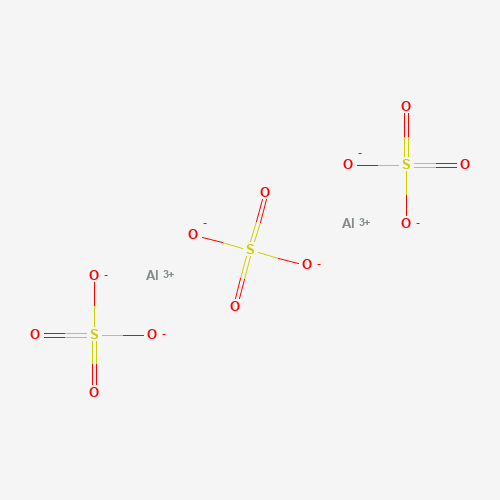
- DOT Label: Corrosive
- First Aid: SKIN: Remove contaminated clothing and shoes. Flush with copious amounts of water. (USCG, 1999)
- Treatment: EYES: irrigate opened eyes for several minutes under running water. INGESTION: do not induce vomiting. Rinse mouth with water (never give anything by mouth to an unconscious person). Seek immediate medical advice. SKIN: should be treated immediately by rinsing the affected parts in cold running water for at least 15 minutes, followed by thorough washing with soap and water. If necessary, the person should shower and change contaminated clothing and shoes, and then must seek medical attention. INHALATION: supply fresh air. If required provide artificial respiration.
- Fire Hazards: Not combustible. Gives off irritating or toxic fumes (or gases) in a fire.
- Interactions: Four cultivars of ryegrass (Lolium multiflorum Lam. cvs. Gulf, Marshall, Urbana, and Wilo) were grown in nutrient solution (pH 4.2 at 0 and 74 uM aluminum). Following a 30 min equilibration period after seeds were exposed to aluminum on day 10 after germination, total and monomeric aluminum concn were 78 + or - 6 and 69 + or - 5 um, respectively. Cations were desorbed from the Donnan free space of roots of 15, 23, and 35 day old plants using barium chloride, barium chloride triethanolamine, ammonium acetate, and potassium chloride. (The ability of desorbents to displace cations varied widely for the desorbent effect). Barium chloride triethanolamine showed the greatest ability to displace aluminum cations from the Donnan free space, while NH4+ did not displace detectable amounts of alum...
- Safe Storage: Separated from bases and strong oxidants. Dry. Store in an area without drain or sewer access. Provision to contain effluent from fire extinguishing.
- Fire Fighting: In case of fire in the surroundings, use appropriate extinguishing media.
- Toxicity Data: LD50: 980 mg/kg (Oral, Mouse) (A236) LD50: 40 mg/kg (Intraperitoneal, Mouse) (A553)
- Eye Prevention: Wear safety goggles.
- Fire Potential: Prophoric material in flammable solvent. Vapors are heavier than air & may travel to a source of ignition & flash back. /Aluminum alkyls/
- Health Effects: Aluminum targets the nervous system and causes decreased nervous system performance and is associated with altered function of the blood-brain barrier. The accumulation of aluminum in the body may cause bone or brain diseases. High levels of aluminum have been linked to Alzheimer's disease. A small percentage of people are allergic to aluminium and experience contact dermatitis, digestive disorders, vomiting or other symptoms upon contact or ingestion of products containing aluminium. (L739, L740)
- Health Hazards: Vapor irritates eyes, nose and respiratory tract due to formation of sulfuric acid. Ingestion of large doses causes gastric irritation, nausea, vomiting, and purging. Liquid irritates eyes and skin. (USCG, 1999)
- OSHA Standards: Vacated 1989 OSHA PEL TWA 2 mg/cu m is still enforced in some states. /Aluminum, soluble salts & alkyls, as Al/
- Reactive Group: Water and Aqueous Solutions
- Cleanup Methods: Environmental considerations: Water spill: Neutralize with agricultural lime (CaO), crushed limestone (CaCO3), or sodium bicarbonate (NaHCO3). Use mechanical dredges or lifts to remove immobilized masses of pollutants and precipitates.
- Exposure Routes: Oral (L739); inhalation (L739)
- Hazards Summary: A skin, eye, and respiratory tract irritant; [ICSC] The octadecahydrate is CAS # 7784-31-8; Aluminum sulfate anhydrous is a severe eye irritant in animal studies; [CHEMINFO] An irritant; May cause serious eye injury; [MSDSonline] See Aluminum potassium sulfate dodecahydrate. See Aluminum.
- Inhalation Risk: A harmful concentration of airborne particles can be reached quickly when dispersed, especially if powdered.
- Skin Prevention: Protective gloves.
- Special Reports: Anon; Information profiles on Potential Occupaional Hazards: Aluminum & Compounds, 2nd Draft (Revised); GRA & I Issue 21 NTIS/PB89-216238 (1989)> TD3: Information profiles are working papers used by the National Institute for Occupational Safety and Health to assist the Institute in establishing priorities. The proile summarizes data on organic and inorganic substances containing aluminum as the only metal. Each summary presents data on known and suspected health effects, the extent of worker exposure, physical and chemical properties and the industrial importance of the following aluminum compounds: aluminum metal, aluminum ammonium sulfate, aluminum chlorhydrate, aluminum chloride anhydrous, aluminum chloride hydrous, aluminum distearate, aluminum ethoxide, aluminum fluoride, aluminum...
- Disposal Methods: Aluminum sulfate: Pretreatment involves hydrolysis, followed by neutralization with sodium hydroxide.
- FDA Requirements: Drug products containing certain active ingredients offered over-the-counter (OTC) for certain uses. A number of active ingredients have been present in OTC drug products for various uses, as described below. However, based on evidence currently available, there are inadequate data to establish general recognition of the safety and effectiveness of these ingredients for the specified uses: aluminum sulfate is included in antiperspirant and topical antifungal drug products.
- Toxicity Summary: The main target organs of aluminum are the central nervous system and bone. Aluminum binds with dietary phosphorus and impairs gastrointestinal absorption of phosphorus. The decreased phosphate body burden results in osteomalacia (softening of the bones due to defective bone mineralization) and rickets. Aluminum's neurotoxicity is believed to involve several mechanisms. Changes in cytoskeletal protein functions as a results of altered phosphorylation, proteolysis, transport, and synthesis are believed to be one cause. Aluminum may induce neurobehavioral effects by affecting permeability of the blood-brain barrier, cholinergic activity, signal transduction pathways, lipid peroxidation, and impair neuronal glutamate nitric oxide-cyclic GMP pathway, as well as interfere with metabolism of...
- Reactivity Alerts: Water-Reactive
- Spillage Disposal: Personal protection: particulate filter respirator adapted to the airborne concentration of the substance. Do NOT let this chemical enter the environment. Sweep spilled substance into covered plastic containers. If appropriate, moisten first to prevent dusting. Store and dispose of according to local regulations.
- FIFRA Requirements: Aluminum sulfate is exempted from the requirement of a tolerance when used as a safener adjuvant in accordance with good agricultural practice as inert (or occasionally active) ingredients in pesticide formulations applied to growing crops only.
- First Aid Measures: Ingestion First Aid: Rinse mouth. Do NOT induce vomiting. Give one or two glasses of water to drink. Refer for medical attention .
- Minimum Risk Level: Intermediate Oral: 1.0 mg/kg/day (L134) Chronic Oral: 1.0 mg/kg/day (L134)
- Reactivity Profile: ALUMINUM SULFATE, SOLUTION is acidic. Will corrode metals. A strong acid. [Handling Chemicals Safely 1980. p. 136].
- Signs and Symptoms: Inhalating aluminum dust causes coughing and abnormal chest X-rays. A small percentage of people are allergic to aluminium and experience contact dermatitis, digestive disorders, vomiting or other symptoms upon contact or ingestion of products containing aluminium. (L739, L740)
- Exposure Prevention: PREVENT DISPERSION OF DUST!
- Allowable Tolerances: Aluminum sulfate is exempted from the requirement of a tolerance when used as a safener adjuvant in accordance with good agricultural practice as inert (or occasionally active) ingredients in pesticide formulations applied to growing crops only.
- Ingestion Prevention: Do not eat, drink, or smoke during work.
- Inhalation Prevention: Avoid inhalation of dust. Use local exhaust or breathing protection.
- NIOSH Recommendations: Recommended Exposure Limit: 10 Hr Time-Weighted Avg: 5 mg/cu m. /Aluminum (pyro powders and welding fumes, as Al)/
- Nonfire Spill Response: ELIMINATE all ignition sources (no smoking, flares, sparks or flames) from immediate area. Do not touch damaged containers or spilled material unless wearing appropriate protective clothing. Stop leak if you can do it without risk. Prevent entry into waterways, sewers, basements or confined areas. Absorb or cover with dry earth, sand or other non-combustible material and transfer to containers. DO NOT GET WATER INSIDE CONTAINERS. (ERG, 2024)
- Air and Water Reactions: Water soluble.
- ICSC Environmental Data: The substance is toxic to aquatic organisms. It is strongly advised not to let the chemical enter into the environment.
- Fire Fighting Procedures: Stop flow of liquid before extinguishing fire. Use dry chemical or carbon dioxide. DO NOT use water as straight stream directly on spilled material. Water fog can be used to control fire. DO NOT use halogenated extinguishing agents on spilled material. Violent reaction may result. Use water spray to keep fire-exposed containers cool. Fight fire from protected location or maximum possible distance. /Aluminum Alkyls/
- Isolation and Evacuation: FIRE: If tank, rail tank car or highway tank is involved in a fire, ISOLATE for 800 meters (1/2 mile) in all directions; also, consider initial evacuation for 800 meters (1/2 mile) in all directions. (ERG, 2024)
- Other Safety Information: Chemical Assessment: Evaluation - Use of aluminium in antiperspirants
- Carcinogen Classification: Not listed by IARC. IARC classified aluminum production as carcinogenic to humans (Group 1), but did not implicate aluminum itself as a human carcinogen. (L135) A link between use of aluminum-containing antiperspirants and increased risk of breast cancer has been proposed (A235), but studies have not been able to establish a clear link (A15468).
- Natural Pollution Sources: THE CRUDE LUMP ALUM AS IT OCCURS WITH EARTH ATTACHED HAS BEEN KNOWN AS ROCK ALUMINUM (ALUMEN RUPEUM) AND AS ROMAN ALUMINUM. /ALUM/
- Effects of Long Term Exposure: The substance may have effects on the central nervous system. This may result in impaired functions.
- Hazard Classes and Categories: Corrosives
- Effects of Short Term Exposure: The substance is severely irritating to the eyes, respiratory tract and gastrointestinal tract. The substance is mildly irritating to the skin.
- Explosive Limits and Potential: ...Violently explosive when they come into contact with water. /Aluminum alkyls/
- Standard Transportation Number: 49 441 65; Aluminum sulfate, solution
- Antidote and Emergency Treatment: /Exposure to aluminum sulfate/: Call for medical aid. Dust: Irritating to eyes, nose and throat. If inhaled will cause difficult breathing. If in eyes, hold eyelids open and flush with plenty of water. If breathing has stopped, give artificial respiration. If breathing is difficult, give oxygen. Solid: Irritating to skin and eyes. If swallowed with cause nausea or vomiting. Remove contaminated clothing and shoes. Flush affected areas with plenty of water. If in eyes, hold eyelids open and flush with plenty of water. If swallowed and victim is conscious, have victim drink water or milk. If swallowed and victim is unconscius or having convulsions, do nothing except keep victim warm.
- Protective Action Criteria (PAC): PAC-3: 380 [mg/m3]
- Probable Routes of Human Exposure: Production of aluminum sulfate and aluminum fluoride is associated with exposure to several irritant substances. Such production has been connected with reversible bronchial obstruction or asthma.
- Personal Protective Equipment (PPE): Protective clothing and a high standard of training in the necessary precautionary measures are essential for the handling of the materials. /Aluminum alkyls/
- Shipping Name/ Number DOT/UN/NA/IMO: NA 1760; Aluminum sulfate solution
- Skin, Eye, and Respiratory Irritations: May cause minor irritation to lungs or eyes. /Aluminum (dust or powder)/
- Hazardous Reactivities and Incompatibilities: Reacts violently with a broad range of materials including air & water. /Aluminum alkyls/
Warm reminder:
Because the manufacturer may temporarily adjust product specifications, prices, inventory, parameters and other information without notice, and there are differences in each user's consultation time and procurement needs, the platform reply content is only of reference value within a certain period. Sorry for the inconvenience caused to you, and thank you for your understanding and support! Please consult the online customer service for the latest details. Everything is subject to the real-time reply of the customer service.!
Please check the quantity, appearance and product information in time when you receive the goods. In case of damage, wrong delivery, abnormal quality and other problems, please feel free to contact us.
Service Hotline:400-6226-992 ,We will handle it for you as soon as possible, thank you for your support and trust.!
Research chemical CAS 10043-01-3 ≥99. 95% 5g
Yuanye Research chemical CAS 10043-01-3 ≥99. 95% 5g, complete specifications; suitable for production, research, laboratory testing and inspection; digital one-stop procurement platform for scientific materials.




