

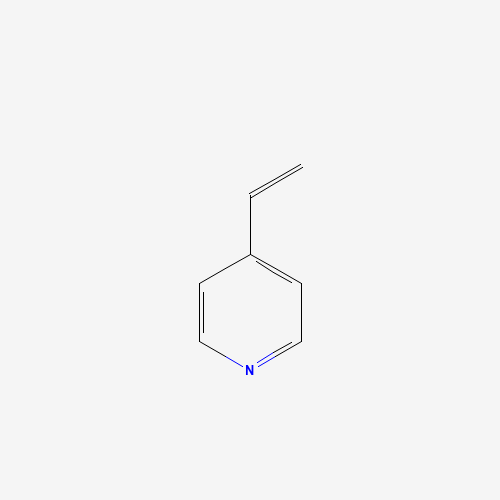
- Toxicity Data: LC50 (rat) = 170 mg/m3
- Fire Potential: Fire hazard is moderate ... .
- Adverse Effects: Toxic Pneumonitis - Inflammation of the lungs induced by inhalation of metal fumes or toxic gases and vapors.
- Hazards Summary: Irritating to eyes, nose, and throat; Causes skin burns and skin sensitization; May cause pneumonitis and pulmonary edema after inhalation of high concentrations; [MSDSonline] Can cause contact urticaria (nonimmunological) and allergic contact dermatitis; [Kanerva, p. 1845] See Pyridine.
- Disposal Methods: SRP: At the time of review, criteria for land treatment or burial (sanitary landfill) disposal practices are subject to significant revision. Prior to implementing land disposal of waste residue (including waste sludge), consult with environmental regulatory agencies for guidance on acceptable disposal practices.
- Ecotoxicity Values: USDA APHIS Chemical Effects: collection=usda_chemeffect&query_type=synonym&query='^100-43-6$'
- Environmental Fate: ATMOSPHERIC FATE: According to a model of gas/particle partitioning of semivolatile organic compounds in the atmosphere(1), 4-vinylpyridine, which has an extrapolated vapor pressure of 1.7 mm Hg at 25 °C(2), is expected to exist solely as a vapor in the ambient atmosphere. Vapor-phase 4-vinylpyridine is degraded in the atmosphere by reaction with photochemically-produced hydroxyl radicals(SRC); the half-life for this reaction in air is estimated to be 14 hours(SRC), calculated from its estimated rate constant of 2.7X10⁻¹¹ cu cm/molecule-sec at 25 °C(SRC), determined using a structure estimation method(3). Vapor-phase 4-vinylpyridine is also degraded in the atmosphere by reaction with ozone(SRC); the half-life for this reaction in air is estimated to be 13 hours(SRC), calculated from its...
- Preventive Measures: SRP: Contaminated protective clothing should be segregated in such a manner so that there is no direct personal contact by personnel who handle, dispose, or clean the clothing. Quality assurance to ascertain the completeness of the cleaning procedures should be implemented before the decontaminated protective clothing is returned for reuse by the workers. Contaminated clothing should not be taken home at end of shift, but should remain at employee's place of work for cleaning.
- Regulatory Information: New Zealand EPA Inventory of Chemical Status: 4-Vinylpyridine: Does not have an individual approval but may be used under an appropriate group standard
- Human Toxicity Excerpts: SEVERAL CASES OF TRANSIENT MUCOUS MEMBRANE IRRITATION, SYSTEMIC SYMPTOMS, SKIN BURNS & SKIN SENSITIZATION ... HAVE BEEN OBSERVED DURING MFR & IN LABORATORY PILOT-PLANT USE.
- Soil Adsorption/Mobility: The Koc of 4-vinylpyridine is estimated as 15(SRC), using a measured water solubility of 29,100 mg/l at 25 °C(1) and a regression-derived equation(2). According to a classification scheme(3), this estimated Koc value suggests that 4-vinylpyridine is expected to have very high mobility in soil. The pKa of 4-vinylpyridine is 5.62(4), which indicates that this compound will partially exist in the protonated form under acidic conditions. Cations adsorb more strongly to soil surfaces than neutral molecules thus adsorption of 4-vinylpyridine is expected to be greater in acidic soils(SRC).
- Artificial Pollution Sources: 4-Vinylpyridine's production and use as a monomer for polyvinylpyridine polymers and in synthetic rubbers, photographic film, ion exchange resins as well as pharmaceuticals(1) may result in its release to the environment through various waste streams(SRC).
- Environmental Biodegradation: AEROBIC: 4-Vinylpyridine, present at 100 mg/l, was not biodegraded, as measured by BOD, in 4 weeks using an activated sludge inoculum at 30 mg/l and the Japanese MITI test(1).
- Hazard Classes and Categories: Hazardous to the aquatic environment (Long-term) - Category 1
- Environmental Bioconcentration: BCF values of 48 to 96 were measured in carp at concentrations of 2 and 20 ug/l during an 8-week study(1). According to a classification scheme(3), these BCF values suggest the potential for bioconcentration in aquatic organisms is moderate(SRC).
- Volatilization from Water/Soil: The Henry's Law constant for 4-vinylpyridine is estimated as 3.2X10⁻⁶ atm-cu m/mole(SRC) using a group contribution estimation method(1). This Henry's Law constant indicates that 4-vinylpyridine is expected to volatilize from water surfaces(2). Based on this Henry's Law constant, the volatilization half-life from a model river (1 m deep, flowing 1 m/sec, wind velocity of 3 m/sec)(2) is estimated as 12 days(SRC). The volatilization half-life from a model lake (1 m deep, flowing 0.05 m/sec, wind velocity of 0.5 m/sec)(2) is estimated as 90 days(SRC). 4-Vinylpyridine's Henry's Law constant(1) indicates that volatilization from moist soil surfaces may occur(SRC). However, 4-vinylpyridine is a weak base with a pKa of 5.62(3), which indicates this compound will partially exist in the protonat...
- Antidote and Emergency Treatment: Advanced treatment: Consider orotracheal or nasotracheal intubation for airway control in the patient who is unconscious or in respiratory arrest. Positive pressure ventilation techniques with a bag valve mask device may be beneficial. Monitor cardiac rhythm and treat arrhythmias if necessary ... Start an IV with D5W /SRP: "To keep open", minimal flow rate/. Use lactated Ringer's if signs of hypovolemia are present. Watch for signs of fluid overload. Consider drug therapy for pulmonary edema ... . Treat seizures with diazepam (Valium) ... . Use proparacaine hydrochloride to assist eye irrigation ... . /Aromatic hydrocarbons and related compounds/
- Shipment Methods and Regulations: The International Maritime Dangerous Goods Code lays down basic principles for transporting hazardous chemicals. Detailed recommendations for individual substances and a number of recommendations for good practice are included in the classes dealing with such substances. A general index of technical names has also been compiled. This index should always be consulted when attempting to locate the appropriate procedures to be used when shipping any substance or article.
- Environmental Abiotic Degradation: The rate constant for the vapor-phase reaction of 4-vinylpyridine with photochemically-produced hydroxyl radicals has been estimated as 2.7X10⁻¹¹ cu cm/molecule-sec at 25 °C(SRC) using a structure estimation method(1). This corresponds to an atmospheric half-life of about 14 hours at an atmospheric concentration of 5X10+5 hydroxyl radicals per cu cm(1). The rate constant for the vapor-phase reaction of 4-vinylpyridine with ozone has been estimated as 2.1X10⁻¹⁷ cu cm/molecule-sec at 25 °C(SRC) using a structure estimation method(1). This corresponds to an atmospheric half-life of about 13 hours at an atmospheric concentration of 7X10+11 ozone molecules per cu cm(2). 4-Vinylpyridine is not expected to undergo hydrolysis in the environment due to the lack of hydrolyzable functional groups(...
- Probable Routes of Human Exposure: The most probable human exposure to 4-vinylpyridine would be occupational exposure, which may occur through dermal contact or inhalation at places where it is produced or used. NIOSH (NOES Survey 1981-1983) has statistically estimated that 3 workers are potentially exposed to 4-vinylpyridine in the USA(1). Non-occupational exposures are likely to occur from the passive and active inhalation of cigarette smoke(2).
- Other Environmental Concentrations: 4-Vinylpyridine was detected in cigarette smoke at an unspecified concentration(1).
- Environmental Fate/Exposure Summary: 4-Vinylpyridine's production and use as a monomer for polyvinylpyridine polymers, in synthetic rubbers, photographic film, ion exchange resins as well as in pharmaceuticals may result in its release to the environment through various waste streams. If released to air, an extrapolated vapor pressure of 1.7 mm Hg at 25 °C indicates 4-vinylpyridine will exist solely as a vapor in the ambient atmosphere. Vapor-phase 4-vinylpyridine will be degraded in the atmosphere by reaction with photochemically-produced hydroxyl radicals and ozone; the half-lives for these reactions in air are estimated to be 14 and 13 hours, respectively. If released to soil, 4-vinylpyridine is expected to have very high mobility based upon an estimated Koc of 15. 4-Vinylpyridine has a pKa of 5.62, which indicates that...
- Personal Protective Equipment (PPE): Depending on the extent of possible contact, workers should be provided with personal protective equipment. A charcoal gas mask canister respirator has been found to be effective against a 2% pyridine concentration at 30 l/min for 1 hr. Rubber and plastic gloves should not be relied upon to prevent skin contact because pyridine and many of its derivatives penetrate these materials ... . /Pyridine, homologs, and derivatives/
- Shipping Name/ Number DOT/UN/NA/IMO: IMO 6.1; Vinylpyridines, inhibited
- Skin, Eye, and Respiratory Irritations: BRIEF EXPOSURES TO UNDETERMINED CONCN OF ... 4-VINYLPYRIDINE DURING LAB USE ... CAUSED EYE, NOSE & THROAT IRRITATION ... .
Warm reminder:
Because the manufacturer may temporarily adjust product specifications, prices, inventory, parameters and other information without notice, and there are differences in each user's consultation time and procurement needs, the platform reply content is only of reference value within a certain period. Sorry for the inconvenience caused to you, and thank you for your understanding and support! Please consult the online customer service for the latest details. Everything is subject to the real-time reply of the customer service.!
Please check the quantity, appearance and product information in time when you receive the goods. In case of damage, wrong delivery, abnormal quality and other problems, please feel free to contact us.
Service Hotline:400-6226-992 ,We will handle it for you as soon as possible, thank you for your support and trust.!
4-vinylpyridine 96%, 80-120 ppm hydroquinone reagent 100/ml
4-vinylpyridine 96%, 80-120 ppm hydroquinone reagent 100/ml 100-43-6, , .




