
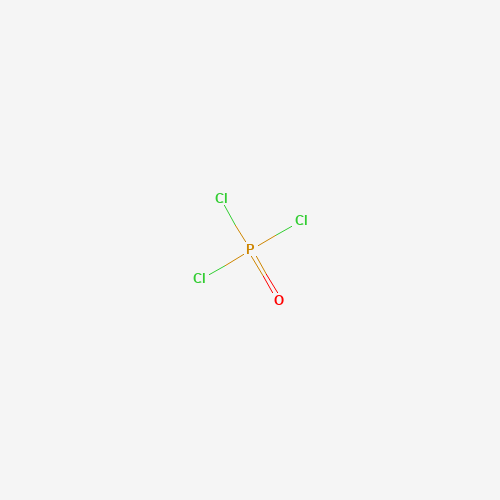
- DOT Label: Poison Inhalation Hazard Corrosive
- First Aid: Swallow: Medical attention immediately - If this chemical has been swallowed, get medical attention immediately.
- AEGLs Notes: AEGLs Status: Final
- AEGLs Table: 8 hr: 0.27
- Fire Hazards: Not combustible. Gives off irritating or toxic fumes (or gases) in a fire.
- Safe Storage: See Chemical Dangers. Cool. Dry. Well closed. Keep in a well-ventilated room.
- Fire Fighting: In case of fire in the surroundings, use appropriate extinguishing media. NO hydrous agents. NO water. In case of fire: keep drums, etc., cool by spraying with water. NO direct contact with water.
- Target Organs: Eyes, skin, respiratory system, central nervous system, kidneys
- Toxicity Data: LC50 (rat) = 32 ppm/4h
- Eye Prevention: Wear face shield or eye protection in combination with breathing protection.
- Fire Potential: PRODUCTS OF ITS REACTION WITH WATER RAPIDLY CORRODE STEEL & MOST METALS WITH FORMATION OF FLAMMABLE HYDROGEN GAS.
- Health Hazards: ERG2024, Guide 137 (Phosphorus oxychloride): · Runoff from fire control or dilution water may cause environmental contamination.
- OSHA Standards: Vacated 1989 OSHA PEL TWA 0.1 ppm (0.6 mg/cu m) is still enforced in some states.
- Reactive Group: Acyl Halides, Sulfonyl Halides, and Chloroformates
- Adverse Effects: Toxic Pneumonitis - Inflammation of the lungs induced by inhalation of metal fumes or toxic gases and vapors.
- Cleanup Methods: Keep material out of water sources and sewers; build dikes to contain flow as necessary; use water spray to knock down vapors; do not use water on material itself; and neutralize spilled material with crushed limestone, soda ash, or lime. For a land spell, dig a pit, pond, lagoon, or holding area to contain liquid or solid material; dike surface flow using soil. sand bags, foamed polyurethane, or foamed concrete; absorb bulk liquid with fly ash or cement powder; neutralize with agricultural lime (slaked lime), crushed limestone, or sodium bicarbonate. For a water spill, neutralize with agricultural lime (slaked lime), crushed limestone, or sodium bicarbonate; use mechanical dredges or lifts to remove immobilized masses of pollutants and precipitates; adjust pH to neutral (pH 7). For air...
- Exposure Routes: inhalation, ingestion, skin and/or eye contact
- Fire Prevention: NO contact with water.
- Hazards Summary: Liquid causes second or third degree burns after short contact; [CHRIS] Highly corrosive to skin; [Quick CPC] Mucous membrane irritation, bronchitis, pulmonary edema, and nephritis have been reported after occupational exposure. [ACGIH] Liver injury in animals in a chronic study; [Desai, H. Phosphorus and Phosphorus Compounds. In: Sullivan J, Krieger G (eds). Hazardous Materials Toxicology. Baltimore:Williams & Wilkins,1992;939] A corrosive substance that can cause pulmonary edema; [ICSC] A lachrymator; [CHEMINFO]
- Inhalation Risk: A harmful contamination of the air can be reached very quickly on evaporation of this substance at 20 °C.
- Skin Prevention: Protective gloves. Protective clothing.
- Special Reports: Phosphorus Oxychloride (CAS Reg. No. 10025-87-3), Interim Acute Exposure Guideline Levels (AEGLs) for NAS/COT Subcommittee for AEGLs (Interim 2:10/2006). Technical Support Document for the AEGL Program. Available at: http://www.epa.gov/oppt/aegl/pubs/tsd312.pdf as of November 24, 2008.
- DOT ID and Guide: 1810 137
- Disposal Methods: Principles and methods for destruction of chemical weapons: ... "Destruction of chemical weapons" means a process by which chemicals are converted in an essentially irreversible way to a form unsuitable for production of chemical weapons, and which in an irreversible manner renders munitions and other devices unusable as such. ... Each ... /nation/ shall determine how it shall destroy chemical weapons, except that the following processes may not be used: dumping in any body of water, land burial or open-pit burning. It shall destroy chemical weapons only at specifically designated and appropriately designed and equipped facilities. ... Each ... /nation/ shall ensure that its chemical weapons destruction facilities are constructed and operated in a manner to ensure the destruction of the...
- Flammable Limits: Flammability: Noncombustible Liquid, but may set fire to combustible materials.
- Physical Dangers: The vapour is heavier than air.
- Toxicity Summary: Phosphorus oxychloride. No toxicokinetic studies were located. Phosphorus oxychloride is acutely very toxic when inhaled by rats and guinea pigs, causing extensive irritation of the respiratory tract. It is also acutely toxic to rats via the oral route. The substance is corrosive to rabbit skin and causes severe eye damage. Little reliable information is available on the effects of repeated inhalation in animals. Irritation of the respiratory tract would be expected and has been claimed in one poorly reported rat study, although no reliance can be placed on these data, particularly as it is not clear if continuous or repeated exposure was used. No reliable genotoxicity or animal reproductive toxicity data are available. No animal carcinogenicity study was located. Single exposure of hum...
- EC Classification: Symbol: T+, C; R: 14-22-26-29-35-48/23; S: (1/2)-7/8-26-36/37/39-45
- Reactivity Alerts: Air-Reactive
- Spillage Disposal: Evacuate danger area! Consult an expert! Personal protection: chemical protection suit including self-contained breathing apparatus. Ventilation. Collect leaking and spilled liquid in sealable dry containers as far as possible. Absorb remaining liquid in dry sand or inert absorbent. Then store and dispose of according to local regulations.
- UN Classification: UN Hazard Class: 8; UN Pack Group: II
- Environmental Fate: ATMOSPHERIC FATE: According to a model of gas/particle partitioning of semivolatile organic compounds in the atmosphere(1), phosphorus oxychloride, which has a vapor pressure of 40 mm Hg at 27.3 °C(2), is expected to exist solely as a vapor in the ambient atmosphere. Vapor-phase phosphorus oxychloride is degraded in the atmosphere by reaction with photochemically-produced hydroxyl radicals(SRC); the half-life for this reaction in air is reported to be >290 days, calculated from its rate constant of <4X10-14 cu cm/molecule-sec at 25 deg(3). Phosphorus oxychloride does not contain chromophores that absorb at wavelengths >290 nm(4) and therefore is not expected to be susceptible to direct photolysis by sunlight(SRC).
- First Aid Measures: Ingestion First Aid: Rinse mouth. Do NOT induce vomiting. Refer for medical attention .
- Reactivity Profile: PHOSPHORUS OXYCHLORIDE is water reactive. Incompatible with strong oxidizing agents, alcohols, bases (including amines). May react vigorously or explosively if mixed with diisopropyl ether or other ethers in the presence of trace amounts of metal salts [J. Haz. Mat., 1981, 4, 291]. Combining the chloride with zinc dust caused immediate ignition, due to the formation of phosphine gas which ignites, [Mellor, 1940, Vol. 8, 1025]. An exotherm starting with the mixing of phosphorus oxychloride with acetone (a ketone) lead to an explosion, may behave similarly with other ketones, [Organic Process Research and Development, Vol.4, No. 6,200, "Phosphorus Oxychloride and Acetone: An Incompatibility Investigation Using ARC."]
- Signs and Symptoms: irritation eyes, skin, respiratory system; eye, skin burns; dyspnea (breathing difficulty), cough, pulmonary edema; dizziness, headache, lassitude (weakness, exhaustion); abdominal pain, nausea, vomiting; nephritis
- Storage Conditions: Where possible, automatically pump liquid from drums or other storage containers to process containers. Sources of ignition such as smoking and open flames are prohibited where this chemical is handled, used, or stored. Metal containers involving the transfer of 5 gallons or more of this chemical should be grounded and bonded. Drums must be equipped with self-closing valves, pressure vacuum bungs, and flame arresters. Use only non-sparking tools and equipment, especially when opening and closing containers of this chemical. Wherever this chemical is used, handled, manufactured, or stored, use explosion-proof electrical equipment and fittings.
- Exposure Prevention: AVOID ALL CONTACT! IN ALL CASES CONSULT A DOCTOR!
- Preventive Measures: Work clothing that becomes wet or significantly contaminated should be removed and replaced.
- Firefighting Hazards: Fumes from fires are irritating to respiratory passages, eyes, skin, & may contain phosphine, phosphoric acid, hydrogen chloride.
- Ingestion Prevention: Do not eat, drink, or smoke during work.
- History and Incidents: An accident involving simultaneous exposure to an explosive release of phosphorus oxychloride, hydrogen chloride, oxalic acid, phosphorus pentachloride, and oxalyl chloride was reported ... . The exposure involved eight men and three women, ages 22-56 years, and an exposure duration of approximately one-half to two minutes (the time required to escape from the contaminated area). The major signs and symptoms of exposure were wheezing, shortness of breath, conjunctivitis, and coughing. All except two patients exhibited effects on ventilatory function that, with the exception of three individuals, resolved within a few days. Of these three individuals, the disturbances in respiratory function returned to normal after four weeks in one patient, 2.5 months in another, and persisted after tw...
- Inhalation Prevention: Use ventilation, local exhaust or breathing protection.
- NIOSH Recommendations: Recommended Exposure Limit: 15 Min Short-Term Exposure Limit: 0.5 ppm (3 mg/cu m).
- Hazards Identification: ERG Hazard Classes: Water-reactive material (WR)
- Nonfire Spill Response: SMALL SPILL: Cover with DRY earth, DRY sand or other non-combustible material followed with plastic sheet to minimize spreading or contact with rain. Use clean, non-sparking tools to collect material and place it into loosely covered plastic containers for later disposal. Prevent entry into waterways, sewers, basements or confined areas. (ERG, 2024)
- Air and Water Reactions: Based on a scenario where the chemical is spilled into an excess of water (at least 5 fold excess of water), half of the maximum theoretical yield of Hydrogen Chloride (hydrochloric acid) gas will be created in 0.12 minutes. Experimental details are in the following: "Development of the Table of Initial Isolation and Protective Distances for the 2008 Emergency Response Guidebook", ANL/DIS-09-2, D.F. Brown, H.M. Hartmann, W.A. Freeman, and W.D. Haney, Argonne National Laboratory, Argonne, Illinois, June 2009.
- Packaging and Labelling: Airtight. Unbreakable packaging. Put breakable packaging into closed unbreakable container.
- CSL Reaction Information: Create Date: 2/23/18
- Fire Fighting Procedures: This chemical reacts violently with moisture producing hydrochloric and phosphoric acids. Poisonous gases including chlorides and phosphorus oxides are produced in fire. Do not use water unless used in flooding quantities to control a large fire by wetting down combustibles burning in vicinity of this material. Use dry chemical, carbon dioxide, or dry sand; do not use water on material itself. Use water spray to absorb vapors and cool all affected containers with flooding quantities of water. Apply water from a s far a distance as possible. Avoid breathing vapors; keep upwind. Wear self-contained breathing apparatus. Avoid bodily contact wit the material. Wear boots, protective gloves, and goggles. Do not handle broken packages without protective equipment. Wash away any material which...
- Isolation and Evacuation: Protection: - PROTECT people from downwind during NIGHT time: 1.8 km (1.2 mi)
- Other Safety Information: Chemical Assessment: IMAP assessments - Phosphoryl chloride: Environment tier I assessment
- Soil Adsorption/Mobility: Phosphorus oxychloride hydrolyzes rapidly in water at room temperature(1), and therefore will not adsorb to soils and sediments(SRC).
- DOT Hazard Classification: Notes: Symbol +: Fixes the proper shipping name, hazard class and packing group for that entry
- Non-Human Toxicity Values: LD50 Rat oral 380 mg/kg
- Toxic Combustion Products: This chemical reacts violently with moisture producing hydrochloric and phosphoric acids. Poisonous gases including chlorides and phosphorus oxides are produced in fire.
- Highly Hazardous Substance: OSHA Highly Hazardous Chemicals, Toxics and Reactives: Note: Phosphorus Oxychloride (also called Phosphoryl Chloride) in quantities at or above above 1000lb presents a potential for a catastrophic event as a toxic or reactive highly hazardous chemical.
- NFPA Hazard Classification: NFPA Specific Notice: W - No water: Materials that react violently or explosively with water.
- Respirator Recommendations: Important additional information about respirator selection
- Accidental Release Measures: Spill or Leak: ERG2024, Guide 137 (Phosphorus oxychloride): · Prevent entry into waterways, sewers, basements or confined areas.
- Artificial Pollution Sources: Phosphorus oxychloride's production and use to manufacture alkyl and aryl orthophosphate triesters(1), manufacture of insecticides, dye intermediates, pharmaceuticals, synthesis of various nerve agents(2), solvent in cryoscopy(3), manufacture of gasoline additives and hydraulic fluid, chlorinating agent and catalyst, dopant for semiconductor grade silicon, tricresyl phosphate, and fire retarding agent(4) may result in its release to the environment through various waste streams(SRC).
- Threshold Limit Values (TLV): TLV-TWA (Time Weighted Average): 0.1 ppm [1979]
- Hazard Classes and Categories: Skin Corr. 1A
- Toxic-by-Inhalation (TIH) Gas: HCl - when spill Phosphorus oxychloride into water.
- Effects of Short Term Exposure: The substance is corrosive to the eyes, skin and respiratory tract. Inhalation of the vapour may cause lung oedema. Exposure at high levels could cause death. The effects may be delayed. Medical observation is indicated.
- Environmental Bioconcentration: Phosphorus oxychloride hydrolyzes rapidly in water at room temperature(1), and therefore is not expected to bioconcentrate in organisms(SRC).
- Explosive Limits and Potential: POOR STIRRING DURING FORMYLATION OF 2,5-DIMETHYLPYRROLE WITH THE PREFORMED COMPLEX OF DIMETHYLFORMAMIDE WITH PHOSPHORYL CHLORIDE CAUSED ERUPTION OF FLASK CONTENTS. REACTION OF COMPLEX WITH LOCAL EXCESS OF PYRROLE MAY HAVE BEEN INVOLVED.
- Standard Transportation Number: 49 323 52; Phosphorus oxychloride
- Volatilization from Water/Soil: Phosphorus oxychloride hydrolyzes rapidly in water at room temperature(1), and therefore will not volatilize from water or moist soil surfaces(SRC). Phosphorus oxychloride is expected to volatilize from dry soil surfaces(SRC) based upon a vapor pressure of 40 mm Hg(1).
- DHS Chemicals of Interest (COI): Security Issue: Sabotage/Contamination: Chemical or material that can be mixed with readily available materials.
- Permissible Exposure Limit (PEL): none See Appendix G
- Protective Action Criteria (PAC): PAC-3: 0.85 [ppm]
- Recommended Exposure Limit (REL): TWA 0.1 ppm (0.6 mg/m3) ST 0.5 ppm (3 mg/m3)
- Shipment Methods and Regulations: The International Maritime Dangerous Goods Code lays down basic principles for transporting hazardous chemicals. Detailed recommendations for individual substances and a number of recommendations for good practice are included in the classes dealing with such substances. A general index of technical names has also been compiled. This index should always be consulted when attempting to locate the appropriate procedures to be used when shipping any substance or article.
- Critical Temperature and Pressure: Critical temperature: 331.8 °C
- Environmental Abiotic Degradation: The rate constant for the vapor-phase reaction of phosphorus oxychloride with photochemically-produced hydroxyl radicals has been reported as <4X10-14 cu cm/molecule-sec at 25 °C(1). This corresponds to an atmospheric half-life of >290 days(1). Phosphorus oxychloride hydrolyzes rapidly in water at room temperature(2). Phosphorus oxychloride does not contain chromophores that absorb at wavelengths >290 nm(3) and therefore is not expected to be susceptible to direct photolysis by sunlight(SRC).
- Probable Routes of Human Exposure: The maximum admissible concentration of phosphoryl trichloride in the workplace air (MAK) is 1.3 mg/cu m (0.2 ppm) in Germany. Workplace air measurements of phosphoryl trichloride were performed in the Bayer Chemicals processing plant. /Eighteen/ total shift measurements and one short time measurement were done in the relevant areas between 1992 and 1996. Three values of these (0.03 - 0.1 mg/cu m) were above the detection limit (0.02 - 0.1 mg/cu m depending on sampling conditions).
- Occupational Exposure Limits (OEL): MAK (Maximale Arbeitsplatz Konzentration): 0.13 mg/m
- Environmental Fate/Exposure Summary: Phosphorus oxychloride's production and use to manufacture alkyl and aryl orthophosphate triesters, manufacture of insecticides, dye intermediates, pharmaceuticals, synthesis of various nerve agents, solvent in cryoscopy, manufacture of gasoline additives and hydraulic fluid, chlorinating agent and catalyst, dopant for semiconductor grade silicon, tricresyl phosphate, and fire retarding agent may result in its release to the environment through various waste streams. If released to air, a vapor pressure of 40 mm Hg at 27.3 °C indicates phosphorus oxychloride will exist solely as a vapor in the atmosphere. Vapor-phase phosphorus oxychloride will be degraded in the atmosphere by reaction with photochemically-produced hydroxyl radicals; the half-life for this reaction in air is estimated t...
- Shipping Name/ Number DOT/UN/NA/IMO: IMO 8.0; Phosphorous oxychloride
- Emergency Response Planning Guidelines: Emergency Response: ERG2024, Guide 137 (Phosphorus oxychloride): · ALWAYS stay away from tanks in direct contact with flames.
- Skin, Eye, and Respiratory Irritations: Acute intoxication causes photophobia, lacrimation, burning in the eyes and throat, dyspnea, try cough, rhinitis, loss of voice, difficult swallowing, constriction in the chest, reddening of conjunctivae and mucous mebranes of the throat, tracheitis, bronchitis, bronchopneumonia, raised temperature. increased sensitivity of the bronchi may last for a long time.
- Exposure Control and Personal Protection: Maximum Allowable Concentration (MAK): 0.02 [ppm]
- Other Standards Regulations and Guidelines: USSR: 0.008 ppm
- Immediately Dangerous to Life or Health (IDLH): See: IDLH INDEX
Warm reminder:
Because the manufacturer may temporarily adjust product specifications, prices, inventory, parameters and other information without notice, and there are differences in each user's consultation time and procurement needs, the platform reply content is only of reference value within a certain period. Sorry for the inconvenience caused to you, and thank you for your understanding and support! Please consult the online customer service for the latest details. Everything is subject to the real-time reply of the customer service.!
Please check the quantity, appearance and product information in time when you receive the goods. In case of damage, wrong delivery, abnormal quality and other problems, please feel free to contact us.
Service Hotline:400-6226-992 ,We will handle it for you as soon as possible, thank you for your support and trust.!
Research chemical CAS 10025-87-3 ≥99. 99% 100g
Research chemical CAS 10025-87-3 ≥99. 99% 100g, complete specifications; suitable for production, research, laboratory testing and inspection; digital one-stop procurement platform for scientific materials.