

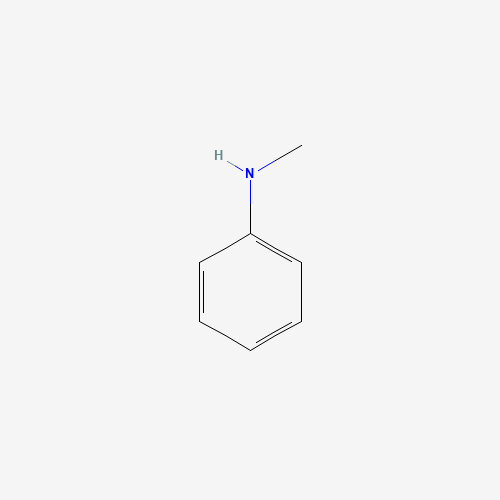
- DOT Label: Poison
- First Aid: Swallow: Medical attention immediately - If this chemical has been swallowed, get medical attention immediately.
- Fire Hazards: Combustible. Gives off irritating or toxic fumes (or gases) in a fire. Above 79.5 °C explosive vapour/air mixtures may be formed.
- Interactions: MONOMETHYL ANILINE (1.95 G/KG OF FOOD) & SODIUM NITRITE (1.0 G/L WATER) FED TO MICE CAUSED LUNG ADENOMAS & MALIGNANT LYMPHOMAS.
- Safe Storage: Separated from strong oxidants, strong acids and food and feedstuffs. Keep in a well-ventilated room. Store in an area without drain or sewer access.
- Fire Fighting: Use water spray, powder, foam, carbon dioxide.
- Target Organs: respiratory system, liver, kidneys, blood, central nervous system
- Eye Prevention: Wear face shield or eye protection in combination with breathing protection.
- Health Hazards: ERG2024, Guide 153 (N-Methylaniline): · Runoff from fire control or dilution water may be corrosive and/or toxic and cause environmental contamination.
- Reactive Group: Amines, Aromatic
- Adverse Effects: Methemoglobinemia - The presence of increased methemoglobin in the blood; the compound is classified as primary toxic effect.
- Exposure Routes: inhalation, skin absorption, ingestion, skin and/or eye contact
- Fire Prevention: NO open flames. Above 79.5 °C use a closed system and ventilation.
- Hazards Summary: Methemoglobinemia and liver injury occur in animals exposed to high concentrations over a period of weeks and months. There are no reports of human poisoning by monomethyl aniline. Listed in table of Industrial Chemicals for Which Methemoglobin Formation is the Principal Cause of Toxicity; [ACGIH] Can induce methemoglobinemia; [ICSC]
- Inhalation Risk: A harmful contamination of the air can be reached rather quickly on evaporation of this substance at 20 °C.
- Skin Prevention: Protective gloves. Protective clothing.
- DOT ID and Guide: 2294 153
- Disposal Methods: SRP: At the time of review, criteria for land treatment or burial (sanitary landfill) disposal practices are subject to significant revision. Prior to implementing land disposal of waste residue (including waste sludge), consult with environmental regulatory agencies for guidance on acceptable disposal practices.
- Flammable Limits: Flammability: Class IIIA Combustible Liquid: Fl.P. at or above 140 °F and below 200 °F.
- EC Classification: Symbol: T, N; R: 23/24/25-33-50/53; S: (1/2)-28-36/37-45-60-61
- Spillage Disposal: Personal protection: chemical protection suit including self-contained breathing apparatus. Do NOT let this chemical enter the environment. Collect leaking liquid in sealable containers. Absorb remaining liquid in sand or inert absorbent. Then store and dispose of according to local regulations.
- UN Classification: UN Hazard Class: 6.1; UN Pack Group: III
- Environmental Fate: ATMOSPHERIC FATE: According to its vapor pressure, 0.453 mm Hg at 25 °C(2), N-methylaniline should exist in the atmosphere as a vapor(4). It will react with photochemically-produced hydroxyl radicals with an estimated half-life of 8.8 hr(3,SRC). It may also photolyze or oxidize while in the vapor phase or in aerosols. The rates of vapor phase photolysis are unknown. N-Methylaniline is fairly soluble in water, 5624 mg/L(1), and therefore should be scavenged by rain(SRC).
- First Aid Measures: Ingestion First Aid: Rinse mouth. Give a slurry of activated charcoal in water to drink. Refer for medical attention .
- Food Survey Values: Samples of fresh vegetables containing N-methylaniline include (vegetable, concn): spinach, 3.4 ppm; red cabbage, 0.3 ppm; carrots, 0.8 ppm; celery, 0.5 ppm(1). No N-methylaniline was found in cabbage, cauliflower, kale, white beet, swede, red beet, large radish and red radish(1). Samples of pickled vegetables containing N-methylaniline include (vegetable, concn): paprika, 13.1 ppm; cucumber, 13.8 ppm; cucumber with mustard, 6.1 ppm; onion, 6.8 ppm; celery, 7 ppm(1). Tilsiter cheese and brown bread contained 37.9 and 0.7 ppm of N-methylaniline, but the chemical was not found in various forms of herring, cod roe and camembert and limburger cheese(1).
- Reactivity Profile: N-METHYLANILINE is an aryl an amine. Neutralizes acids in exothermic reactions to form salts plus water. May be incompatible with isocyanates, halogenated organics, peroxides, phenols (acidic), epoxides, anhydrides, and acid halides. Flammable gaseous hydrogen is generated in combination with strong reducing agents, such as hydrides.
- Signs and Symptoms: lassitude (weakness, exhaustion), dizziness, headache; dyspnea (breathing difficulty), cyanosis; methemoglobinemia; pulmonary edema; liver, kidney damage
- Storage Conditions: IN GENERAL, MATERIALS WHICH ARE TOXIC AS STORED OR WHICH CAN DECOMP INTO TOXIC COMPONENTS...SHOULD BE STORED IN A COOL, WELL-VENTILATED PLACE, OUT OF DIRECT RAYS OF THE SUN, AWAY FROM AREAS OF HIGH FIRE HAZARD, & SHOULD BE PERIODICALLY INSPECTED... INCOMPATIBLE MATERIALS SHOULD BE ISOLATED FROM EACH OTHER.
- Exposure Prevention: PREVENT GENERATION OF MISTS! STRICT HYGIENE! IN ALL CASES CONSULT A DOCTOR!
- Ingestion Prevention: Do not eat, drink, or smoke during work.
- Plant Concentrations: N-Methylaniline was detected, but not quantified in cold-pressed Valencia orange oil from Florida(1).
- RAIS Toxicity Values: Oral Subchronic Chronic Reference Dose Reference: PPRTV Current
- Inhalation Prevention: Use local exhaust or breathing protection.
- Nonfire Spill Response: ELIMINATE all ignition sources (no smoking, flares, sparks or flames) from immediate area. Do not touch damaged containers or spilled material unless wearing appropriate protective clothing. Stop leak if you can do it without risk. Prevent entry into waterways, sewers, basements or confined areas. Absorb or cover with dry earth, sand or other non-combustible material and transfer to containers. DO NOT GET WATER INSIDE CONTAINERS. (ERG, 2024)
- Air and Water Reactions: Becomes brown on exposure to air (NTP, 1992). Slightly soluble in water.
- Effluent Concentrations: In a comprehensive survey of wastewater from 4000 industrial and publicly owned treatment works (POTWs) sponsored by the Effluent Guidelines Division of the U.S. EPA, N-methylaniline was identified in discharges of the following industrial category (positive occurrences, median concn in ppb): petroleum refining (1; 161.3), printing and publishing (1; 9.8), pharmaceuticals (2; 1022), foundries (1; 2.2), aluminum (1; 6.1), organic chemicals (5; 18.5), publicly owned treatment works (2; 39.8)(1). The highest effluent concn was 1736 ppb in the pharmaceuticals industry(1). N-Methylaniline was detected in the effluent of one of three New Jersey publicly-owned treatment works (POTWs) at 13-17 ppb(2). It was detected, but not quantified, in wastewater from the Kashima petrochemical complex (inc...
- Human Toxicity Excerpts: There are no reports of human intoxication from exposure to N-methyl aniline; however, the clinical toxicology of N-methyl aniline is expected to resemble that seen in cases of aniline poisoning. Overexposure would be expected to induce methemoglobinemia with signs of cyanosis (especially in the lips, nose, and earlobes) weakness, dizziness, and severe headache. Further, based on the fact that aniline can cross the placenta and induce fetal methemoglobinemia, a similar property can be expected in the case of N-methyl aniline.
- ICSC Environmental Data: The substance is harmful to aquatic organisms.
- Packaging and Labelling: Do not transport with food and feedstuffs.
- Isolation and Evacuation: Evacuation: ERG2024, Guide 153 (N-Methylaniline): · If tank, rail tank car or highway tank is involved in a fire, ISOLATE for 800 meters (1/2 mile) in all directions; also, consider initial evacuation for 800 meters (1/2 mile) in all directions.
- Soil Adsorption/Mobility: Since the pKa of N-methylaniline is 4.848(2), N-methylaniline will be partially ionized at acidic environmental pHs and its adsorption to soil would be expected to be pH-dependent(SRC). The Koc for N-methylaniline predicted from molecular structure is 65(3). According to a suggested classification scheme(5), this estimated Koc suggests that N- methylaniline will be highly mobile in soil(SRC). Batch equilibrium studies used to determine the adsorption isotherms for N-methylaniline to a Podzol (4.85% OC pH 2.8), an Alfisol (1.25% OC, pH 6.7) and a sediment (1.58% OC, pH 7.1) yielded the results (soil, Freundlich adsorption constants (Kf), Freundlich exponent (1/n), Koc): Podzol, 22.29, 0.89, 460; Alfisol, 0.59, 0.78, 47; Sediment, 1.12, 0.77, 71(1). N-Methylaniline will be almost complete...
- DOT Hazard Classification: Placard/Label(s)
- Natural Pollution Sources: N-Methylaniline is produced in nature, being found in fresh vegetables, such as spinach, red cabbage, carrots, and celery(1), and fruits, such as orange rind(2).
- Atmospheric Concentrations: In 1988, N-methylaniline was qualitatively identified in air at a forest site in West Germany, studied because of severe damage to spruce trees over the previous decade(1).
- Respirator Recommendations: Important additional information about respirator selection
- Accidental Release Measures: Spill or Leak: ERG2024, Guide 153 (N-Methylaniline): · DO NOT GET WATER INSIDE CONTAINERS.
- Non-Human Toxicity Excerpts: ... Deaths /were reported/ among rabbits, guinea pigs, and rats after 130 or fewer 7-hour inhalation exposures at 7.6 ppm N-methyl aniline and among cats after 58 or fewer similar exposures at 27 ppm. A dog, however, survived 50 such exposures at 86 ppm. One monkey survived 130 seven-hour inhalation exposures at 2.4 ppm, and one rabbit survived 130 seven-hour exposures at 2.3 ppm. Safe limits of exposure for the most susceptible animals were said to range from 2.3 to 7.6 ppm. Various blood changes, including methemoglobinemia (at 7.6 ppm) and the formation of Heinz bodies (at 2.4 ppm), were observed in rats. Animals that died had pulmonary involvement ranging from edema to interstitial pneumonia, as well as occasional centrolobular hepatic necrosis and moderate kidney damage.
- Artificial Pollution Sources: N-Methylaniline may be released to the environment(SRC) as a result of its manufacture, transport, disposal and use as a chemical intermediate and solvent(1). N-Methylaniline has been identified in the waste stream of incinerators and may be emitted from such facilities(2). Similarly, it is found in condensate from coal gasification plants and may released with the tar wastes or emissions from such plants(3).
- Environmental Biodegradation: N-Nethylaniline showed no potential for biodegradation under anaerobic conditions using an anaerobic digesting sludge inoculum(1). A net gas production of 14% (standard error of mean of 16.5%) and a 42 day lag was obtained when it was incubated for >60 days under anaerobic conditions at 35 °C for over 60 days.
- Threshold Limit Values (TLV): TLV-TWA (Time Weighted Average): 0.5 ppm [1992]
- Hazard Classes and Categories: Aquatic Chronic 1
- Effects of Short Term Exposure: The substance may cause effects on the blood. This may result in the formation of methaemoglobin. The effects may be delayed. Medical observation is indicated.
- Environmental Bioconcentration: N-Methylaniline was found to have very low bioconcentration in fish using the procedures of the Ministry of International Trade and Industry (MITI) in Japan(1,2). Using its log Kow of 1.66(3), one would estimate a BCF of 11 for N-methylaniline using a recommended regression equation(4). This would indicate that N-methylaniline would not bioconcentrate in aquatic organisms(SRC).
- Volatilization from Water/Soil: The Henry's Law constant for N-methylaniline estimated from its vapor pressure, 0.453 mm Hg(1), and water solubility, 5624 mg/L(2), is 1.14X10⁻⁵ atm-cu-m/mol(SRC). Using this value for the Henry's Law constant, one can estimate a volatilization half-life of 3.5 days for N-methylaniline in a model river 1 m deep flowing at 1 m/s with a wind speed of 3 m/s(3). Similarly, the volatilization half-life for N-methylaniline from a model lake 1 m deep, with a 0.05 m/s current and a 0.5 m/s wind is estimated to be 28 days(3).
- Permissible Exposure Limit (PEL): TWA 2 ppm (9 mg/m3) [skin] See Appendix G
- Protective Action Criteria (PAC): PAC-3: 100 [ppm]
- Recommended Exposure Limit (REL): TWA 0.5 ppm (2 mg/m3) [skin]
- Critical Temperature and Pressure: Critical temperature = 428 °C; Critical pressure = 51.3 atm
- Environmental Abiotic Degradation: N-Methylaniline has a vapor pressure of 0.453 mm Hg at 25 degC(3) and therefore in the atmosphere, it will exist primarily as the vapor(2). In the atmosphere, vapor-phase N-methylaniline reacts with photochemically-produced hydroxyl radicals with an estimated rate constant of 43.9X10⁻¹² cu cm/molecule-s(1). Assuming a hydroxyl radical concn of 5X10+5 radicals/cu cm, the half-life of N-methylaniline in the atmosphere would be 8.8 hr(SRC). The structurally similar chemical, aniline, has a strong UV absorption band at 285 nm which extends beyond 290 nm(4) and therefore N-methylaniline which would be expected to have similar UV absorption and could be subject to direct photolysis.
- Probable Routes of Human Exposure: NIOSH (NOES Survey 1981-1983) has statistically estimated that 82 workers are exposed to N-methylaniline in the USA(1). Workers would be exposed to N-methylaniline by inhalation and dermal contact(SRC). The general population will be exposed to N-methylaniline primarily through the consumption of vegetables naturally containing this chemical(SRC).
- Environmental Water Concentrations: SURFACE WATER: N-Methylaniline was found in the River Elbe and River Ammersbek at 0.8 and 1.1 ppb, respectively(1). A 1989 monitoring study of five sites in the Rhine delta in The Netherlands found N-methylaniline at one site on the main stream at 0.027 ug/L(2).
- Occupational Exposure Limits (OEL): MAK (Maximale Arbeitsplatz Konzentration): 2.2 mg/m
- Other Environmental Concentrations: N-Methylaniline was not detected in cigarette smoke concentrate, although it was detected in a previous study(1).
- Environmental Fate/Exposure Summary: N-Methylaniline may be released to the environment as a result of its manufacture, transport, disposal and use as a chemical intermediate and solvent. It may also be released from coal gasification plants and waste incinerators. N-Methylaniline is found naturally in some vegetables and fruits. N-Methylaniline has low adsorptivity to soil and if released on soil may leach. It may photodegrade on the soil surface. N-methylaniline slowly reacts with humic material in soil. It biodegrades in screening studies with acclimated inocula and may be expected to biodegrade in soil. In one study in which high levels of N-methylaniline in sludge was incorporated to soil, N-methylaniline was almost completely degraded from the surface 6 inches of soil in 231 days. N-Methylaniline is estimated to have...
- Emergency Response Planning Guidelines: Emergency Response: ERG2024, Guide 153 (N-Methylaniline): · ALWAYS stay away from tanks in direct contact with flames.
- Exposure Control and Personal Protection: Maximum Allowable Concentration (MAK): 0.5 [ppm]
- EPA Provisional Peer-Reviewed Toxicity Values: Weight-Of-Evidence (WOE): Inadequate information to assess carcinogenic potential
- Immediately Dangerous to Life or Health (IDLH): See: 100618
- Hazard Quotient Level 3 or Cancer Risk Level 1E-04: Fraction of Contaminant Absorbed Dermally from Soil: 0.1
- Hazard Quotient Level 0.1 or Cancer Risk Level 1E-06: Fraction of Contaminant Absorbed Dermally from Soil: 0.1
Warm reminder:
Because the manufacturer may temporarily adjust product specifications, prices, inventory, parameters and other information without notice, and there are differences in each user's consultation time and procurement needs, the platform reply content is only of reference value within a certain period. Sorry for the inconvenience caused to you, and thank you for your understanding and support! Please consult the online customer service for the latest details. Everything is subject to the real-time reply of the customer service.!
Please check the quantity, appearance and product information in time when you receive the goods. In case of damage, wrong delivery, abnormal quality and other problems, please feel free to contact us.
Service Hotline:400-6226-992 ,We will handle it for you as soon as possible, thank you for your support and trust.!
Research chemical CAS 100-61-8 ≥99%; GC; 5ml
Research chemical CAS 100-61-8 ≥99%; GC; 5ml; supplied for laboratory research, analysis, inspection, and scientific procurement use; specifications: ≥99%; GC; 5ml.




