

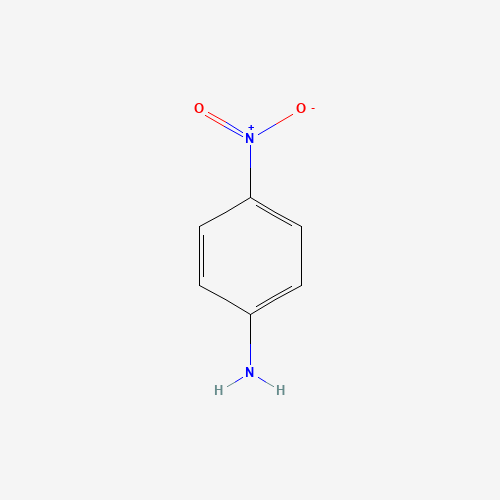
- DOT Label: Poison
- First Aid: Swallow: Medical attention immediately - If this chemical has been swallowed, get medical attention immediately.
- Fire Hazards: Combustible. Many reactions may cause fire or explosion. Finely dispersed particles form explosive mixtures in air.
- Safe Storage: Separated from strong acids, strong oxidants, combustible substances, reducing agents and food and feedstuffs. Dry.
- Fire Fighting: Use water spray, powder, foam, carbon dioxide. In case of fire: keep drums, etc., cool by spraying with water. Combat fire from a sheltered position.
- Target Organs: respiratory system, blood, heart, liver
- Eye Prevention: Wear face shield or eye protection in combination with breathing protection.
- Fire Potential: Process errors led to discharge of copious amt of nitrous fumes into glass reinforced plastic ventilation duct above diazotization vessel. On 2 occasions fires were caused in the duct by vigorous reaction of the dinitrogen tetraoxide with nitroaniline dusts in the duct.
- Health Hazards: Inhalation or ingestion causes headache, drowsiness, shortness of breath, nausea, methemoglobinemia, and unconsciousness; fingernails, lips, and ears become bluish; prolonged and excessive exposures may also cause liver damage. Contact with eyes causes irritation and possible corneal damage. Contact with skin causes irritation; continued exposure may cause same symptoms as inhalation or ingestion. (USCG, 1999)
- OSHA Standards: Vacated 1989 OSHA PEL TWA 3 mg/cu m, skin designation, is still enforced in some states.
- Reactive Group: Amines, Aromatic
- Adverse Effects: ACGIH Carcinogen - Not Classifiable.
- Cleanup Methods: Effectiveness of purification of p-nitroaniline waste water contaminants was increased by using pseudomonas fluorescens 5/7 in aerating purifiers with the addition of nutrient salts in waste waters.
- Exposure Routes: inhalation, skin absorption, ingestion, skin and/or eye contact
- Fire Prevention: NO open flames. NO contact with combustible substances. Closed system, dust explosion-proof electrical equipment and lighting. Prevent deposition of dust.
- Hazards Summary: Can cause severe methemoglobinemia in the workplace; Chronic exposure can cause anemia, jaundice, and liver injury; Listed in a table of Industrial Chemicals for Which Methemoglobin Formation is the Principal Cause of Toxicity; [ACGIH] A mild eye irritant; May induce methemoglobinemia; [ICSC]
- Inhalation Risk: A harmful contamination of the air can be reached rather quickly on evaporation of this substance at 20 °C, on spraying or dispersing much faster.
- Skin Prevention: Protective gloves. Protective clothing.
- Special Reports: x[DHHS/NTP; Toxicology & Carcinogenesis Studies of p-Nitroaniline in B6C3F1 Mice (Gavage Studies) Technical Report Series No. 418 (1993) NIH Publication No. 93-3149]
- DOT ID and Guide: 1661 153
- Disposal Methods: A good candidate for rotary kiln incineration at a temperature range of 820 to 1,600 °C and residence times of seconds for liquids and gases, and hours for solids. A good candidate for fluidized bed incineration at a temperature range of 450 to 980 °C and residence times of seconds for liquids and gases, and longer for solids.
- Flammable Limits: Flammability: Combustible Solid
- Physical Dangers: Dust explosion possible if in powder or granular form, mixed with air.
- EC Classification: Symbol: T; R: 23/24/25-33-52/53; S: (1/2)-28-36/37-45-61; Note: C
- RCRA Requirements: P077; As stipulated in 40 CFR 261.33, when p-Nitroaniline, as a commercial chemical product or manufacturing chemical intermediate or an off-specification commercial chemical product or a manufacturing chemical intermediate, becomes a waste, it must be managed according to federal and/or state hazardous waste regulations. Also defined as a hazardous waste is any container or inner liner used to hold this waste or any residue, contaminated soil, water, or other debris resulting from the cleanup of a spill, into water or on dry land, of this waste. Generators of small quantities of this waste may qualify for partial exclusion from hazardous waste regulations (40 CFR 261.5(e)).
- Spillage Disposal: Personal protection: particulate filter respirator adapted to the airborne concentration of the substance. Do NOT let this chemical enter the environment. Sweep spilled substance into covered containers. If appropriate, moisten first to prevent dusting. Wash away remainder with plenty of water.
- UN Classification: UN Hazard Class: 6.1; UN Pack Group: II
- Ecotoxicity Values: USDA APHIS Chemical Effects: collection=usda_chemeffect&query_type=synonym&query='^100-01-6$'
- Environmental Fate: ATMOSPHERIC FATE: According to a model of gas/particle partitioning of semivolatile organic compounds in the atmosphere(1), 4-nitroaniline, which has a vapor pressure of 3.2X10⁻⁶ mm Hg at 25 °C(2), will exist in both the vapor and particulate phases in the ambient atmosphere. Vapor-phase 4-nitroaniline is degraded in the atmosphere by reaction with photochemically-produced hydroxyl radicals(SRC); the half-life for this reaction in air is estimated to be 29 hours(SRC), calculated from its rate constant of 1.3X10⁻¹¹ cu cm/molecule-sec at 25 °C(SRC) that was derived using a structure estimation method(3). Particulate-phase 4-nitroaniline may be removed from the air by wet or dry deposition(SRC). 4-Nitroaniline does absorb light at wavelengths >290 nm(4) and therefore may be susceptible to...
- First Aid Measures: Ingestion First Aid: Induce vomiting (ONLY IN CONSCIOUS PERSONS!). Refer for medical attention .
- Reactivity Profile: P-NITROANILINE may react vigorously with sulfuric acid above 392 °F. It may also react with sodium hydroxide at 266 °F. Under pressure, it may produce an explosive compound. It is incompatible with strong oxidizers and strong reducing agents. It is capable of explosive decomposition with strong initiators. It will attack some forms of plastics, rubber and coatings. (NTP, 1992)
- Signs and Symptoms: irritation nose, throat; cyanosis, ataxia; tachycardia, tachypnea; dyspnea (breathing difficulty); irritability; vomiting, diarrhea; convulsions; resp arrest; anemia; methemoglobinemia; jaundice
- Storage Conditions: Store in a cool, dry, well-ventilated location. Separate from acids, oxidizing materials, & reducing agents.
- Exposure Prevention: PREVENT DISPERSION OF DUST!
- Ecotoxicity Excerpts: /OTHER TERRESTRIAL SPECIES/ Benzamines are the major aromatic amines used in industry and can also be released from azo dyes, which are widely used in the textile, paper-making, and food industries. The toxicity of 10 benzamines was tested by the well diffusion assay technique against 18 common bacterial species including the nitrogen-fixing bacterium Azotobacter vinelandii. p-Phenylenediamine was found to be inhibitory to the growth of Aeromonas hydrophila and Pseudomonas fluorescens. o-Phenylenediamine was inhibitory to Escherichia coli, Klebsiella pnemoniae, Salmonella enteritidis, and Shigella sonnei. 2,5-Diaminotoluene was inhibitory to the growth of P. fluorescens and Streptococcus mitis. The growth of A. vinelandii was inhibited by p-phenylenediamine and 2,5-diaminotoluene in the...
- Ingestion Prevention: Do not eat, drink, or smoke during work. Wash hands before eating.
- Medical Surveillance: Routine checking of lips, tongue and nail beds of exposed personnel for signs of cyanosis. /Protect/ from exposure those individuals with anemia, cardiovascular or pulmonary diseases.
- RAIS Toxicity Values: Oral Slope Factor Reference: PPRTV Current
- Atmospheric Standards: This action promulgates standards of performance for equipment leaks of Volatile Organic Compounds (VOC) in the Synthetic Organic Chemical Manufacturing Industry (SOCMI). The intended effect of these standards is to require all newly constructed, modified, and reconstructed SOCMI process units to use the best demonstrated system of continuous emission reduction for equipment leaks of VOC, considering costs, non air quality health and environmental impact and energy requirements. p-Nitroaniline is produced, as an intermediate or a final product, by process units covered under this subpart.
- Inhalation Prevention: Use local exhaust or breathing protection.
- NIOSH Recommendations: Recommended Exposure Limit: 10 Hr Time-Weighted Avg: 3 mg/cu m (skin).
- Nonfire Spill Response: STORAGE PRECAUTIONS: You should protect this chemical from exposure to light. Keep the container tightly closed under an inert atmosphere, and store under refrigerated temperatures. (NTP, 1992)
- Air and Water Reactions: It may be sensitive to prolonged exposure to air and light. Insoluble in water. This chemical is sensitive to moisture.
- Effluent Concentrations: Raw wastewater collected from a US dye manufacturing plant on the Black River, South Carolina in July 1976 contained 270 ppb nitroaniline (isomers unspecified); the final treated effluent contained no detectable levels of nitroaniline(1). 4-Nitroaniline was qualitatively detected in a stack effluent from a hazardous waste incinerator(2). 4-Nitroaniline has been detected in waste landfill leachates from various locations throughout the United States, however, concentrations were not given(3). 4-Nitroaniline was tested in tire leachate water form tires used as artificial reefs in canals but not detected at a detection limit of 1.0 ug/L(4).
- ICSC Environmental Data: The substance is harmful to aquatic organisms.
- Packaging and Labelling: Do not transport with food and feedstuffs.
- Fire Fighting Procedures: Wear positive pressure self-contained breathing apparatus when fighting fires involving this material. /Nitroanilines/
- Isolation and Evacuation: FIRE: If tank, rail tank car or highway tank is involved in a fire, ISOLATE for 800 meters (1/2 mile) in all directions; also, consider initial evacuation for 800 meters (1/2 mile) in all directions. (ERG, 2024)
- Other Safety Information: Chemical Assessment: IMAP assessments - Benzenamine, 4-nitro-: Human health tier II assessment
- Soil Adsorption/Mobility: 4-Nitroaniline has measured log Koc values of 1.78(1) and 1.88(2) and log Kom values of 1.49(3) and 1.64(4). These values correspond to Koc values of 60, 76, 54 and 75, respectively. 4-Nitroaniline has also been observed to have a Koc of 87(5). According to a classification scheme(6), these Koc values suggest that 4-nitroaniline is expected to have high mobility in soil. 4-Nitroaniline was found to have a Kd value of 13.5 L/kg in homoionic K+ Montmorillonite type soil(7). However, anilines are expected to bind strongly to humus or organic matter in soils due to the high reactivity of the aromatic amino group(8,9), suggesting that mobility may be much lower in some soils(SRC). 4-Nitroaniline had small and scattered amounts of irreversible binding over a 20 hour experiment(10).
- Carcinogen Classification: Summary: Under the conditions of these 2-year gavage studies there was equivocal evidence of carcinogenic activity of p-nitroaniline in male B6C3F1 mice based on the increased incidences of hemangiosarcoma of the liver and hemangioma or hemangiosarcoma (combined) at all sites. There was no evidence of carcinogenic activity of p-nitroaniline in female B6C3F1mice receiving doses of 3, 30, or 100 mg/kg.
- Toxic Combustion Products: Toxic oxides of nitrogen may form in fire.
- Atmospheric Concentrations: URBAN/SUBURBAN: 4-Nitroaniline was detected in the city of Lanzhou, China in March of 2003 at a concn of 1.92 ng/cu m, from 3 sets of duplicate samples collected over a 24 hour period on the top of Lanyuan Hotel(1).
- EPA Hazardous Waste Number: P077; An acute hazardous waste when a discarded commercial chemical product or manufacturing chemical intermediate or an off-specification commercial chemical product or a manufacturing chemical intermediate.
- Highly Hazardous Substance: OSHA Highly Hazardous Chemicals, Toxics and Reactives: Note: Nitroaniline (para Nitroaniline in quantities at or above above 5000lb presents a potential for a catastrophic event as a toxic or reactive highly hazardous chemical.
- NFPA Hazard Classification: NFPA Instability Rating: 2 - Materials that readily undergo violent chemical changes at elevated temperatures and pressures.
- Respirator Recommendations: Important additional information about respirator selection
- Populations at Special Risk: Routine checking of lips, tongue and nail beds of exposed personnel for signs of cyanosis. /Protect/ from exposure those individuals with anemia, cardiovascular or pulmonary diseases.
- Artificial Pollution Sources: ... P-NITROANILINE /FOUND/ IN SOME SAMPLES OF WAX CRAYONS ... .
- Environmental Biodegradation: AEROBIC: The mono-nitroanilines were found to be markedly more resistant to biological degradation, as compared to aniline, using Warburg respirometer procedures(1). In a 2-week closed bottle biodegradation study, using 100 mg/L 4-nitroaniline and 30 mg/L sludge, 4-nitroaniline had a theoretical BOD of 0%(2). No biodegradation of 4-nitroaniline was observed at concn of 25-30 ppm upon incubation with adapted activated sludge for 20 days(3). Degradation of 4-nitroaniline in a mineral salts solution, with a soil inoculum, was in excess of 64 days(4). No biodegradation occurred over a 240 hr period in an electrolytic respirometer study(5). Only limited biooxidation of 4-nitroaniline was observed in respirometric tests utilizing phenol-adapted bacteria(6) Using a concentration of 50 mg/L, 4-...
- Threshold Limit Values (TLV): TLV-TWA (Time Weighted Average): 3 mg/m³ [1992]
- Effects of Long Term Exposure: The substance may have effects on the blood. This may result in the formation of methaemoglobin.
- Hazard Classes and Categories: Aquatic Chronic 3
- Effects of Short Term Exposure: The substance is mildly irritating to the eyes. The substance may cause effects on the blood. This may result in the formation of methaemoglobin. The effects may be delayed. Medical observation is indicated.
- Environmental Bioconcentration: In a 6-week bioconcentration test, the BCF of 4-nitroaniline was 2.9-3.6 at a concentration of 0.5 mg/L and <10 at a concentration of 0.05 mg/L(1). In a bioconcentration study using zebrafish and a 4-nitroaniline concentration of 0.21 umol/L, the BCF was measured to be 4.4(2). According to a classification scheme(3), these experimental BCF values suggest bioconcentration in aquatic organisms is low (SRC).
- Standard Transportation Number: 49 215 30; Nitroaniline
- Volatilization from Water/Soil: The Henry's Law constant for 4-nitroaniline is 1.26X10⁻⁹ atm-cu m/mole(1). This Henry's Law constant indicates that 4-nitroaniline is expected to be essentially nonvolatile from water surfaces(2). 4-Nitroaniline is not expected to volatilize from dry soil surfaces(SRC) based upon a vapor pressure of 3.6X10⁻⁶ mm Hg(3).
- Permissible Exposure Limit (PEL): TWA 6 mg/m3 (1 ppm) [skin] See Appendix G
- Protective Action Criteria (PAC): PAC-3: 300 [mg/m3]
- Recommended Exposure Limit (REL): TWA 3 mg/m3 [skin]
- Shipment Methods and Regulations: The International Maritime Dangerous Goods Code lays down basic principles for transporting hazardous chemicals. Detailed recommendations for individual substances and a number of recommendations for good practice are included in the classes dealing with such substances. A general index of technical names has also been compiled. This index should always be consulted when attempting to locate the appropriate procedures to be used when shipping any substance or article.
- Environmental Abiotic Degradation: The rate constant for the vapor-phase reaction of 4-nitroaniline with photochemically-produced hydroxyl radicals has been estimated as 1.3X10⁻¹¹ cu cm/molecule-sec at 25 °C(SRC) using a structure estimation method(1). This corresponds to an atmospheric half-life of about 29 hours at an atmospheric concentration of 5X10+5 hydroxyl radicals per cu cm(1). 4-Nitroaniline is not expected to undergo hydrolysis in the environment due to the lack of functional groups that hydrolyze under environmental conditions(2). Aromatic amines react relatively rapidly in natural water with photochemically produced oxidants such as hydroxyl radicals and alkoxy radicals(3); half-lives of aniline are on the order of 30 hr of sunlight for hydroxyl radicals and 19 hr of sunlight for alkoxy radicals(3); reaction...
- Probable Routes of Human Exposure: NIOSH (NOES Survey 1981-1983) has statistically estimated that 1448 workers (262 of these are female) are potentially exposed to 4-nitroaniline in the US(1). Occupational exposure to 4-nitroaniline may occur through dermal contact with this compound at workplaces where 4-nitroaniline is produced or used(SRC).
- Environmental Water Concentrations: SURFACE WATER: 4-Nitroaniline was detected at a concn of 1 ppb in water from the Rhine River in the Netherlands, but was not detected in associated tapwater(1). A concentration of 1 ppb 4-nitroaniline was identified in water taken from the Rhine River near Lobith, Netherlands(2). 4-Nitroaniline was detected at several locations in Rhine River water at concentrations of 0.018 to 0.261 ug/L(3).
- Occupational Exposure Limits (OEL): MAK (Maximale Arbeitsplatz Konzentration): skin absorption (H); carcinogen category: 3
- Environmental Fate/Exposure Summary: 4-Nitroaniline's production and use as an intermediate in the synthesis of dyes, antioxidants, pharmaceuticals, and pesticides may result in its release to the environment through various waste streams. If released to air, a vapor pressure of 3.2X10⁻⁶ mm Hg at 25 °C indicates 4-nitroaniline will exist in both the vapor and particulate phases in the atmosphere. Vapor-phase 4-nitroaniline will be degraded in the atmosphere by reaction with photochemically-produced hydroxyl radicals; the half-life for this reaction in air is estimated to be 29 hours. Particulate-phase 4-nitroaniline will be removed from the atmosphere by wet or dry deposition. 4-Nitroaniline does absorb light at wavelengths >290 nm and therefore may be susceptible to direct photolysis by sunlight. If released to soil, 4-ni...
- Shipping Name/ Number DOT/UN/NA/IMO: IMO 6.1; Nitroanilines (o-, m-, p-)
- Skin, Eye, and Respiratory Irritations: Dust: irritating to eyes, nose and throat; solid: irritating to skin & eyes
- Exposure Control and Personal Protection: Exposure Summary: Biological Exposure Indices (BEI) [ACGIH] - Methemoglobin in blood = 1.5% of hemoglobin during or at end of shift. [ACGIH]
- Other Standards Regulations and Guidelines: The Soviet limit is 0.1 mg/cu m ... West Germany adopted the 6 mg/cu m value as its MAK.
- EPA Provisional Peer-Reviewed Toxicity Values: Weight-Of-Evidence (WOE): Suggestive evidence of carcinogenic potential
- Immediately Dangerous to Life or Health (IDLH): See: 100016
- Hazard Quotient Level 3 or Cancer Risk Level 1E-04: Fraction of Contaminant Absorbed Dermally from Soil: 0.1
- Hazard Quotient Level 0.1 or Cancer Risk Level 1E-06: Fraction of Contaminant Absorbed Dermally from Soil: 0.1
Warm reminder:
Because the manufacturer may temporarily adjust product specifications, prices, inventory, parameters and other information without notice, and there are differences in each user's consultation time and procurement needs, the platform reply content is only of reference value within a certain period. Sorry for the inconvenience caused to you, and thank you for your understanding and support! Please consult the online customer service for the latest details. Everything is subject to the real-time reply of the customer service.!
Please check the quantity, appearance and product information in time when you receive the goods. In case of damage, wrong delivery, abnormal quality and other problems, please feel free to contact us.
Service Hotline:400-6226-992 ,We will handle it for you as soon as possible, thank you for your support and trust.!
Research chemical CAS 100-01-6 1ml
Yuanye Research chemical CAS 100-01-6 1ml, complete specifications; suitable for production, research, laboratory testing and inspection; digital one-stop procurement platform for scientific materials.




