

What is isopropyl alcohol?
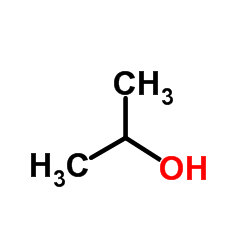
Image: Structural formula of isopropyl alcohol
Iso-Propyl Alcohol (IPA), also known as dimethylmethanol, 2-propanol, also known as IPA, is an organic compound. It exists in liquid form at room temperature, is colorless and transparent, and has a similar smell to ethanol (commonly known as alcohol). Its chemical structure formula is C3H8O, the relative molecular weight is 60.095, Cas 67-63-0, and the melting point (flash point 11.7 degrees Celsius). According to the data of Huayuan.com, isopropanol can be miscible with ethanol, ether, chloroform and water, and can dissolve rosin, alkaloids, synthetic resins, rubber, shellac and other organic substances and some inorganic substances. It is insoluble in salt solution. Isopropanol is a low-toxic and flammable substance. It forms an azeotrope with water and can be burned at room temperature. Its vapor and air mix easily to form an explosive mixture, which is about twice as toxic as ethanol.
The physiological effects of isopropanol on the human body are similar to those of ethanol. Although the toxicity, anesthesia and irritation to the upper respiratory tract mucosa are not as good as propanol, they are stronger than ethanol. It will hardly remain in the body, and the bactericidal ability is twice that of ethanol. As an organic solvent, isopropanol is widely used in inks and coatings and other fields. In the electronics industry, isopropyl alcohol is mainly used to clean oil stains; as a chemical raw material, isopropyl alcohol can be used to produce methyl isobutyl ketone, hydrogen peroxide, acetone, isopropylamine, diisobutyl ketone, isopropyl chloride, isopropyl ether, fatty acid isopropyl ester and chlorinated fatty acid isopropyl ester; in the fine chemical industry, it can be used to produce triisopropyl phosphite, aluminum isopropyl alcohol, isopropyl xanthate, isopropyl nitrate, etc. It can sometimes be used as part of the pharmaceutical raw materials or pesticide raw materials, and can also be used to produce diisoacetone, isopropyl acetate and thyme phenol. It can also be used as an additive for blending gasoline, a cleaning agent, an antifreeze agent, a fixing agent for the printing and dyeing industry, a dispersant for pigment production,
The use of isopropanol is so extensive that it is often used in scientific research. Generally, you can purchase reagents from major brands on professional platforms such as Huayuan Mall. At the same time, you can also try to prepare it yourself in the laboratory.
99.5% propylene and water are pressurized to 1.96 MPa, preheated to 200 degrees Celsius, mixed and added to the reactor for hydration reaction
The reaction temperature is controlled at 95 degrees Celsius, the reaction pressure is controlled at 0.96 MPA, the catalyst is diatomaceous earth phosphate, the molar ratio of water to propylene is 0.7:1, the one-way conversion of propylene is about 5.2%, and the selectivity is 99%.
3. After the reaction gas is neutralized and heat exchanged, it is sent to the high-pressure cooler and high-pressure separator, and the isopropanol in the gas phase is recovered by spraying deionized water in the recovery tower. The final reacted gas is pressurized by a circulating compressor and recycled (the propylene content in the circulation system is maintained at 85%). The liquid phase is 15% -17% low-concentration isopropanol, which is distilled in a crude distillation tower to obtain an 85% -87% aqueous solution of isopropanol, which is distilled to 95% in a distillation tower, and finally concentrated to more than 99% by benzene extraction.




