
The efficacy and role of betaine
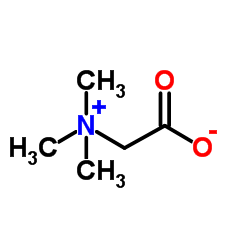
Image: Betaine structural formula
Betaine is an alkaloid, also known as trimethylglycine, which is widely found in animals and plants. The main source of betaine is molasses from beets. Legumes and wolfberry contain betaine. In animals, mollusks such as cuttlefish, octopus, shrimp, etc. contain betaine, and the liver, spleen and amniotic fluid of vertebrates (including humans) also contain betaine. Betaine has a structure similar to amino acids and belongs to quaternary ammonium bases. According to Huayuan.com data, betaine is generally a white crystalline powder with a sweet taste and no odor. Its chemical formula is C5H11NO2, with a basic molecular weight of 117.146. It is soluble in water and organic solvents such as ethanol and methanol, and slightly soluble in ether.
Betaine has always been one of the darlings of scientific research. Various experimental studies have found that betaine is widely used in the field of human health and feed, and can even be used for pesticides.
1. To prevent fatty liver, one of the key functions of betaine is to prevent fatty liver. While maintaining a balance in the total number of unsaturated fatty acids in the human body, betaine can also accelerate the metabolism of acidic substances in the human body, thereby reducing the total amount of cholesterol in the human body and preventing the body from digesting and absorbing fat. Betaine can effectively inhibit the deposition of human fat in the liver, thus preventing the production of fatty liver while improving the body's liver function.
2. Prevention of cancer. As a typical alkaline substance, betaine can maintain the acid-base balance in the human body and inhibit the activity of carcinogens in the human body. Regular use of betaine can avoid cancer. Its therapeutic effect is excellent in dealing with cancers such as liver cancer, leukemia and lung cancer. By enhancing the phagocytic capacity of human macrophages, betaine can promote lymphocyte regeneration.
3. Prevention of hypertension, betaine can directly act on the cardiovascular of the human body, stabilize blood circulation, prevent the accumulation of cholesterol and fat in blood vessels, increase the permeability of blood vessels, so that the blood pressure of the human body remains stable and normal. Betaine has a mild antihypertensive effect, and for moderate or mild hypertension, it has a certain auxiliary medication effect, but for hypertension, it does not have much effect
4. Skin care, compared to glycerin, betaine's moisturizing function is extraordinary. Glycerin realizes moisturizing function by fixing water molecules, while betaine realizes by promoting the complete absorption and utilization of water molecules by all living cells. When the amphoteric ions of betaine are occupied by water molecules, the water molecules can be easily released to the surrounding liquid. This moisturizing mechanism can improve the moisture content of the skin, even at low concentrations, it can last for a long time. Betaine can inhibit surfactants, reduce its irritating effect on the scalp, and improve itching and dry hair after shampooing. When exposed to high osmotic pressure in the external environment, the skin's cell osmotic mass will be lost in large quantities, eventually leading to cellular thinking. Betaine osmotic mass can effectively inhibit this process, penetrate into the stratum corneum of the skin to protect cell balance, relieve cell damage and aging, and ultimately maintain the skin's elastic vitality.
Betaine is so effective on the human body that more and more research is being conducted on betaine. In addition to purchasing brand betaine reagents from the website of Huayuan Mall, you can also extract or prepare them yourself. Here is a method for extracting betaine from wolfberry:
1. At room temperature, dry the wolfberry indoors at room temperature for a week to obtain a dry sample of wolfberry, cut a dry sample of wolfberry, and get a broken sample of wolfberry.
2. Put the chopped wolfberry sample into water at 60 degrees Celsius (temperature maintained) to extract, the ratio is 1:20 g/ml, and the time is 4 hours to obtain the extract
3. After centrifuging the extract at 8000 revolutions/min for 15 minutes, the supernatant ⅰ and filter residue ⅰ were separated.
4. After the supernatant ⅰ is concentrated under vacuum and reduced pressure at 60 ° C, 6 times the volume of absolute ethanol is added to mix and remove sugar to obtain a mixed solution
5. After centrifuging the mixture at 8000 rpm for 15 minutes, the supernatant ⅱ and filter residue ⅱ were separated.
6. After the supernatant II is concentrated under vacuum and reduced pressure at 60 degrees Celsius, an extract is prepared
7. Add an appropriate amount of double-steamed water to the extract to dissolve, and obtain a sample solution
8. After the sample solution is fully adsorbed by the 732 type cation exchange resin, first wash it with a sufficient amount of deionized water until the eluent is light yellow or colorless, and then use 4 times the volume of 5% ammonia to elute the betaine adsorbed on the exchange resin to obtain the eluent containing wolfberry betaine.
9. After the eluent of wolfberry betaine is adsorbed by 717 type anion exchange resin, it is eluted with twice the volume of deionized water to collect the effluent. After the effluent is concentrated under vacuum and reduced pressure, the concentrate of wolfberry betaine is obtained
10. Freeze-dried wolfberry betaine concentrate to obtain crude wolfberry betaine
11. The crude product of wolfberry betaine was washed twice with ethanol, centrifuged at 8000 rpm for 15 minutes, and the supernatant ⅲ and filter residue were obtained. The supernatant ⅲ was placed in a sample bottle and concentrated to dryness under reduced pressure to obtain a content of about 87.94% wolfberry betaine