

Erythritol's efficacy, function and preparation method
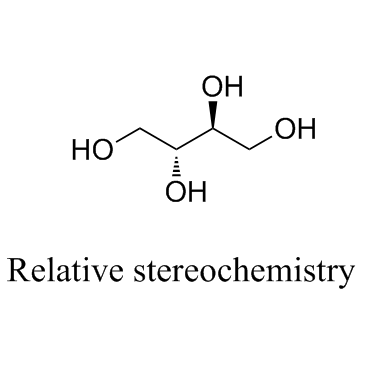
Image: Structural Formula of Erythritol
With the improvement of people's living standards, the sweet food consumer market is getting bigger and bigger, and the widespread obesity and diabetes problems are becoming more and more serious. Food manufacturers have racked their brains and begun to study various sugar substitute additives, hoping to satisfy human "enjoyment" of sweetness while avoiding various health problems caused by high sugar calories. There is no doubt that erythritol is a pearl in sugar substitutes.
Erythritol is widely found in nature, commonly found in fungi (lichens and mushrooms, etc.), melons, grapes, pears; a small amount of fermented food wine, beer, soy sauce, Japanese sake; human body fluids can occasionally be detected. According to Huayuan.com, erythritol is also called erythritol or alginol. It is a sugar alcohol that is generally in a white crystalline powder state. The products actually used in the food addition industry mainly come from fermented corn starch glucose. Compared with ordinary sugar, it produces less calorie and has a sweeter taste. It is an ideal low-calorific value sweetener. The data shows that with respect to cane sugar with a sweetness value of 4 kcal/g per 100, erythritol has a sweetness of about 70, but only 0.24 kcal/g of calories. Its molecular formula is C4H10O4, with a molecular weight of 122.120.
Low melting point, low hygroscopicity, low heat, more heat absorption when dissolved, and high stability to acid and heat. Many advantages make erythritol widely used in the food processing industry. The use of erythritol in bakery products can maintain the taste while also preventing moisture, and even add a unique refreshing feeling to cookies. Adding erythritol to beverages can improve the taste. At the same time, its antioxidant properties can play a certain protective role on the vitamins in beverages. Adding erythritol to candy or chocolate can achieve better quality and taste. For example, after using erythritol, because of its good thermal stability and low hygroscopicity, it can be operated at a high temperature of 80 degrees, reducing processing time and adding various new flavors. At the same time, it can reduce the temperature by 34%. % of calories, the product has a cool taste and is non-caries-causing.
The anti-caries properties of erythritol are a hot spot in the application of erythritol in the pharmaceutical industry. The mixture of erythritol and milk can inhibit the growth of Streptococcus mutans in biofilms, promote demineralization of tooth enamel and remineralization, and achieve the effect of anti-caries; erythritol can inhibit Porphyromonas gingivalis and reduce its adhesion ability on the surface of cementum, which is a new idea for the prevention and treatment of periodontitis; the antioxidant properties of erythritol can reduce the body's oxidative emergency damage, and animal experiments have found that the antioxidant effects of erythritol can protect blood vessels damaged by hyperglycemia to a certain extent in diabetic rats
After most of the sugar alcohol enters the human body, it will not be absorbed by the human body, but through the small intestine into the large intestine, and finally digested by the intestinal flora, while erythritol is different, 90% will be absorbed by the small intestine, and finally eliminated by urine, the remaining 10% Even if it enters the large intestine, because the human body lacks the metabolic enzyme of erythritol, it is not easy to ferment, causing discomfort, but because it can increase the short URL fatty acids in the intestine and promote human health.
At present, the research on erythritol is becoming more and more extensive. For purely chemical research, considering various costs such as time, you can purchase relevant brand reagents on major platforms such as Huayuan Mall, or you can try to prepare it yourself. Erythritol can generally be synthesized using chemical methods and microbial fermentation methods. When using chemical synthesis methods, a large amount of hydrogen peroxide is required, which costs more energy and time. It may even cause environmental pollution due to metal salts such as nickel and cobalt. Therefore, here we mainly introduce the biological fermentation method:
1. Production of crushed rice sugar solution
(1) Wash the broken rice as a by-product of the indica rice, remove impurities, soak it in water at 40 ° C for 2 hours, refine the pulp to a fineness of 40 mesh (about 0.63 mm), and add water to ensure that the concentration of the broken rice pulp is 20%.
(2) Add liquid α-amylase to the broken rice pulp according to the ratio of 160ml high temperature resistant α-amylase in one ton of broken rice pulp. Use a high temperature jet liquefier for two liquefaction operations, the first injection temperature is 105 degrees Celsius, and the second injection temperature is 130 degrees Celsius, and the pressure is maintained for 2 minutes. After cooling to 100 ° C, pump it into the laminar flow tank, and add the same high temperature resistant α-amylase reaction again according to the ratio of 240ml per ton of broken rice. The reaction temperature is 100 degrees Celsius, and the reaction time is 90 minutes. When the solid content is 20%, the reaction end point is reached, and the broken rice liquefaction liquid is prepared and cooled.
(3) Adjust the pH of the cooled crushed rice liquefaction solution to 4 with dilute hydrochloric acid, add the saccharification enzyme according to the ratio of 1000 grams of saccharification enzyme per ton of crushed rice, and control the saccharification temperature at 60 degrees Celsius. The saccharification time is 60 hours to obtain the saccharification solution.
(4) The crushed rice saccharification liquid is filtered by a filter press, the pressure is 60 degrees Celsius, and the pressure is 250 billion Pa. The crushed rice sugar liquid is prepared, and the crushed rice sugar liquid is pumped into two storage tanks, one storage tank is used as the substrate of the secondary seed medium, and the other storage tank is used as the substrate of the fermentation medium.
2. Preparation of erythritol fermentation broth
(1) Selecting Pterospora plexus as the starting strain, this method uses Esito Pterospora plexus (MoNiliella acetoabutans ATCC 18455) as an example
(2) First sterilize the shaking flask medium, then connect a cyclic Ecito fungus yeast species and culture it in a shaker at 30 degrees Celsius for 24 hours. The recipe for shaking flask medium is:
① Glucose 200g/L
② Corn syrup dry powder 3g/L
③ Urea 5g/L
(3) After adding 10 g/l of potassium dihydrogen phosphate and 5 g/l of magnesium sulfate to the broken rice sugar solution in the medium substrate storage tank, it was sterilized at 120 degrees Celsius for 15 minutes and then pumped into the secondary seed tank. After cooling to 30 degrees Celsius, it was connected to the primary seed, and the inoculation amount was 5%. The sterile air was filtered and sterilized and then passed into the fermentation tank, the tank pressure was 500 billion Pa, the ventilation volume was 0.5 cubic meters/min, the culture conditions were the tank temperature was 30 degrees Celsius, the speed was 200 rpm, and the culture time was 24h. The secondary seed liquid was obtained after the microscopic inspection of strains and the inspection of OD value and other indicators;
(4) Add 10 g/l potassium dihydrogen phosphate, 5 g/l manganese sulfate, 5 g/l magnesium sulfate, and 0.05% to the broken rice sugar solution in the fermentation medium substrate storage tank. After sterilization at 120 degrees Celsius for 15 minutes, pump into the fermentation tank, cool down to 30 degrees Celsius and connect to the secondary seed liquid. The inoculation amount is 10%. Keep the tank temperature at 28 degrees Celsius for fermentation. Sterile air is filtered and sterilized and then passed into the fermentation tank. The tank pressure is 50 billion Pa. The ventilation volume is 1 cubic meter/minute, the rotation speed is 400 rpm, and the fermentation time is 100 hours. When the glucose concentration was reduced to 0.5%, the fermentation broth containing erythritol was obtained, in which the erythritol conversion rate was 43.3% and the erythritol content was 135 g/l.
3. Refined erythritol
(1) Pump the fermentation broth into the storage tank, use a plate and frame filter press for coarse filtration, the filtration temperature is 60 degrees Celsius, the pressure is 250 billion Pa, remove bacteria, proteins and other substances in the fermentation broth, and obtain coarse filtrate
(2) The crude filtrate is ultrafiltered, the membrane retains a molecular weight of 1000D, and operates at room temperature. The ultrafiltration pressure is 200 billion Pa to remove the remaining macromolecular substances, including bacteria, nucleic acids, proteins, colloidal particles, etc., to obtain ultrafiltration
(3) The ultrafiltrate was nanofiltration, membrane retention molecular weight 200D, operating temperature 40 degrees Celsius, nanofiltration pressure 2 trillion Pa, concentration multiple of 15 times, removing pigments, nucleotides, amino acids, short peptides, salt ions in the fermentation broth, etc., to obtain nanofiltration
(4) The nanofiltration liquid is concentrated to 20% of the original liquid through a multi-effect falling film evaporator and then sent to the crystallization tank, and the crystallization tank is reserved for 10%. The total crystallization time is 60 hours, including 12 hours for crystallization and 48 hours for cooling and crystallization. Conventional centrifugal separation, dry packaging, and the white crystalline powder obtained is erythritol crystals with a purity of 99% and a water content of 0.05%.




